

Andrew McGinley says Deirdre Morely's not guilty verdict is 'probably the right verdict'
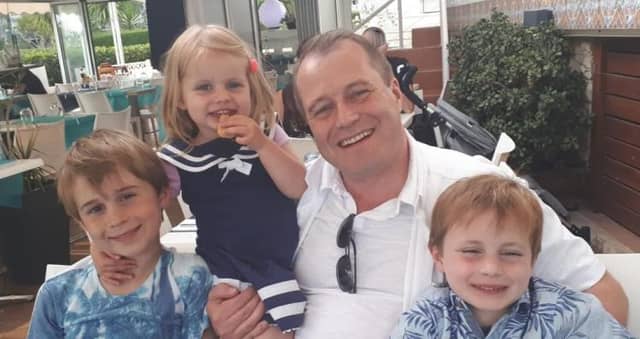

Donegal man 'no closer to understanding' why his three children died
The Donegal man whose wife was found not guilty of their murders by reason of insanity has said he is no closer to understanding why they died.
Paediatric nurse Deirdre Morley smothered her three young children at their family home.
She had pleaded not guilty by reason of insanity to the murder of her sons Conor McGinley (9) and Darragh McGinley (7) and her daughter Carla McGinley (3). The children's bodies were discovered at the family home in Co Dublin on January 24 last year.
The 12 jurors in the three-day trial at the Central Criminal Court accepted the evidence given by two psychiatrists that she was suffering from a mental disorder at the time of the three killings and fulfilled the criteria for the special verdict.
Her husband Andrew McGinley said the verdict was “probably the right verdict”.
In a statement issued after Thursday’s verdict, he said everyone who knows Deirdre knows how much she loved their children and how devoted she was to them.
He said he hoped an understanding will be found as to why Deirdre’s diagnosis prior to the children’s deaths was different to her diagnosis now.
“If Deirdre’s diagnosis was questionable prior to January 24, 2020, then surely so too was her treatment and medication,” he said.
“We are now also aware of a number of occasions within Deirdre’s professional care when her initial diagnosis should have been queried but none of these seem to have been fully addressed.”
Investigation
He called on the HSE to launch an investigation into Deirdre’s diagnosis, treatment and medication prior to the deaths of their children.
“We ask for this to be conducted as a matter of urgency. This will help us understand the insanity that took the lives of our beloved Conor, Darragh and Carla. We as a family need to be included in any investigation as our exclusion during her treatment has left us with many unanswered questions. We believe that an inclusive investigation can only serve to inform clinicians in their practice and therefore avoid tragedies like ours happening again. We do not want any other family to suffer as we have.”
He said lessons that should have been learned from the deaths of other children in similar circumstances should have led to improvements in the Mental Health Act, which in turn would have prevented the deaths of Conor, Darragh and Carla.
“It is too late for us but I do not want to see another grieving parent speaking in the future about the same exclusion after a similar catastrophic loss. My message here and now to anyone who has a loved one in psychiatric care is to get in there as soon as you can to be added as an advocate for their treatment plan.”
Celebrate
Mr McGinley said he will continue to celebrate “the all too short lives of Conor, Darragh and Carla to ensure that they are never forgotten”.
He said Conor had asked him to help him with a YouTube channel.
“You will find Conor’s Clips on YouTube now and given his interest in the internet this is supported on Twitter and Instagram. I hope to continue to do that with the same great sense of humour which Conor had.”
He said he had promised to build a snowman for Carla.
“As we don’t get snow every year I’m planning a colouring competition called Snowman for Carla in her name.”
He said he had promised Darragh to get involved with Rathcoole Boys Football Club.
“In Darragh’s name, I am starting a charity to encourage everyone to get involved more in their own communities and to participate, as Darragh did.”