

Donegal County Council spent €300m in 2020

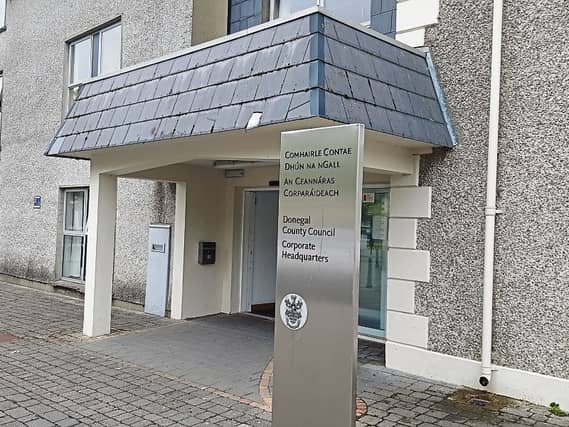

Extra Government funding of close to €50m boosted council’s finances
Donegal County Council spent more than €300m in 2020 which included almost €50m in extra funding from Government.
The council had a surplus of more than €850,000 last year, a report on income and expenditure presented to councillors shows.
The local authority’s expenditure and income in 2020 were both €50m higher than the adopted budget, totalling €205m, an increase from €156m in 2019. There was also €95m of capital expenditure.
The council’s deficit has been reduced from €7.7m at end of 2019 to €6.9m at the end of 2020, down from €17.8m in 2013. Head of finance Richard Gibson told councillors that the figures show how well the council’s debt reduction strategy is working.
Mr Gibson said the council’s finances in 2020 were helped by significant central government support which “fundamentally” changed the financial outturn for the year.
However, the future remains uncertain and the council must be prudent in the choices it makes so that it can maintain services to the public in the future, he said.
The council also needs to position itself to take advantage of post-pandemic and post-Brexit opportunities, including staycationing, attracting investment and job creation.
The council received additional funding of €48.3m made up of €24.3m in 4,392 business restart grants, €15m in rates waivers for 4,159 business, €7.8m in additional roads grants and €1.2m in extra housing grants.
“Those significant government supports acted as a lifeline to business in the county,” Mr Gibson said.
Funding of €3.55m was provided from the Government for exceptional expenditure and lost income due to the Covid-19 pandemic.
The transition to online meetings during 2020 saved the council €400,000 in travel and subsistence.
There was an additional €745,000 from the Non-Principal Private Residence (NPPR) charge, more than €500,000 from Irish Water’s contribution to central management charges and savings on pension and retirement gratuities of €1.028m.
The council also saved €421,000 on insurance costs which included a Covid-19 premium credit of almost €300,000 and savings of more than €2.5m due to shorter working-time arrangements, the timing of recruitments and assignments and payroll transfers to the capital account.