

Donegal HR Professional stresses the importance of Workplace Wellbeing
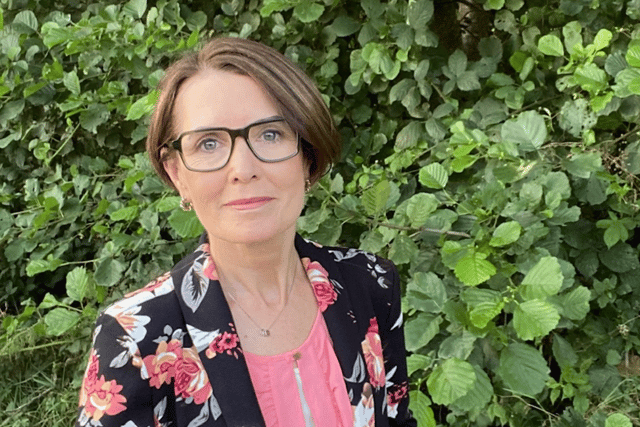

Patricia McGrory, a Chartered CIPD member, says employers increasingly need to look beyond salary and traditional benefits if they want to compete for talent in a labour market
As Irish employers continue to face skills shortages, recruitment difficulties and growing pressure to retain experienced staff, an Inishowen HR professional is warning that workplace wellbeing is moving from being a “nice to have” to a potentially decisive factor in whether people choose to join, remain with or leave an organisation.
Patricia McGrory, a Chartered CIPD member with more than 25 years’ experience in Human Resources, says employers increasingly need to look beyond salary and traditional benefits if they want to compete for talent in a labour market where skilled workers have more choice. Her comments come as Ireland continues to operate close to full employment. The Department of Enterprise, Tourism and Employment reported 2.82 million people at work as the country entered 2026, with unemployment described as broadly consistent with full employment.
At the same time, the latest HR Practices in Ireland 2026 report from CIPD Ireland found that skills shortages are affecting 91% of surveyed organisations, while 80% reported difficulty retaining talent. One third of organisations had experienced increased turnover, with career progression and financial pressures among the leading factors. For Patricia McGrory, the figures underline a fundamental shift in the employment landscape, employers are no longer simply competing with one another on pay, but on the quality of the working environment they provide.
“Throughout my HR career, I saw how stress can affect the way people think, communicate, make decisions and relate to colleagues,” said Patricia McGrory. “I also saw the difference it makes when people feel genuinely valued and supported.
“People spend a huge proportion of their lives at work. If they feel listened to, respected, supported and able to develop, that can have a significant impact on how they experience their working lives and, ultimately, whether they want to stay.”
The issue is particularly relevant for younger workers, who are increasingly assessing employment through the wider lens of quality of life. Research from the National Youth Council of Ireland, reported by RTÉ in 2025, found that three in five people under the age of 25 were considering emigrating in search of a better quality of life. While employers cannot resolve Ireland’s housing crisis or wider cost of living pressures, Patricia McGrory believes the workplace itself can become an important part of the equation.
“A young person deciding whether to build their future here is looking at much more than a payslip,” she said. “They are thinking about quality of life, progression, flexibility, relationships, purpose and whether they feel that an organisation genuinely cares about its people.
“Employers cannot fix housing or the cost of living, but they can influence what it feels like to work for them. That matters.”
The changing expectations of younger workers are reflected in Deloitte’s 2025 global research, which found that Gen Z employees place significant emphasis on work life balance, while money, meaning and wellbeing remain closely connected to career decisions. However, she stresses that workplace wellbeing should not be viewed simply as a Gen Z issue.
Employees at every stage of their working lives can face stress, excessive workloads, caring responsibilities, bereavement, illness, financial pressures, relationship difficulties or burnout. CIPD Ireland’s latest research found that 28% of organisations had experienced increased absence, with 51% identifying mental health as the leading cause of absence.
For employers, the consequences can extend beyond individual wellbeing to absenteeism, productivity, staff turnover, workplace relationships and organisational performance.
“Workplace wellbeing is sometimes treated as something separate from the business, but it is fundamentally about people being able to function well,” Patricia said.
“If someone is constantly operating under pressure, sleeping badly, struggling with anxiety or feeling overwhelmed, that can affect concentration, communication, decision making and relationships. Those things have a direct impact on a workplace.
“Equally, when people have the tools to manage pressure, understand their own responses and communicate effectively, everybody benefits.”
Patricia McGrory is now combining her background in HR, people management and organisational change with training in neuroscience and solution focused approaches to support employers and employees across Donegal and the Derry area. Her work includes practical workplace sessions addressing stress and anxiety, resilience, sleep, confidence, imposter syndrome, habits and behaviour change, workplace conflict, burnout and supporting people through difficult life events.
She believes the most effective approach is not to wait until employees reach crisis point, but to create workplace cultures where conversations around wellbeing are normalised and support is available before problems escalate.
“In my experience, prevention is incredibly important,” she said. “People do not suddenly become stressed or burned out overnight. There are often signs along the way.
“Good people management means noticing those signs, having appropriate conversations and creating an environment where someone feels safe enough to say, ‘I’m struggling,’ before they reach breaking point.”
There is also an increasingly strong economic argument for employers to take the issue seriously. Research published by CIPD in 2025 found that companies investing heavily in employee wellbeing were four times more profitable than those investing less. Deloitte’s wider research has also estimated an average return of approximately £4.70 in improved productivity for every £1 invested in employee mental-health and wellbeing support.
She says such figures should not lead employers to view wellbeing purely through a financial lens.
“Of course organisations need to understand the business impact of absence, turnover and disengagement, but wellbeing should not simply become another productivity metric,” she said.
“Ultimately, it is about people. If an organisation genuinely values its employees, that should be reflected in how people are treated, how managers communicate, how workloads are handled and whether people feel psychologically safe.
“The commercial benefits can follow, but the starting point should be creating healthier workplaces.”
With Ireland continuing to experience intense competition for skilled workers, Patricia McGrory believes employers who take a more human approach to the employee experience may have an important advantage.
“In a tight labour market, every meaningful advantage matters,” she said. “People want to feel valued as individuals, not simply as employees filling a role.
“A credible approach to wellbeing will not solve every recruitment or retention problem, but it can help create an organisation where people want to work, where they feel they belong and where they have reasons to stay.
“That is becoming increasingly important in Ireland’s competition for talent.”