

Donegal village’s heart is being ‘ripped from its chest’

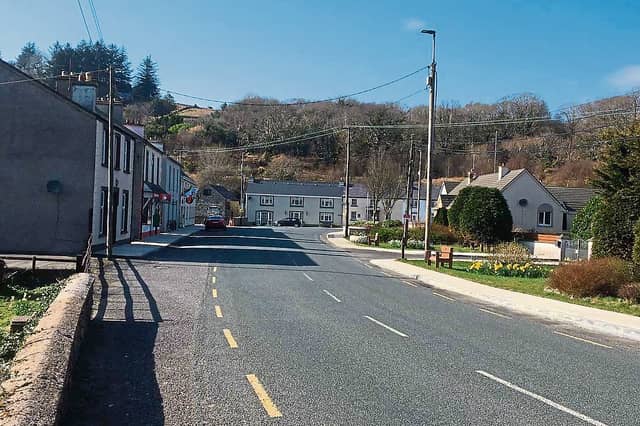

With the Corkscrew Bar being the latest closure, a member of the now disbanded Doochary Development committee has said she fears the worst for the area
The former acting chair of Doochary Development says that urgent action must be taken to ensure the survival of the village.
The committee stepped down in part due to many frustrations with ongoing, unresolved issues of underinvestment and because of the health issues of some of its members.
Dr Andrea Redmond expressed her serious concerns, specifically over the future of Dúcharaidh/ Doochary - and rural Ireland and its language in general, with the Corkscrew bar the latest closure in a long line of facilities lost in the area.

In a heartfelt letter to the Donegal Democrat/DonegalLive, she writes: “There is an old Irish proverb that refers to the essence of a rural pub: ‘It is in the shelter of each other that the people live.’
“Unfortunately, the village of Doochary faces the possibility of the closure of its only pub.
“In rural Ireland, the pub is so much more than a place to have a pint; it is, as one commentator noted: ‘the beating heart of the community ... It's where birthdays are remembered, where grief is shared, and where the stories of the past are preserved and passed down’.
“An Dúcharaidh/ Doochary has had its heart ripped from its chest, as the pub has been closed since the New Year, and rumours abound about its fate. It supported seasonal celebrations for children and pensioners from surrounding areas, Men’s Shed, classes, dances and the annual Doochary Festival.
“It is just one example of how Doochary, and so many other areas of rural Donegal, are losing the cornerstones of village life. Doochary has lost its Garda Station, Health Centre, Post Office, and village shop, and its National School, which will close in June, is now under threat.
“We can talk about the years of underinvestment by successive governments, but new thinking, new strategies need to be created and implemented now - and not a blame game, which is the extent of much of the response from the powers that be.”
Dúcharaidh/ Doochary, Dr Redmond adds, is an area proud of its past - always battling against the odds - and one that should be looking forward to its future, if given the chance.
“Doochary is famous for its unspoiled beauty; it is a village of hard-working hill-farming families and fisherfolk,” she continues.
“They are the David in the story of David and Goliath when, in 1906, the ‘Winning of the River ’-when villagers, to preserve their right to fish the wild salmon, took the local landlord, the Marquis of Conyngham, to court and won on appeal.
“Bonfires were lit late into the night, celebrating an historic win against colonial control. The village has had its share of poets and philosophers: Daniel McDermott, a postman-poet, and Dominic O’Kelly, writer, poet, historian and teacher who ran the Irish College in the village.
“The College was a vibrant Gaeltacht rivalling Loughanure, providing a much-needed economic boon to the local families. The remains of the college are poetically indicative of the village itself, nature has reclaimed its rotted prefabs.
“Why has a once vibrant Gaeltacht village literally become ‘drive-through’? There are a number of issues, the key being housing.
“The lack of adequate social and long-term accommodation has been a serious source contributing to the closure of many of the services, including the National School - this has been compounded by Council itself tending to cluster single individuals into family homes, impacting the number of children attending the school and the only available land for building social housing is on a floodplain.
“Our committee voiced concerns consistently about this type of allocation for over six years, specifically the impact it was having on the school population, only to be met with stonewalling.
“Ironically, this year an online survey asked whether Irish language speakers had issues with finding accommodation; this was a survey across the Gaeltacht on the whole Island.
“I voiced concerns that many of the young people who could not access housing were now in Australia or elsewhere, and therefore, was the survey advertised, etc?
“Those homes coming onto the market are used as second homes or for investors, which means the area is a ghost town much of the year. The lack of health services, education and a vital shop has been impacted by limited housing stock.”
Steps must be taken, Dr Redmond says, to do all that is possible to ensure the survival of the Irish language, citing examples of similar instances from around the world.
“Are we serious about preserving the cultural heritage of Irish speakers?” she adds.
“Other areas of the world are making these decisions. While Donegal County Council has some restrictions, we need comprehensive strategies for balancing tourism and community needs, or we will ultimately lose the Gaeltacht
“Wales is safeguarding housing stock by restricting short-term rentals to preserve Francophone language and identity, so too are Quebec, Barcelona, Spain, and Japan, Italy - Florence, Venice, and Rome - to name a few.
“Other issues impacting the village include transport, with one bus leaving the village for Dungloe and not returning many hours later.
“The Corkscrew was more than just the local pub, it was essentially the beating heart of the village. As has been said, it was utilised as a community centre. It was formerly Teach Gleann Ceo, run by local families, the Wards, O’Donnells and Bonners over the years.
“It had its fire, music and craic. Boxty and stew were served on special nights. With its new name and owners, refugees fleeing war were welcomed to the village and were active in all aspects of life, many eventually moving on to find homes and work elsewhere, but still remaining close to the villagers.
“The closure of the Corkscrew has devastated villagers, creating social isolation and destroying the community spirit. While plenty of rumours abound about its fate, nothing seems forthcoming. It would never be a major profit-making enterprise.
“Perhaps there needs to be considered incentives to support rural publicans - as often they are a labour of love rather than a scheme to get rich quick. But is that what we are reducing the destruction of a community in favour of profit margins? The community will lobby to ensure that does not happen.
“Doochary epitomises the canary in a coalmine and is will be the fate of many other culturally and linguistically sensitive areas if the necessary decisions are not made now.”