

COLUMN: A sad death that has resonated deeply - and the uncomfortable truth that it raises


A view of Donegal by journalist Siobhán McNamara
I recently covered a story about a man who died in London after having spent much of the last 40 years on the street.
Many of those who encountered him and spoke to him believed he was from Donegal, though there are also suggestions that he came from Laois or Carlow and was connected to Donegal through his mother.
It was a sad story that highlighted the complexities of homelessness; this man’s problems were never going to be solved with accommodation alone, and he vehemently rejected any offers of help.
I received quite a few messages both through our email and social media, and personally from people I knew. The question that kept coming up was ‘Could this man be my missing relative?’
Up until only a few weeks ago it would have been my first thought too. My Uncle Gerald was last seen by my late mother’s family in the 1950s or early 1960s. He visited his brother in Coventry and from what my cousins in that household remember, he told them he was going to London to buy Christmas presents and that he would be back.
He was never heard of again. I heard various theories over the years - that he had gone to France, was working in South Africa and even that he had joined a monastery.
Various attempts had been made to find him but to no avail.
Shortly before Christmas, my cousin in Australia brought all the members of our far flung clann together in a WhatsApp group. Needless to say, it wasn’t long before the subject of our missing uncle arose and it emerged that each of his siblings had slightly different ideas or memories of what happened. The common theme was that they would all have dearly loved to have known what became of him.
The last remaining member of the family is my lovely auntie who is in her nineties. At the same time as our WhatsApp group was being put together, she was recovering from ill health. Thankfully she is now back home and feeling much better. This combination of events prompted some members of her family to have another go at tracing Uncle Gerald. They hired an investigator and the mystery was finally solved. He had lived out his life in the south of England, had a steady career and was married. The couple had no children.
It seems that he had a good life, and was well thought of in his community. A relative of his late wife told the family that he never spoke about his Irish roots.
It was a relief to know that he hadn’t fallen on bad times or met an unpleasant end in a diamond mine on the other side of the world. I must admit there was a part of me that was a little bit hurt that my mother and most of her siblings had died without knowing that he was alright. A letter or phone call to someone in the family would have made a world of difference.
My aunt was sent photographs of his life and they are a great comfort; at long last a tangible connection to the man who had been listed among the missing for more than half a century.
Photographs taken in his later years portray him as a gentle, perhaps slightly shy man. We will never know why he lost touch but I can only imagine that the more time goes by, the harder it becomes to bridge the gap. And as I said, the main feeling by far was relief that he had a happy life.
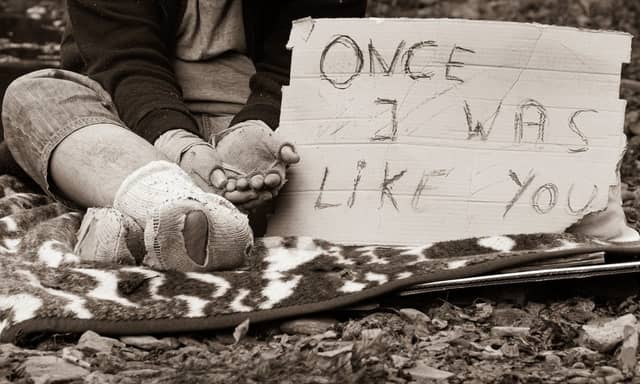
The story of the homeless man in London is very different and has stirred up a lot of emotions for people. He was someone’s son once, and maybe someone’s brother, uncle, cousin, friend. It has been suggested that his wife and daughter were killed on the Chiswick roundabout and that is why he chose to stay there.
If that is true, then nothing would have changed his loss. But one has to wonder if there had been more understanding of mental health problems back then, would he have had the support to process the trauma and build some semblance of a life? Sadly, we will never know.
Another thing that really struck me was a comment my friend Cathy made on reading the story. She said: “Isn't it sad that people have so much more empathy for homeless people when they die than when they are alive?”
This raises a very uncomfortable truth. I wonder if it is because we are removed of the burden of responsibility to our fellow human beings once they are dead? It is easier to ask why a person didn’t get the help they needed after they are dead than to be the one to acknowledge our prickling conscience, to step up and take on that role.
I know that in the case of the man at Chiswick Roundabout, the authorities were in constant contact with him and they tried very hard to get him into accommodation. I have been in contact with the Irishman in London who first shared the sad news of Mr Dwyer’s death, and he tells me that he too reached out to him and was told in no uncertain terms to back off.
But there are many people on our streets in Ireland and around the world who might just be crying out for someone to offer that crucial helping hand. And yes, there is quite possibly a small proportion who don’t want help for reasons of their own, but that doesn’t remove the responsibility to them or to all the other people who are someone’s son or daughter; father or mother, brother, sister, uncle, aunt or friend - and even more so to those who have no-one in the world to help them.
Life can sometimes get on top of us and it's not always easy to claw back. It’s said that most of us are only three pay cheques away from homelessness. The current pandemic has shown us how quickly life can change in ways that are far beyond our control.
True compassion is a mix of kindness and courage- the kindness to want to help and the courage to see it through. Let’s keep compassion alive in our society.
There is talk of a plaque being erected at the Chiswick roundabout to commemorate Mr Dwyer. Perhaps a more appropriate way to honour him would be to reach out to others that might be more open to being helped.
We can’t go out and collect every homeless person off the street ourselves, but we can lobby our decision makers, support food collections and fundraisers, and not be afraid to share a smile, a chat or buy a cup of tea and a sandwich for those who face that awful, dehumanising existence.
It may seem to us here in our various communities around Ireland that homeless people living on the street is a distant problem. But the plight of the man from Chiswick Roundabout and the many more members of our Diaspora who have fallen on hard times shows that many of us are only one or two degrees of separation from those in most dire need. Those people are not an alien species; they all come from somewhere.