Search


27 Mar 2026
Search
27 Mar 2026

Please allow ads as they help fund our trusted local news content.
Kindly add us to your ad blocker whitelist.
If you want further access to Ireland's best local journalism, consider contributing and/or subscribing to our free daily Newsletter .
Support our mission and join our community now.
To continue reading this article, you can subscribe for as little as €0.50 per week which will also give you access to all of our premium content and archived articles!
Alternatively, you can pay €0.50 per article, capped at €1 per day.
Thank you for supporting Ireland's best local journalism!

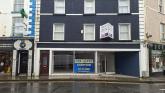
Falmore House c. 1998, with inscribed foundation stone above door - James Steele Nicholson 1845 and Masonic insignia.

James Steele Nicholson lived at Balloo House, Bangor, Co. Down and built a shooting lodge at Falmore, a remote location between Gleneely and Culdaff in 1847. He inherited the estate from his father, William Nicholson, J.P. His mother was Isabella Hancock, from an established banking family.
About four miles from the town Moville, Falmore House is a burnt-out and long-abandoned shell of a building today, but it was once a bustling property of some renown, famous for its annual festive gatherings.
A number of hand-written recipes from the account book of Falmore House have come to light dating from around 1850. They offer a unique insight into the comfortable lifestyle of the “Big House”, as Ireland painfully emerged from the consequences of the Great Famine.
James Steele Nicholson did not enjoy the benefits of modern refrigeration but had an “ice house” outdoors to keep food cool for a limited period. Food could be uninviting so lavish amounts of sugar, salt, essences, brandy and spices were required to add flavour, as the recipes reveal.
Nicholson lived a relatively lavish lifestyle. He travelled extensively throughout Europe taking off on the “grand tour”, an upmarket model of our package holidays. He stayed in the best hotels in Edinburgh, Glasgow and London and while visiting Dublin, he had a preference for the Gresham Hotel in O’Connell Street, the leading establishment in the city which was patronised by the ruling elite.
He socialised among the well-heeled upper middle class citizens of the city and dined in the best restaurants.
An avid reader and collector, his library had a fine stock of books on the English classics, Scottish poetry, particularly Robbie Burns, and Irish history. One of his prize possessions was a first edition of Maghtochair’s history of Inishowen, published in 1867. A copy signed by Nicholson recently sold to a Donegal collector for £600 sterling.
Maghtochair admired Nicholson for his sense of fairness and his contribution to the community but his book argues strongly for the rights of tenants and is critical of the injustices of the landlord system.
Nicholson had a good eye for architectural detail so the ornate plaster work on the ceiling of the drawing-room of Falmore House, the marble fireplaces, the finely carved, curved staircase and wood panelling all indicated a man of good taste. Even his field gates were beautifully designed and his farm buildings were elaborately constructed by local craftsmen.
He was a keen gunman – hence the shooting lodge – and he renewed his gun licence annually. Consequently, the menu in Falmore House featured a choice of game: grouse, pheasant, snipe, woodcock, pigeon, and duck, all which thrived on his 6,531 acre estate.
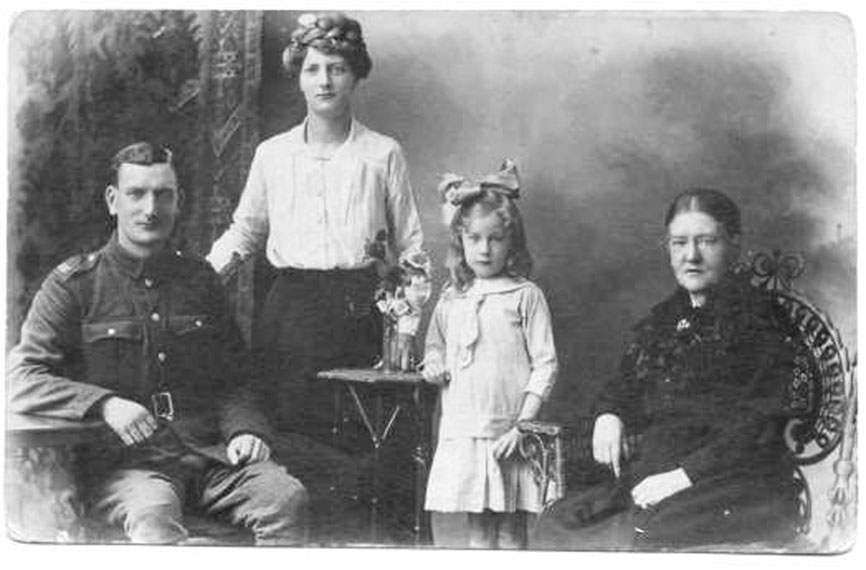
As lord of the manor, he enjoyed unrestricted shooting rights. The lands had three well-stocked lakes where he could fish at leisure. Local rivers and bays had large stocks of wild salmon which could be enjoyed in season. He employed about a dozen agricultural labourers, both male and female, who provided him with fresh vegetables, beef and mutton while his garden produced ample supplies of apples, rhubarb, and gooseberries.
He grew acreages of turnips which were served at table and to livestock. Workers kept several fires blazing throughout the winter as the lodge was situated on the edge of a bog with good supplies of turf and bog oak.
Their wages were about one shilling a day at most but if they had land, the rents could be as high as £5 per year. In fairness, he did not evict anyone when tenants went into arrears during the Great Famine.
I have a personal interest in his story as he was the landlord for my great-grandparents and grandparents, John and Catherine Beatty. They never spoke ill of him.
Christmas was when the best fare was available in Falmore House. Nicholson’s mother, Isabella, directed cooking operations in the huge kitchen with traditional ingredients supplied by the famous Dublin grocer firm of Findlaters, where she shopped as a child.
In an inventory of silverware, she lists no fewer than six types of spoons: teaspoons, coffee spoons, soup spoons, salt spoons, gravy spoons and table spoons. So dining in style was the order of the day.
Roast stuffed goose was on the menu rather than turkey. Christmas pudding, laced with liberal portions of whiskey, probably poteen, was made ready on the open fire. Exotic teas rather than coffee were served to the ladies after the meal, while the gentlemen retired to the smoking room to enjoy a few cigars, a drink or a slice of cheese as they mulled over matters of the day.
Members of the local gentry were in attendance at the festivities but they frowned on their host’s preference for “rebel” songs. Workers were not forgotten and were treated to large portions of Christmas cake and pudding.
The Christmas tree was a novel idea in Victorian times and came into Ireland via the Big House; it was many years before it would become popular in ordinary households.
Isabella Nicholson was one of the first to have a Christmas tree in the Gleneely region, decorated with paper ornaments and surrounded by presents at the base. At this time presents were not wrapped.
The recipes provide a taste of the regular menu available in Falmore House while Nicholson’s account book has records of his whiskey purchases, which he bought by the gallon from local suppliers whose names are recorded. In all probability, the drink was poteen. These recipes come with a health warning – they have not been tested by the author but no doubt competent chefs will decide on their suitability for the modern table.
A lecturer in the North West College, Emmet McCourt, assures me that he would be happy to use the same recipes today with the addition of a few extra spices to accommodate the modern palate. As the author of a new book Feast or Famine, he has commented on the impact of middle eastern spices on the menus of nineteenth century Ireland. They were essential for flavouring, preserving food and for adding flavour and brought a touch of Arabia or Turkey about them to the Irish dinner table.
With so many mouth-watering possibilities, I would love to try the kippered salmon, the recipe for which is akin to that for kippered herring. The orange jelly or French custard pudding would do nicely for dessert and the addition of rose water is indeed something novel for the modern diner.
Some might prefer a chunk of traditional Irish country house cheese or the soft aroma of a cigar. Of course, there were no restrictions about smoking indoors, provided it was not in the presence of the ladies. All the recipes are signed with the initials FF, which are probably those of the resident cook. Bon appetit.
Kippered salmon
Salmon pressed for 24 hours in salt; Wash and dry well; Add one a half ounces of allspices, red peppers and a quarter pound of sugar; Pressure for another 24 hours.
Orange jelly
I pint of orange juice strained; Add half ounce of sugar and . . . (this ingredient is unclear, probably pectin); Boil and when really cold, pour into shapes.
French custard pudding
I pint milk; 3 eggs; Sugar to taste flavoured with rose water; Essence of lemon or brandy in milk.
Boil. Mix flour smoothly in cold milk. As soon as the milk boils stir in the mixture of flour and milk; Let it boil one minute; Take it off and set it to cool.
Beat the eggs and when the milk is cool add them to it with sugar; Pour in mixture and bake in moderate oven (FF)
Recipe for curing beef
5 lbs salt to 2 gallons of water; One and half pounds of sugar and 2 ounces of saltpetre; Boil for 20 minutes; Pour over beef when cold.
To be skimmed before it boils; Cure in a crock.

Subscribe or register today to discover more from DonegalLive.ie
Buy the e-paper of the Donegal Democrat, Donegal People's Press, Donegal Post and Inish Times here for instant access to Donegal's premier news titles.
Keep up with the latest news from Donegal with our daily newsletter featuring the most important stories of the day delivered to your inbox every evening at 5pm.

This publication supports the work of the Press Council of Ireland and Office of the Press Ombudsman, and our staff operate within the Code of Practice of the Press Council. You can obtain a copy of the Code, or contact the Council, at www.presscouncil.ie, Lo-call 1800 208 080 or email: info@presscouncil.ie.