

Barrtalk: 72 games to be left with 32 teams! World Cup might be a tad overkill


Moville journalist Caoimhinn Barr writes a weekly column which has been running in the Inishowen Independent newspaper since 2010
Like millions of football supporters, I was eagerly anticipating the 2026 FIFA World Cup, and wondering how ‘soccer’ would be received in the United States and Canada [We already know the Mexicans adore the game].
However, any buzz I may have had began to fade pretty rapidly when I looked at some of the opening fixtures the other day – and that was before I even clocked that many of the matches will be kicking off in the early hours of the morning at stupid-o-clock.
The 2026 tournament will be the biggest World Cup ever staged, with a record 48 teams taking part, up from the 32 nations that competed from 1998 to 2022. The expansion means there will be 104 matches in total, making it by far the largest World Cup in history.
But is that necessarily a good thing? Or could it be a case of less would have been more?
While FIFA argues that the enlarged format gives more countries the opportunity to compete on the biggest stage, critics say it risks diluting the quality and prestige of the competition – and I do tend to agree [old dinosaur that I am].
Looking through the fixture list, it is hard not to feel that some of the glamour traditionally associated with the World Cup has been lost. I mean, during the initial phase alone, it’s gonna take a whopping 72 games just to whittle the contest down to 32 teams!
All of that’ll add up to a lot of barely consequential games. Though maybe I’m just disgruntled because Ireland aren’t there, when they really could have been.
To be honest, I’ve barely heard of some of the countries who’ll take to the field for the 2026 tournament, including Curaçao, a tiny former Dutch colony in the Caribbean with a population of 150,000.
Or imagine pulling Cape Verde out of the hat for your work World Cup draw; it being a tiny volcanic archipelago of islands off the coast of West Africa with a population of only half a million.
And that’s before you get to debutantes, Jordan and Uzbekistan, countries 90 per cent of the American fans are guaranteed never to have heard of before!
Though maybe we shouldn’t scoff too hard. After all, Uzbekistan are ranked NINE places above Ireland in the FIFA world rankings, while Jordan are just four places below us.
Of course, once the knockout rounds arrive and the big guns of Brazil, Argentina, England, France and Spain begin battling it out, the excitement will likely return. But it could be a long wait til then.
I’ll probably do what I always do when watching the World Cup, which is to shout for the team with the most United players in it, and hope that the United players do well and don’t get injured.
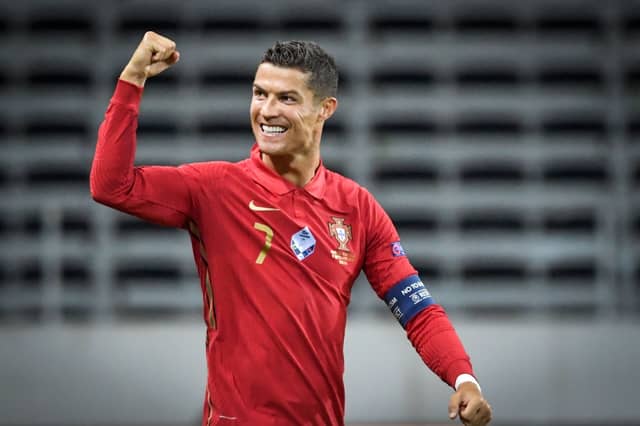
With that in mind, I’ll likely shout for Portugal [Bruno Fernandes, Diogo Dalot and that boy Ronaldo, who’s still a starter aged 41], followed by Brazil [Casemiro and Cunha], while hoping that Mainoo does well for England in a losing team effort overall [obviously].
Anyway, the final’s on the 19th of July, by which time we should have had some excitement after the duller posturing forays. I wonder what price an Iran-USA final! Now that would be interesting.
Film scores displacing Mozart and Beethoven
I read with interest in the New York Times how movie scores are increasingly replacing classical composers on the symphonic stage across the Atlantic and here in Europe.
Once treated as occasional curiosities, live film-score performances have apparently become a core fixture of orchestral seasons these days.
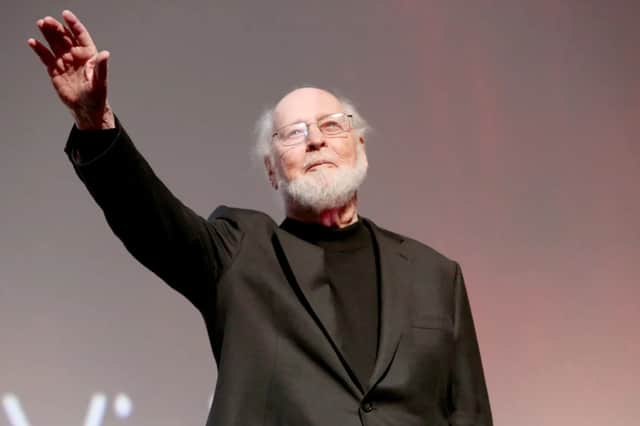
This summer, audiences at leading orchestras are as likely to hear John Williams’ themes for ‘Harry Potter’ or ‘Star Wars’ or Hans Zimmer’s ‘Dune’, as they are symphonies by Mozart, Mahler, Bach, or Beethoven.
For many institutions, the change is pragmatic. Classical music organisations are under financial pressure, and administrators say film concerts reliably draw larger and younger audiences who might never attend a traditional symphony programme.
At venues like Pittsburgh’s Heinz Hall, performances of ‘The Empire Strikes Back’ have become some of the orchestra’s strongest audience magnets, with executives describing live-to-picture events as their fastest-growing programming category.
Not everyone sees this as a simple win. Some musicians argue that while film music can be richly orchestrated, its function is fundamentally different from concert music. As one performer put it, these scores may deepen audiences’ attachment to films, but they do not necessarily translate into renewed interest in Beethoven or Bach. Indeed.
The concern is not just programming balance, but cultural direction: a future in which cinematic universes steadily overwhelm the traditional classical canon, and ‘Star Wars’ becomes more familiar in concert halls than Mozart.
Iconic though it undoubtedly is, the Star Wars theme can never be placed on the same level as Eine kleine Nachtmusik or Beethoven’s Fifth Symphony.
Clearly, as someone who shares a birthday with Beethoven [no less], I’m concerned about the impending displacement of the geniuses of the past, who have endured for centuries for a reason [ie: they’re amazing and deserve to be celebrated as such forever].
What’s next? ‘Poetry’ from Ed Sheeran in favour of Keats or Yeats? Save us.