

Barrtalk: Why do we need an app to buy a loaf these days?


Moville journalist Caoimhinn Barr writes a weekly column which has been running in the Inishowen Independent newspaper since 2010
Curmudgeon that I am, I'm probably the worst possible luddite customer for the modern retail world.
Not because I'm particularly tight, although that accusation could certainly be levelled at me, but because I absolutely detest being told I need an app to get a half-decent price on everything.
It seems almost every shop, supermarket, coffee outlet and retailer now has its own loyalty scheme, rewards programme or downloadable app.
Want a discount? Download the app. Want to collect points? Download the app. Want to avail of a special offer on a loaf of bread? You guessed it. Download the app.
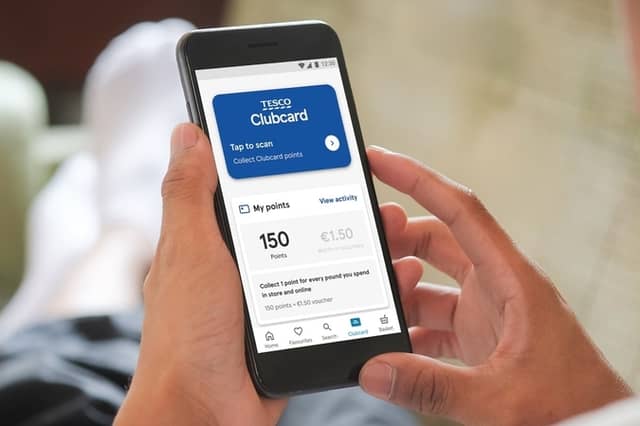
Tesco has its Clubcard, Sainsbury's has Nectar, while the likes of Centra, Eurospar and various other familiar names have their own loyalty schemes and special offers here in Inishowen too.
I'm beginning to think I'll need a separate phone just to accommodate all the apps required to get the bread and milk.
I don't have a Tesco Clubcard, nor a Nectar card or any of the others. And I have absolutely no intention of signing up for them.
It's not that I don't appreciate a bargain. Far from it. If someone wants to knock a few euro off my weekly shopping, I'm all ears. But there's a difference between offering customers a good deal and making them jump through digital hoops to get one.
Life is simply too short to be standing in a queue fiddling around with a phone, trying to remember a password, download an app, find the relevant voucher and connect to the shop's Wi-Fi, all while a growing line forms behind you.
And that's assuming the app actually works, which is another story altogether.
Perhaps I'm showing my age, but I still like the idea of walking into a shop, picking up what I need, paying for it and walking out again. No registration, no QR codes, no digital membership cards and no interrogation about my shopping habits.
There's also a principle involved. Why should two customers buying exactly the same product pay different prices simply because one has signed up to a loyalty scheme and the other hasn't?
My phone is there for work, and when I'm out and about, I'm not working. I rarely ever take it out with me. I feel I should be rewarded for that, never mind punished.
Deals? Yes please. Apps and all the rigmarole they entail? No thanks.
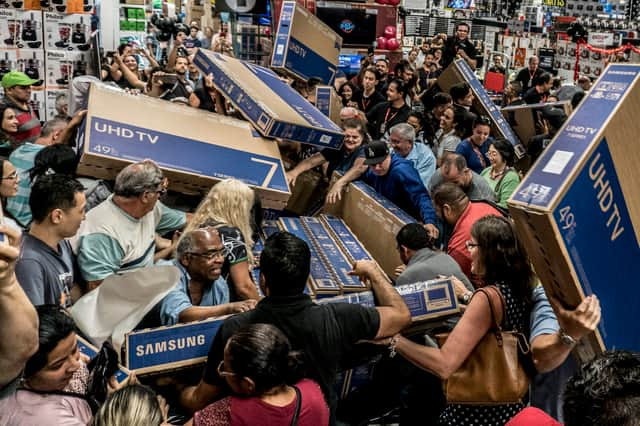
Is Black Friday past its sell-by date?
I have been suspicious of Black Friday for years. Not that my suspicions have ever stopped me from getting sucked in too!
Every November I tell myself that I won't be sucked into the annual retail circus, only to find myself browsing websites a few days later, convinced that I'm about to stumble across the bargain of a lifetime.
This year's big event actually falls on Friday, November 27, although you'd be forgiven for thinking it was already upon us.
Black Friday seems to arrive earlier every year, with retailers now dangling so-called Black Friday deals in front of us from September onwards.
By the time the actual day arrives, some of us have been bombarded with special offers for so long that we're almost ready to declare Christmas over.
It's a strange phenomenon. You can spend the previous eleven months happily living without something, but suddenly, when a retailer tells you it's 40 per cent off for one day only, you develop an overwhelming desire to own it. Hello air fryers, coffee machines, handheld vacuum cleaners and electronic toothbrushes.
Black Friday has become something of a global sporting event, with retailers wheeling out their biggest discounts, websites flashing countdown clocks and email inboxes filling up with increasingly desperate pleas to buy now before it’s too late.
But I've long suspected that much of it is a bit of a con.
For starters, we now seem to have sales virtually all year round. January sales, summer sales, mid-season sales, bank holiday sales, end-of-season sales, clearance sales and special promotional weekends. Not to mention scary Halloween discounts, which have just ended.
So what makes Black Friday so special? Are the discounts genuinely better, or are we simply being presented with reheated versions of offers that have been doing the rounds for months?
I'm particularly suspicious of those retailers who proudly announce that an item has been reduced from €799 to €399, suggesting we're saving an astonishing €400.
But was it ever really worth €799 in the first place? And if it's been available at €399 since September, is it actually a Black Friday bargain at all?
Then there's the psychological warfare. Those little messages telling us that only three items remain in stock, that 27 other people are viewing the same product or that an offer expires in nine minutes.
Apparently, the fate of civilisation depends on me purchasing a discounted electric toothbrush before lunchtime.
And yet, despite all my dubiousness, I remain hopelessly vulnerable.
I'll click on the email, browse the offers and convince myself that I'm being financially savvy by purchasing something I hadn't intended to buy in the first place.
I'll even tell myself I've saved money, which is an impressive piece of mental gymnastics when I've actually spent €150 I hadn't planned on spending.
So this year, I'm determined to exercise restraint. I'm going to ignore the countdown clocks, resist the flashing discounts and refuse to be manipulated by retailers.
Having said all that, if anyone spies a good deal on a new 4K TV, please let me know!