

Health & Happiness: Celebrating the Light, The Magic of the Summer Solstice

Columnist Aileen Casey is a Buncrana-based writer, parent and healthy-living enthusiast with a background in early childhood care and elderly support
As June unfolds across Inishowen, there is a noticeable shift in the landscape. The hedgerows are bursting with wildflowers, the sea sparkles beneath long evenings, and daylight seems reluctant to leave the sky.
This year, on June 21st, we reach the Summer Solstice, the longest day of the year and one of the oldest celebrated events in human history.
The Summer Solstice occurs when the Earth's North Pole is tilted most directly towards the sun. It marks the point at which the sun reaches its highest position in our sky, giving us the greatest amount of daylight.
In Ireland, we enjoy almost 17 hours of daylight around the solstice, but the light lasts even longer thanks to extended twilight. In the northern parts of the country, darkness never fully settles for several hours, leaving a soft glow lingering on the horizon late into the night.
The word solstice comes from the Latin sol, meaning sun and sistere, meaning to stand still. Ancient observers noticed that the sun appeared to pause briefly in its annual journey before slowly changing direction.
Although it is the longest day of the year, it is not usually the hottest. The warmest weather tends to arrive weeks later because the land and sea continue absorbing heat throughout the summer, a phenomenon known as seasonal lag.
For thousands of years, people have marked this special day. Long before calendars, watches and weather forecasts existed, the sun was humanity's clock, compass and calendar. The changing position of the sun told people when to plant crops, harvest food, move livestock and prepare for winter.
Ireland contains some remarkable reminders of this ancient connection. Newgrange in County Meath was built around 3200 BC, making it older than both Stonehenge and the Egyptian pyramids. While Newgrange is most famous for its alignment with the winter solstice sunrise, it demonstrates the extraordinary astronomical knowledge possessed by our ancestors.
Other ancient sites, such as the Hill of Tara, Lough Gur and Carrowkeel, also reveal how carefully people observed the movements of the sun and stars.
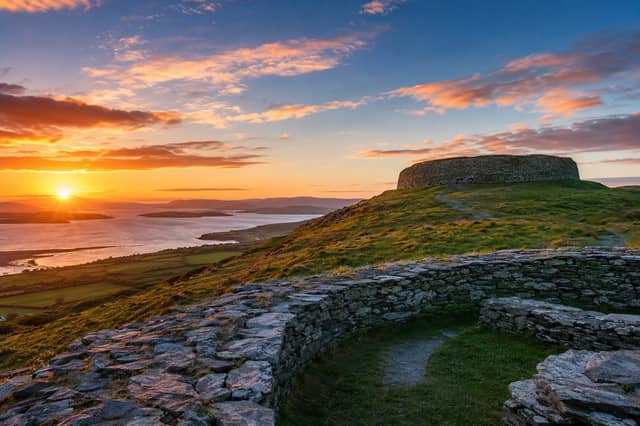
Closer to home, Inishowen has its own fascinating connection to the sun through the Grianán of Aileach. Perched high above Lough Swilly and Lough Foyle, the ancient hillfort takes its name from the Irish word grian, meaning sun. The name Grianán is commonly translated as ‘The Sunny Place’ or ‘The Place of the Sun’.
The site served as the royal seat of the ancient Kingdom of Aileach, but archaeologists believe the hill itself may have been important long before the stone fort was built. In an age before clocks and calendars, elevated locations provided ideal places from which to observe the changing seasons and the movement of the sun across the landscape.
Standing atop Grianán today, with panoramic views stretching across Donegal, Derry and Tyrone, it is easy to imagine generations of people gathering there to mark important moments in the solar year.
The Summer Solstice was particularly significant to the Celts. It represented abundance, fertility, growth and the promise of a successful harvest. Midsummer celebrations often included music, dancing, feasting and large bonfires lit on hilltops. Fire symbolised the power of the sun and was believed to bring protection, prosperity and good fortune.
Some traditions in parts of Ireland included livestock being driven between two bonfires to protect them from illness. Embers from midsummer fires were carried home and placed in hearths to bless households. Certain herbs gathered around the solstice were believed to possess enhanced healing properties, while dew collected on Midsummer morning was thought to bring luck and beauty.
Many of these customs survived well into Christian times through the celebration of St John's Eve on June 24th. Across rural Ireland, midsummer bonfires continued to bring communities together for generations. Songs were sung, stories were shared and neighbours gathered outdoors to celebrate the brightest time of the year.
What is perhaps most remarkable is how many of these ancient traditions still make sense today. Modern research continues to show that spending time outdoors, exposure to natural light and connection with nature can benefit both physical and mental wellbeing. Sunlight helps regulate our body clock, supports healthy sleep patterns and contributes to the production of vitamin D.
Perhaps our ancestors understood something that many of us are only rediscovering. In a world filled with screens, schedules and constant notifications, there is value in stepping outside and paying attention to the natural world around us.
The Summer Solstice also reminds us that life moves in cycles. Although it marks the height of light, it is also a turning point. From June 21st onwards, the days begin their gradual shortening once again. The change is almost impossible to notice at first, but it serves as a gentle reminder that nature is always moving forward.
Here in Inishowen, we are fortunate to experience some of the finest summer evenings in Ireland. Whether it is a walk along Buncrana Shore Front, a visit to Five Finger Strand, a drive through Mamore Gap or a climb to the Grianán of Aileach, there are countless ways to appreciate the season.
For thousands of years, people across Ireland have paused to celebrate the light. While our lives may look very different from those of our ancestors, the wonder inspired by a golden June evening remains much the same.
So as the sun lingers a little longer in the sky this June, take a moment to step outside. Listen to the birds, notice the wildflowers, watch the light dance across Lough Swilly and appreciate one of nature's most remarkable annual events. After all, some traditions endure because they continue to remind us of what matters most.