

'Keep exercising if it makes you happy'
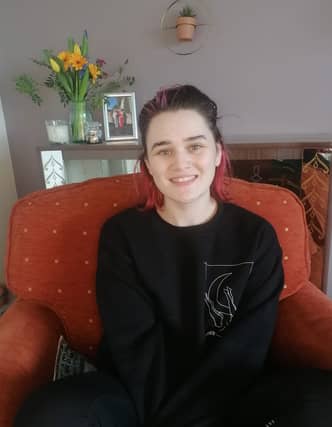

Stephanie's raising awareness on Type 1 Diabetes
A young student nurse from Inishowen is using her social media platforms to raise awareness about Type 1 diabetes.
Stephanie McConnellogue from Quigley's Point, who was diagnosed with Type 1 diabetes when she was seven, acknowledged the “amazing support” she had received growing up, from her parents, Majella and Stephen.
Speaking to Donegal Live, Stephanie, said she hoped her first video would encourage people with diabetes to keep exercising “if it makes them happy”.
She explained: “I was diagnosed with Type 1 Diabetes when I was seven, so I have grown up with it. However, I noticed over the last few years not a lot of people know a whole lot about Type 1 Diabetes, which is fair enough because Type 2 Diabetes is more prevalent and, generally, that's what people talk about when they talk about diabetes.
“In my first video, I wanted to raise awareness about Type 1 Diabetes and exercise. My dad, my sister and myself have recently started a Couch to 5K and I have been learning so much more about my Diabetes through that. It is a constant learning curve for me and I thought it would be good for people to be more aware of it.”
Stephanie and her family have now switched to a Couch to 10K, because, she says, her dad “loves a challenge”.
She added: “I injured myself a fortnight ago so I took the week off but my dad and my sister completed a 10K. Normally we run the two bridges [in Derry] or we'll run the Inch Wildfowl Reserve, which is 8K. We are doing pretty well with it.
“I was hoping the video, which was about diabetes and exercise, would help people understand a little bit more about what diabetes is and, specifically, how Type 1 Diabetes affects people's lives.
“I have also made a second video about a day in my life, showing people diabetes is not just about what you eat or about taking injections, it is about every wee thing that you do in your day, especially if you are exercising. It is not just what you do before you exercise, you have to really calculate everything for the next day as well.
“Whenever I wake up in the morning, one of the first things I have to do is to check my blood sugar and then, if I am going to eat, I have to take insulin. I also have to count the carbohydrates that are in my meal and then, if my blood sugar is outside of the perfect range I want it to be, I will have to take a little bit more insulin.”
If Stephanie was planning to go for a run two hours after she wakes up, she would have to take that into account.
She explained: “I would take a little less insulin or eat a bit more, so that I don't go low after that run. At lunchtime then it is the same thing, taking insulin and carbohydrate counting.
“After a run or exercising, diabetics are gong to go low or there is a high possibility they are going to go low. It is important to watch for that as well, especially if I am going to do anything else in the day.
“On the day I made the first video, I had three lows, so I was showing how to managing the lows as well. Whenever diabetics go low, we need to have 15 grammes of fast acting carbohydrate and, once that works, we have to have a slower rate carbohydrate, just to keep our blood sugars up.
“Sometimes it can be quite erratic. If you have had a run and then you go low and if you over correct you might go high. It can affect you a lot, especially mentally, if your blood sugars are fluctuating. If your blood sugar is high, you can be very, very lethargic and it will affect your work productivity. The same with lows. Diabetics cannot do anything when we are low.”
When diabetics are low, there is not enough sugar getting into their cells. According to Stephanie, they won't have the energy to do anything.
She said: “You are a wee bit shaky and can't form coherent sentences. You can't do anything physically. You couldn't just get up and walk around or you would drop.”
Stephanie has now got to the stage where she can calculate the amount of carbohydrate she needs to take on board during in any one day, depending on what activities she is undertaking.
She said: “There is an App called Carbs and Cals, which is very good. I would have used it for years but now, because I am used to doing it, it is alright.
“Whenever you are diagnosed with Type I Diabetes, the health professionals take you through everything. When you are on the insulin regime, there is a programme called the CHOICE Programme, which the Diabetic nurse takes you through.
“CHOICE teaches diabetics how to carbohydrate count. Every single person will have a specific ratio of insulin to carbohydrate. Mine actually changes throughout the day. I have a specific ratio for breakfast and a different one for lunch and then back to the same one for dinner as I have at breakfast. If I kept the same ratio through out the day, I would go low then after lunch.
“It is a lot of trial and error. In addition, whenever you find a regime that works for you, it might work for you for a month or two and then a small thing might through it off, maybe you are getting up an hour earlier or later in the morning. If something changes in your life, you might have to change your regime to suit. You are constantly tweaking.”
An upbeat Stephanie described the tweaking as “constant but grand”.
Speaking from experience, she said: “I think there are things that are worse than diabetes, however, you do have days when you just do not want to do the tweaking. It is so much work. It is constant. You cannot switch it off. You can't even switch it off for an evening, for a day.
“I coped really, really well with it at the start, when I was first diagnosed. I just thought, 'this is something I have to do' so I was taking all of my injections from the start. I didn't let anybody else inject me.
“I did struggle a bit when I was a teenager, especially at 15,16 and 17, when you are starting to go out and starting to drink. I am actually doing a wee bit of research on that at the moment, how alcohol affects diabetes. I want to do video on that subject.
“Whenever I was 17 I had gone out a couple of nights in a row and didn't take one of my injections. I ended up being really, really sick, which was quite scary. After that episode I went into a thing called diabetic ketoacidosis (DKA), a really scary side effect of not taking insulin. My organs and everything were starting to shut down. That experience scared me so much, that from then I thought, 'I don't want to go back to that stage again I want to look after myself.'”
The DKA experience helped Stephanie cope with her diabetes as an adult.
“I realised if I didn't take my insulin, this is what could happen. I knew I had to stay on top of my diabetes,” she said. There are days when my diabetes gets too much and sometimes I do take a wee step back. I let myself run a wee bit high or low for the day and I just go to bed early and get up the next morning and start again.
“I would say diabetes is definitely manageable. There are definitely going to be struggles but the best thing you can have is a really good support system.
“My parents have always been an amazing support system for me and even now and my partner, Steven, as well he is fantastic. You need to have people around you who are willing to learn and grow with you and know what to do.
“Whenever I was very young, Diabetes Ireland used to host a weekend for all the children with Type 1 Diabetes and their families. It was brilliant. I have friends now who live all over Ireland, who are Type 1 Diabetics and I can chat to at any time. It really helps as well if you know someone else who is going through the same thing. Meeting other families with a Type 1 Diabetic member helped my parents too.
“I found running really, really beneficial for me. If there are other diabetics interested, I would like to encourage them not to stop doing something that make them happy, especially if it is exercise. It can be scary going in and trying to exercise and then you drop low. However, there are always ways around it.”
Stephanie can be contacted on Instagram or via YouTube.