

Major plans to turn Pettigo Mill into thriving cross-border community hub

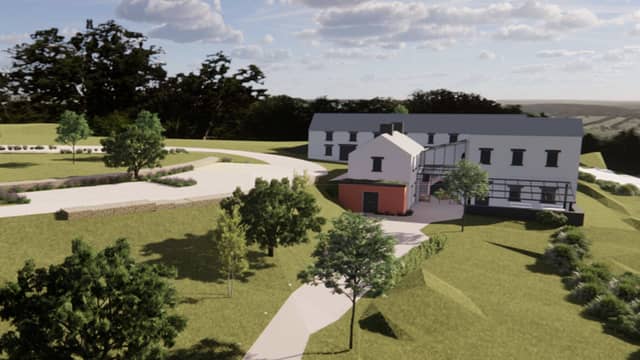

The first phase of the proposed development in the border village of Pettigo is to include a wine bar, bistro, co-working facilities and a riverside walk on the site of an ancient mill
There are plans for a major redevelopment of the ancient Pettigo Corn and Saw Mill site.
The owners of the site have submitted an application to Donegal County Council for planning permission for the works which they saw will ‘deliver commercial and leisure facilities’ at the site.
The first phase is to include a wine bar, bistro, co-working facilities and a riverside walk.
Michael Beare and Gary Dunlop say they are looking to create a ‘community hub’ in the border village.
Pettigo Corn and Saw Mill is listed and in need of remediation and the owners say that the application “forms the framework for the first phase of the process” to pave the way for a sustainable future for the complex.
Phase one is designed at looking at preservation and repurposing of the former saw mill, flax mill and mill keeper’s cottage.
The initial phase will refurbish the miller’s cottage and saw mill to deliver: Administration and reception facilities for the site as well as a southern base for Finn Lough, a family-run retreat; baking facilities for artisan breads and pastries; evening wine bar and bistro; an introduction of the hydro electric pump to deliver electricity for future phases; a riverside walk; and infrastructure to allow access for tourist coaches.
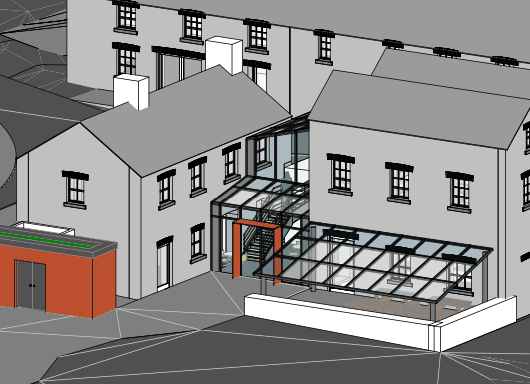
An impression of what the exterior of the building would look like
“It is intended to join the buildings with a lightweight glazed infill structure that touches lightly on the buildings either side.”
A mill stood on this site in 1756 and a much smaller corn mill building is indicated on a map of the area in 1836 while the Leslie family were said to have built a large flax mill in 1851 - a date that correlates with the growth of Pettigo, a village that straddles both sides of the border.
The mill was used to generate electricity and it produced enough to power the village of Pettigo during the 1930s
The owners of the complex now say that this is “ideal timing for the creation of a cross-border facility that serves the community”.
“The design intent is to utilise the plethora of original heritage artefacts as well as being true to the building fabric to retain the site for future generations,” they say.
“The proposed development will ultimately provide a heritage tourist attraction with the initial phase looking to utilise a previous mill as a bakery thereby providing a circular economy use for the first phase.
“The provision of the same delivery as the Enniskillen based ‘Folk’ bakery will see artisan coffee and bakes available both for the local community and as a destination en route to Lough Derg, the Wild Atlantic Coast Line or the local Lough Erne shores.
“To give the site a round the clock appeal it is intended to utilise the upper floor of the saw mill as a bar and ‘pizza bistro’ with locally produced produce where possible.”
The ESB previously owned the site and generated electricity into the 1960s before the mill closed.