

Men plead guilty to Ardara assault at Donegal Circuit Court

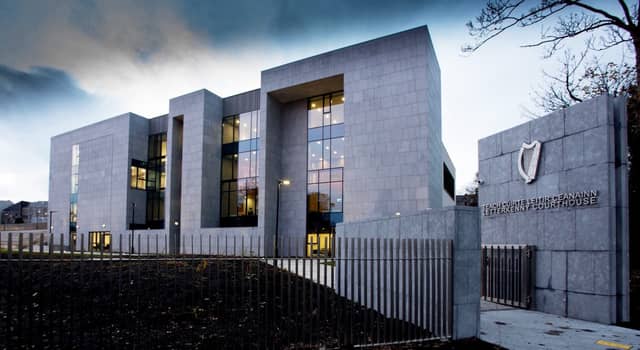

Judge said victim was “fortunate” not to lose an eye
Two men pleaded guilty to separate assault charges from an incident in Ardara that was described as “completely unacceptable.”
Mark Bonner, 24, of Derryhenny, Doochary, and Eoin Kitterick, 25, of Lough Head, Portnoo, attended Donegal Circuit Court, held at Letterkenny Courthouse, before Judge John Aylmer at their sentencing hearing.
Bonner pleaded guilty to the assault of Joseph Melly, causing him harm, contrary to Section 3 of the Non-Fatal Offences Against the Person Act 1997, and Kitterick pleaded guilty to a charge contrary to Section 2 of the Non-Fatal Offences Against the Person Act 1997, for an incident on Front Street, Ardara, on June 7, 2021.
Judge Aylmer handed Bonner a two-year sentence, suspended for two years, and deferred a conviction for Kitterick, invoking Section 100 of the Criminal Justice Act 2006, deferring a €1,000 fine on the condition that he is of good behaviour, until December 8.
Bonner voluntarily transferred €10,000 in cash to the victim, who had to be taken to Sligo General Hospital after the incident, as a “token of his remorse,” whilst Kitterick voluntarily transferred €3,000.
Sergeant Garda Maurice Doyle helped outline the prosecutor's case with questioning from State Prosecutor Fiona Crawford BL, and Judge Aylmer.
Ms Crawford said the victim was on a night out in Ardara, and remembered “a crowd around him” and remembered the names of Mark Bonner and Eoin Kitterick.
She also said a witness “observed two males striking a male in a white t-shirt, by punching him up against a car,” and that Mr Melly had “a deep cut and his eyes were swollen and bleeding.”
The court was then shown three CCTV videos of the incident, which were commented on by Garda Doyle.
The Judge said that Melly was sitting with his girlfriend, and a friend had tried to keep Bonner away from Melly, but “he didn’t succeed on that,” to which Garda Doyle answered “yes”.
Ms Crawford stated: “I think there were seven blows from Mr Bonner.”
Garda Doyle responded: “Yes, Judge. The one that did the most damage was an uppercut, and you can see Mr Melly was staggering after that blow was delivered. That was where the damage was done.”
The Judge asked if punches “were aimed at the face and neck area,” if they caused “significant injury to the left eye,” and if they were the “consequences of the punch.” Garda Doyle answered yes to all the questions and outlined that it was the uppercut that caused the “significant injury.”
Defence Barrister for Kitterick, Damien Crawford BL, told the court that his client arrived by another vehicle after the altercation had started.
“Mr Bonner,” said Garda Doyle, “did admit being involved in an altercation but said it came from an earlier incident in the pub. The injured party was mistakenly associated with comments made to Mr Bonner. Those comments were not made by Mr Melly when, in actual fact, he was trying to keep the peace.”
The court heard that both defendants had no previous convictions.
Defence Barrister for Bonner, Simon Gillespie BL, then spoke in court. He said: “For context, Covid restrictions were in place with social separation. I think your colleague took a statement from one of the patrons of the day. It was Bank Holiday Monday, the first day the pub had reopened. It didn't seem serious; it seemed friendly. It seemed to get heated and there was a shove.”
Mr Gillespie said a witness commented: “There was a bit of slagging. I don't recall exactly what was said. There was a bit of slagging, a bit of banter, but certainly would be between different groups at the beer garden. Earlier in the day.”
Garda Doyle replied: “Yes”
“We have heard the evidence that said Mr Bonner initially ran away from the scene,” stated Mr Gillespie.
Garda Doyle responded: “The Garda car arrived and at that stage, Mr Bonner ran away from the scene.”
Mr Gillespie continued: “Mr Bonner's brother said he was concerned for his safety and went to a wooded area and found him. He apologised for running away, said he panicked and said he was wrong.
“He gave a prepared statement, which he alleges was that when he was speaking to Mr Gallagher, Mr Melly said 'I will do nothing without your older brother' and at that point he saw red.
“When CCTV was viewed by Mr Bonner, he realised it was not a case of self-defence.
“Mr Bonner was drinking on the day in question.
“You are aware that Mr Bonner and Mr Melly met a couple of months after that incident. They had words, and there was no animosity after that.”
Garda Doyle replied: “They spoke and had a conversation with each other, and there was no animosity.”
Mr Crawford then spoke. He confirmed with Garda Doyle that Kitterick had arrived after the altercation.
He said: “He delivered a prepared statement and made certain admissions. It was more than that. For example, people making threatening statements to him (Mr Bonner), the bar intervened to tell them to calm down.
“Mr Melly was one of the people that he perceived to be acting aggressively before him.”
Garda Doyle answered: “He perceived that.”
Mr Crawford described Kitterick’s statement, which described how he left Bonner with another man, and was driving on the street to pick them up, when “I saw two people fighting in the street. The intimidation and threats were still fresh in the mind, and I feared for Mark. This was all in an instant. I just knew I had to protect my friend against a bigger and stronger man.
“I remember hitting Melly on the stomach a few times to get him off Mark. It was all over in a few seconds, and it was a bit of a blur.
“I cooperated and explained the situation truthfully.”
Mr Crawford continued: “He thought it was his friend in a fight with Mr Melly, and he wanted to assist his friend.
“He recalls there was tension between a group of Ardara boys and Mr Kitterick and Mr Bonner. Is that a fair statement?”
Garda Doyle replied: “Yes, but there is also an opinion that at all times, the injured party was trying to keep the peace.”
Bonner then took to the witness box and took questions from Mr Gillespie. He said he felt “disgust” and “embarrassment.”
He stated: “What happened was not a true reflection of who I am. It is something that I think about nearly every day.
“I apologise so much to him. If I could turn back the clock, I honestly would. It should never have happened. Violence is not the answer.”
Mr Gillespie told the court: “Mr Bonner is still a relatively young man. I am going to submit to you that from his manner, he is a genuine and hard-working young man. He is qualified as a plumber.
“No doubt about it, it is a very serious incident with very significant injuries. The court has heard Mr Bonner's very real remorse. Drinking is a context, but it is never an excuse. Mr Bonner accepts that. I ask the court that Mr Bonner initially panicked and his brother, being a stable influence, put matters right on the night and made sure he cooperated with Gardaí, which he did, and made an early guilty plea.
“The apology is a wholesome apology. He means it, and to show he means it, over the course of 18 months, worked hard and saved €10,000. That is a sum of money that is significant.
“His own words describe how he feels. He said he was disgusted, embarrassed and not reflective of who he is. This was entirely out of character for him.”
Character references for Bonner, from Na Rossa GAA and Father Edward Gallagher in Lettermacaward, were highlighted by Mr Gillespie.
Mr Gillespie concluded: “He accepted that his behaviour was unacceptable and since then he had committed himself to his work, his health and fitness, and his relationship.
“The out-of-character note, in itself, that the court considers a non-custodial sentence. The token of remorse is a genuine token. All factors which are going to be a punishment of rehabilitation (visa travel), and ask that you be as lenient as possibly can be.”
Regarding Kitterick, Mr Crawford said: “He is a qualified carpenter. He is currently in Edinburgh. He is hard-working and has been in self-employment. He had not come to any negative Gardaí attention and cooperated at the scene with Gardaí at all times.
“This involvement was mistakenly believing his friend was under attack rather than the other way around. He felt under threat, as did Mr Bonner and other people.
“The circumstances of tension when he came on were that there was an incident. It was a mistake that could be understood in that way.
“Punches to the torso, so he said, it was to get Mr Melly to stop attacking his friend.
“None of those actions was premeditated.
“He was not drunk on the day. His involvement in the matter is of a significantly different nature.”
In giving his sentencing, Judge Aylmer said: “It was Mr Bonner who commenced the assault. It does seem that, clearly, he had been drinking. That provides no excuses.”
Judge Aylmer said it was clear there were efforts to keep Mr Bonner “away from Mr Melly but having gotten past him, proceeded to punch him in the face and head a number of times across the street. One of the punches landed very solidly, causing damage to Mr Melly. It was very fortunate that the damage was not greater, and he didn't lose an eye.
“It was a very purposeful, albeit drunken, attack, and you are fortunate that the injury was not more serious.”
Judge Aylmer highlighted that the maximum sentence at the time of the incident was five years imprisonment, and has subsequently been extended to 10 years, and stated that Bonner’s actions would merit a sentence of a three-year imprisonment.
He continued: “Mitigating circumstances, you were very young at the time. 19 years of age. No previous convictions, and you have since qualified as a plumber.
“I listened to you from the witness box, and it is clear you are genuinely remorseful. It was entirely out of character, and you have not come to any adverse attention since.
“While you initially panicked and ran from the scene, it was not long before you were found with the assistance of your brother. Thereafter, you did everything in the proper manner.
“I accept an early plea in the circumstances. You have saved €10,000 as a token of your remorse. You display an appropriate level of empathy and disgust at the matter in question. I note the contents of the two character references and that you are a person who enjoys excellent family support, in the circumstances that you sadly lost your mother at 14 years of age. In those circumstances, it would be two years' imprisonment.
“The court has dealt with a person without a previous conviction in a serious offence, completely out of character. The court takes the view that, given the exemplary behaviour since, the absence of previous convictions, and you have come to court with such a significant sum to demonstrate your remorse, I will suspend that two-year sentence for a period of two years.”
Regarding Kitterick, Judge Aylmer said: “I accept that the role is very different.
“You arrived very late upon the scene and so far as it was going on, and jumped to conclusions, and accept that you may have concluded incorrectly, that it was your friend under attack.
“Your error was to plough in flailing punches. I know they were to the body, and fortunately, no great damage appears to have been done, resulting in any injury.
“Nevertheless, it is something capable of indicating a custodial sentence, although in your case, you were a person who had no previous convictions and you have qualified as a carpenter since.
“Again, this was a complete aberration. A hard-working man in Liverpool and now in Edinburgh. You were fully cooperative with the investigation and, having prepared a statement, didn't seek to evade your culpability and gave a full and frank description from your perspective, which is understandable.
“Imposition of a fine rather than a custodial sentence. Maximum fine of €1,500. But, I think taking into consideration all the circumstances, the court is minded to reduce the fine to €1,000.
“This was a case that the court has to consider the consequences of conviction for you. What you should be burdened with, when in your head, you believed it was your friend under attack. It would give rise to a very significant price if you were not free to travel.
“I am going to make a condition that you keep the peace and be of good behaviour during that period. If you don't, I am going to impose a fine of €1,000 on that date, which gives rise to a recorded conviction.
“Of course, I noted the €3,000, which would be twice the normal fine and will be transferred to Mr Melly.”