

New nature/travelogue book on birds features on an increasingly rare visitor to Donegal
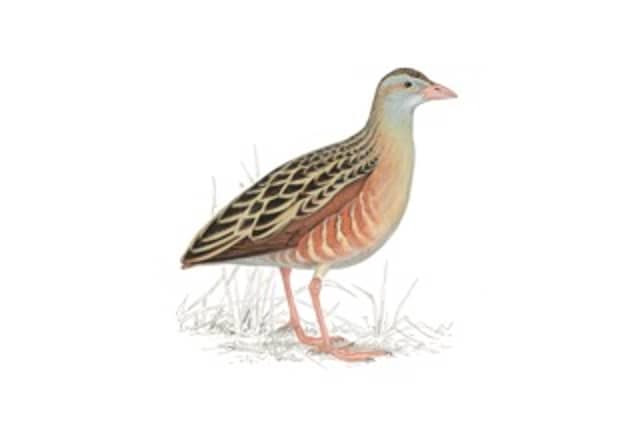

Tory has long been a site of ornithological renown. Its strategic position makes it an ideal stopover during migration season. But during summer the island is one of the last strongholds of one of the rarest breeding birds we have: the corncrake.
In 2016 Wicklow man Conor O’Brien had a notion that would ultimately take him all over Ireland, across the four provinces and take two years to complete. His idea was to seek out 12 of our rarest or most elusive birds, species that had eluded him on all of his previous forays across Ireland. It was a quest that would test and try him – while also opening his eyes and ears to the beauty, variety and history of our island. His journey would conclude with the recent publication of a truly beautiful new book entitled: Ireland Through Birds - Journeys in Search of A Wild Nation.
In this special article for the Donegal Democrat, Conor tells us about his time on Tory Island where he sought out the elusive Corncrake:
In 2016 I had a notion that would ultimately take me all over Ireland, across the four provinces and take two years to complete. My idea was to seek out 12 of our rarest or most elusive birds, species that had eluded me on all of my previous birdwatching forays across Ireland. It was a quest that would test and try me – while also opening my eyes and ears to the beauty, variety and history of our island.
Finding birds in Ireland can be as hard or as easy as you want it to be. With just a little temptation – fruit, seeds, even a bowl of water – you can lure all sorts into your garden. Take a stroll to your local park, pond or seafront and you’ll tick off a few more species. But there are some birds that just can’t be found without investing more time and covering more miles.
In my case, this meant hopping on buses and trains to the four corners of Ireland, enduring all weathers from the warmest days of summer to driving winter rains in search of Some are highly localised, some extremely shy. Others require a massive rub of the green. They include top predators of day and night; migrants who cross continents to be here; sea-going pirates; underhanded nest parasites; songsters of the high mountains; and ingenious forest dwellers. All of them beautifully adapted to vastly different lifestyles.
A journey searching for each one was an adventure – and in each case, as with birdwatching anywhere, you never knew what might turn up. This is the real beauty of looking for birds. Plenty of times I’ve found myself wondering why I left a warm bed on a cold winter’s morning to go exploring a windswept wetland or forest pelted with rain. But, if you’re treated to a glimpse of a new or elusive species, however brief, you soon forget any hardships that led you to it.
The other great joy of looking for birds in Ireland is the places your journeys bring you. With the complexion of our birdlife shifting with the seasons as migrants come and go, searching for birds lets you relish Ireland at all times of year. A birdwatching quest across the country can take you from the windswept isles of Donegal to the towering mountains of Kerry, from the bogs of the Midlands to the urban parks of Dublin. And you get to enjoy a staggering array of new places in the process. What better way to discover the natural beauty and rich history right on our doorstep.
One of the places I was most determined to visit was Tory Island off the northern coast of Donegal. As well as a place of staggering, haunting beauty, with commanding views over the mainland, Tory has long been a site of ornithological renown. Its strategic position makes it an ideal stopover during migration season. But during summer the island is one of the last strongholds of one of the rarest breeding birds we have: the corncrake.
There was a time when the unique call of the male corncrake rung out on farms right across the country. The corncrake was as integral a part of the summer experience in rural Ireland as the swallow is to this day. As recently as the 1970s it was a confirmed breeder in every Irish county. However, the onset of mechanised agriculture and the transition from haymaking to silage farming took a devastating toll on the bird. With ideal nesting conditions depleted, the corncrake is now largely restricted as a breeding species to remote outposts on the north and west coasts.
Tory Island is one of them. Here, from deep within the safety of the nettles, the male corncrakes still let loose with their relentless crek-crek cries. It’s far from the most beautiful call in the avian pantheon. But it’s nothing if not effective. Traveling far across the island, the calls serve to summon females within earshot to them. But although male corncrakes like to be heard, I soon discovered that they are not the easiest of birds to see. Furtively clinging to their hideaway amongst the undergrowth, they use secret tunnels through the nettles and long grasses of Tory to move unseen through the fields, frustrating my attempts to pick one out through my binoculars. Further proof that, when birdwatching, few good things come without patience.
Searching for my first corncrake was just one of the unforgettable wildlife journeys that awaited me – and could await you. For away from the increasingly urbanised Ireland we call home there still exists a wild country just waiting to be explored – one valley, forest and mountain lake at a time. And there’s plenty more still to be seen.