

Nine million litres of raw sewage flowed into River Finn after plant fault went undetected
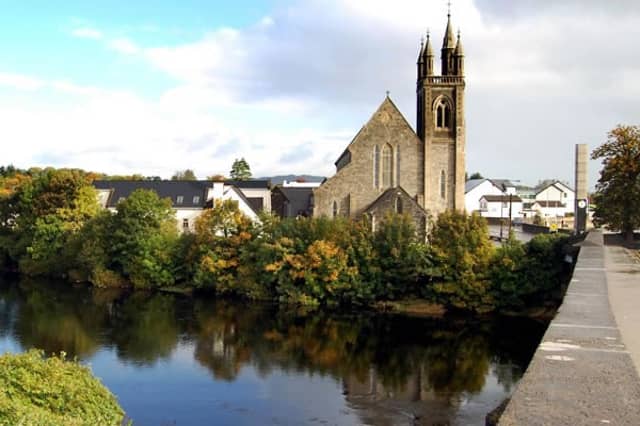

Environmental Protection Agency report highlights the ongoing problem of untreated sewage being discharged into waters at Moville and Falcarragh
The failure to ensure adequate staff cover during a period of annual leave led to more than 9 million litres of raw sewage flowing into the River Finn when a fault at the Stranorlar Wastewater Treatment Plant went undetected for almost a week last summer.
The Environmental Protection Agency (EPA) highlighted the incident in its report on urban wastewater treatment for 2025, published this week.
The EPA says the fault, which occurred between 6 and 11 August 2025, is a prime example of pollution caused by equipment breakdowns and inadequate operation and maintenance. The agency says there were more than 600 such incidents in 2025 across the country's network of 1,100 wastewater treatment plants, a level it considers far too high.
“Many environmental incidents could have been prevented, and environmental risks mitigated, by better management,” the EPA said. “Uisce Éireann must address this without delay.”
Uisce Éireann, which operates the Stranorlar Wastewater Treatment Plant (WWTP), said a sensor fault activated the emergency overflow, leading to the uncontrolled release of sewage into the River Finn from August 6 onwards. Due to annual leave, the alarms were not communicated to relief personnel and the issue went undetected for a further five days.
Some 9 million litres of untreated sewage - enough to fill the swimming pool at the Finn Valley Leisure Centre 20 times over - flowed into the Finn during the incident.
An electrician rectified the issue on August 11, and Uisce Éireann reported the incident to the EPA one week later.
In its annual report on the state of urban wastewater treatment across the country, the EPA says the delivery of infrastructure needs to be accelerated, while improvements must also be made to the operation and maintenance of existing treatment plants. This is necessary, the agency says, not only to protect the environment but also to support housing development and sustainable economic growth.
There were some positive developments for Donegal acknowledged within the EPA report. A new treatment plant at Tirroddy came into operation last year, ending the discharge of untreated sewage from Rathmullan, Ramelton and Milford into the Swilly Estuary, which had also contributed to pollution at Maggy’s Burn and Lough Fern.
The EPA had previously prosecuted Uisce Éireann for failing to provide adequate wastewater treatment for the three towns. A new plant, along with pumping stations and rising mains, was completed in late 2025. The new WWTP is designed to meet the EPA’s effluent quality standards and is helping to protect water quality and the local environment.
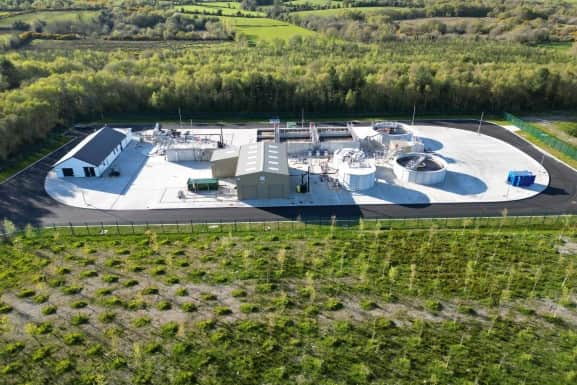
While that is a success story, the towns of Falcarragh and Moville are among 11 urban areas across the State still discharging raw sewage into nearby waters because their public sewers are not connected to wastewater treatment plants.
Uisce Éireann's plan to construct a WWTP at Carnagarve, near Moville, has met with local opposition and has been referred to the High Court for a judicial review.
The proposed plant would discharge treated effluent into Lough Foyle, but opponents want the plan scrapped, with a new treatment plant built at Greencastle and its discharge directed into the Atlantic.
In the meantime, Moville remains the only large urban area in the State without wastewater treatment. The other ten areas - in Clare, Dublin, Galway, Limerick, Mayo and Wicklow - are villages.
The EPA report also highlights problems with wastewater treatment at Kilmacrennan, Bridgend and Burnfoot, which are among 35 'priority areas' across the country.
The agency says treatment must be improved at each of those locations and acknowledges that work to upgrade infrastructure is already under way at Kilmacrennan.
There is no timeline or schedule for upgrade works at Bridgend or Burnfoot, where future housing developments have been put on hold.
Meanwhile, infrastructure improvements are needed at the Donegal Town WWTP to protect freshwater pearl mussel habitats. The EPA says the necessary works have not yet commenced, but the scope of the improvements is under development.