

The Donegal Historical Society will look into Lifford’s story this Sunday
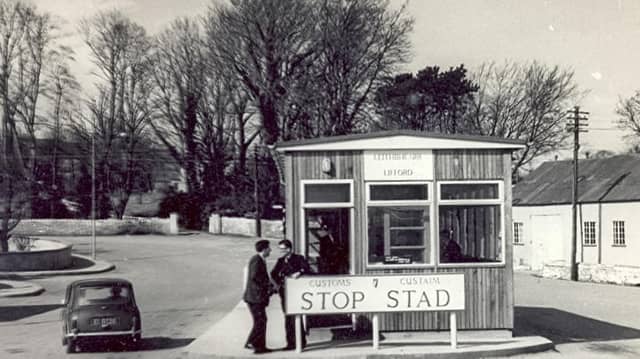

Lifford has long been the administrative capital of the county - Its location, on the border where the rivers the Finn and the Mourne meet to form the Foyle, has led to it being described as the ‘gateway to Donegal’
Lifford is the location for the latest Field Day of the Donegal Historical Society on Sunday – and the guide for the day, Seán Boner, says there’ll be plenty to talk about.
The meeting place is the public car-park in the Diamond at 3pm. Seán describes Lifford as “one of the more interesting towns in Donegal from a historical point of view”. It has an old courthouse, it had a jail and “it is a place where old ghosts meet, as the poet once put it”, he says.
Lifford has long been the administrative capital of Donegal. Its location, on the border where the rivers the Finn and the Mourne meet to form the Foyle, has led to it being described as the ‘gateway to Donegal’. It was once the location of a renowned castle of the county’s ruling clan, the O’Donnells.
Seán adds: “Lifford had many personalities that get mentioned in the pages of Donegal history, from the O’Donnell chieftains of the Middle Ages to the more recent celebrities from the worlds of sport, the media or music. Just outside the town, at Murlog, is one of the seven Liam McCormick churches in the county.
“And, of course, people have been going to the dogs in Lifford for years. For fishermen, the Finn and the Mourne are salmon rivers of significance.”
Lifford’s importance to the history of the county will be given a boost soon when the museum of the Donegal Historical Society is opened in the old Courthouse, which is now owned by the County Council. The museum was hosted for many years in the friary in the Rossnowlagh through the generosity of the Franciscan Order.
The Field Day on Sunday will finish with tea, coffee and snacks in the courthouse. Seán concludes: “Bring suntan lotion and a light raincoat. Judging by the summer we’re having you’ll need both.”