

When Ireland changed - the flight of the Earls
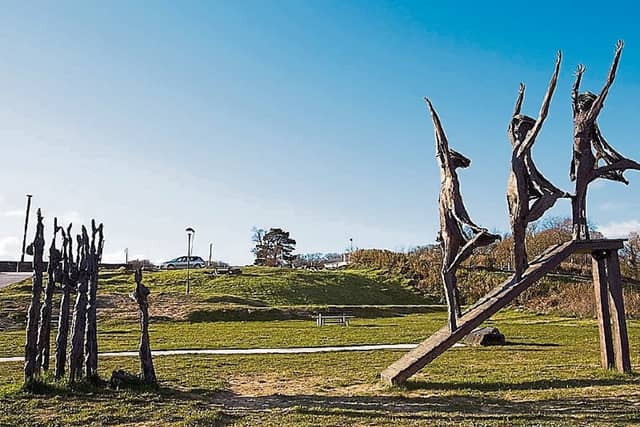

The Flight of the Earls occurred in 1607 when prominent Gaelic chieftains, including Hugh O'Neill and Rory O'Donnell, secretly left Ireland from Rathmullan,
September 14 marks the date in 1607 when the last leaders of Ulster’s ancient aristocracy took flight to Europe following their defeat at the Battle of Kinsale. Deeply etched in the memories of people, particularly in the counties of Donegal and Tyrone, it was a defining moment in the shaping of Ireland.
Following the Nine Years' War and fearing arrest and imprisonment by the English, Hugh O’Neill and Rory O’Donnell set sail from Rathmullan accompanied by family members and large retinues.
The intention was to sail for Spain, a strong ally of the Irish against the English. Storms on the way led to the group landing instead in France, from where they were brought to safety in Rome. Both men eventually died in Italy, O’Donnell in July 1608 and O’Neill in July 1616. The defeat and flight of Hugh O Neill and Rory O Donnell had devastating effects and marked a major turning point in Ulster and Irish history. It was the beginning of the Irish diaspora, which has since shaped the experience of so many Irish people over the centuries.
The event could be equated to an army losing its key generals on the battlefield to face the enemy leaderless. The remaining clans felt helpless in the face of English power as they saw the old Gaelic order collapse.
Great families ruled ancient Gaelic Ireland traditionally through a system of patronage, filial loyalty and economic power through the ownership of land. Following the Flight of the Earls and the subsequent plantations, quite different systems and people were to take prominence.
To set the O’Neill and O’Donnell families in a wider context, both families were part of a wide tapestry of family and clan rule across the whole of Ireland. In Leinster, it was the Fitzgeralds and the Butlers; in Munster, the McCarthys, the O’Briens, the O’Sullivans and the O’Driscolls. In Connacht, it was the Burkes, O’Connors, O’Malleys, O’Flahertys and O’Kellys. As can be seen, families have always been important in Ireland- that tradition was firmly laid down in Gaelic Ireland.
Famous O'Neills and O’Donnells abound at home and abroad. The O’Neill diaspora extended to Spain, France, Portugal and the Caribbean. The O’ Donnells made their names mainly in Spain, France and Austria. The Irish state, through the office of the Chief Herald of Ireland, has recognised the leaders of both families abroad as part of Ireland’s heraldic history.
Famous O’Neills have included: Tip O’Neill, former Speaker of the US House of Representatives; American playwright, Eugene O’Neill; Terence O’Neill, former Prime Minister of Northern Ireland; and football greats, Martin and Michael O’Neill. In a spirit of inclusivity, among them could also be included actors Ryan O’Neal and Tatum O’Neal and basketball player Shaquille O’Neal!
The O’Donnells include singer Daniel and the great poet and writer, Peader O’Donnell. The UK has former Cabinet Secretary, Gus O’Donnell. The film business has actor Rosie O’Donnell, formerly in the US but now living in Ireland. Later generations of O’Neills and the O’Donnells also formed part of the many waves of Irish emigration to the US, Canada, Britain and many parts of the former British Empire.
Many have referred to the fact that after the Flight of the Earls, Ireland had no indigenous aristocracy to promote progress and development in Ireland. Most successful European countries from the 16th and 17th centuries onwards relied on key families or dynasties to cement their status as major powers. In those centuries, aristocracies and dynasties mattered, and Ireland no longer had its own and was left rudderless in the face of colonial expansion.
Ruling dynasties were instead imposed from outside. In essence, this was the critical significance of 1607, as Ireland thereafter was never to be the same. Obviously, rule through aristocratic primogeniture is inappropriate for the modern era. However, the times were different in the 17th century. A homegrown series of elite families could have laid the ground for a system more attuned to Irish national and popular interests. It could also have acted as a foundation and springboard for Ireland’s future development, but was sadly allowed to wither on the vine for centuries.
In the year 2007, the 400th anniversary of the Flight of the Earls was commemorated through many official events. Then President, Mary McAleese, unveiled a statue on the quay at Rathmullan on 14 September of that year. This was followed by a ship regatta, fireworks, conferences and lectures. The Cardinal Tomas O’Fiach Memorial Library and Archive in Wexford also organised talks and outreach programmes in that year. In 2008, an Irish choir attended a commemorative musical event in Rome, the destination of the two Earls.
As was the case with much of Irish history, the Flight of the Earls was a sad event about loss and dispossession. It was a landmark event in our history and one worth commemorating not in a bitter or vengeful way, but as part of the deep fabric of our past. True to the turning point it was, the country was never to be quite the same subsequently.
Paul McElhinney is a writer/journalist based in Wexford. His main interests are in history, politics, sport and culture. His family originates from Donegal and Derry