

Wind farms of the future to use fewer but much taller turbines

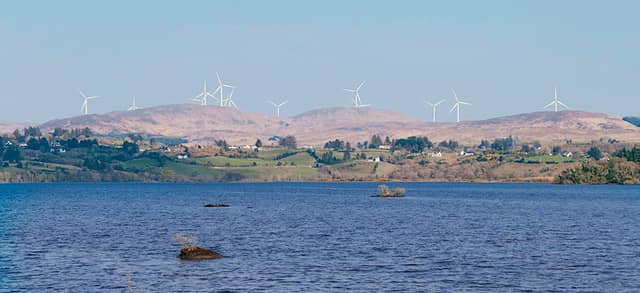

Donegal wind farm is the first repowering of an existing wind farm in the country to be given the green light
New wind turbines built at existing wind farms in Donegal in the coming years will be multiple times taller than those they replace with operators choosing taller turbines that produce cheaper electricity.
An Bord Pleanála has granted planning permission for the repowering of one of the oldest wind farms in the county at Barnesmore.
Scottish Power Renewables has been given the go-ahead for the decommissioning and removal of 25 wind turbines which were granted planning in 1996 and their replacement with 13 turbines which will be three times the height.
First in the country
The project is the first repowering of an existing wind farm in the country to be given the green light.
The 180-metre turbines will increase the overall generating capacity of the wind farm from 15 megawatts to potentially over 70 MW.
The development was dealt with by An Board Pleanála as a strategic infrastructure application meaning the application did not go before Donegal County Council.
In a submission, Derry and Strabane District Council said the proposed 180-metre turbines, which will be close to Donegal’s border with Tyrone, would be more appropriate in a marine setting.
Two options
Justin Moran, head of communications and public affairs with Wind Energy Ireland, said that owners of wind farms that are coming close to the end of their life have two options, decommissioning or repowering.
Some projects will not be suitable for repowering due to residential developments in the years since their construction but other projects will suit repowering by increasing the height of the turbines but reducing their number, he said.
“As more Irish wind farms get older, we expect and hope to see many more repower in the years to come. Repowering projects means that the existing grid and physical infrastructure can be reused. This reduces the cost of generating power, and therefore electricity bills, and minimises impact on the environment.
“It’s a very broad rule of thumb, but the taller a turbine is, the cheaper and more effectively and more efficiently it produces energy," he said.
“That’s why when people look at off-shore wind turbines, you can build them at a huge height and that’s why they can generate 10, 12, 14 megawatts of electricity. The smaller the turbine is, typically the more expensive the power produced by those turbines is because you don’t have the height advantage. These days, if you were building a turbine, a 150 metre turbine ,if you were putting in a planning application, would be considered very much on the low side - most people will be going for 175, 180, maybe higher than that.
“When you repower, what you will be doing is reducing the number of turbines but replacing them with substantially taller turbines.”