

DONAL REID COLUMN: The story of South African rugby captain Siya Kolosi
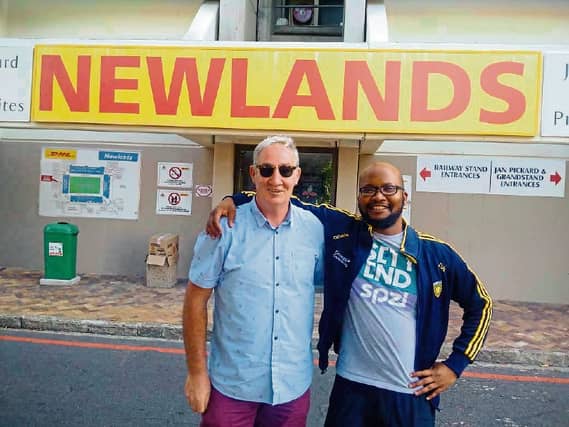

Newlands, Cape Town. December 10th 2019. I’m back in the ‘Mother City’ of South Africa. Newlands is the home of South African cricket and rugby. As one would expect, this city is buzzing with excitement after the country’s sensational success in last month’s Rugby World Cup in Japan. The first time that South Africa achieved this feat was back in 1995, just a year after Nelson Mandela became the first black president of the country. It was a monumental occasion for not only South Africa but for the world at large.
This year’s victory is no less poignant because the South African rugby team was captained by its first ever black player, Siya Kolosi. I’ve been visiting this country for over 20 years and I’ve witnessed many changes cosmetically but behind the camouflage, little has changed. Kolosi’s captaincy is massive news here. His local club is Cape Town Stormers who are located here in Newlands where I’m staying with my Lesotho friends. Kolosi’s story is truly inspiring which has given the black population hope, not only in sport but in life in general.
Nelson Mandela was released from Victor Vestor prison on the 11th February, 1990. It is situated between Franshoek and Paarl about 40 miles east of Cape Town. It is a low security prison where I’ve often seen hordes of inmates in their orange uniforms working in the prison fields. Mandela spent 18 years in prison on Robben Island, 6 years in Pollsmoor Prison and did the ‘Long Walk to Freedom’ from Victor Vestor prison after 14 months there.
Who can ever forget Mandela, wearing the number 6 jersey of the captain Francois Pienaar, coming on to the pitch after the rugby World Cup victory in 1995 in Johannesburg to congratulate the team? Nelson Mandela was a shrewd, articulate and an intelligent man. This was a political masterstroke.
However, huge problems for Mandela and South Africa lay ahead. Corruption, cronyism and poverty is still rife in this scenic and picturesque rainbow nation. Besides the racial inequalities, there exists a liberal Marxist ideology. The country is enslaved where the power of the nation lies in the hands of a few. Crime, murder, car jackings, drugs, alcoholism and prostitution are an everyday reality.
Siya Kolosi grew up in the impoverished Zwide township outside Port Elizabeth and endured a tough upbringing. Kolosi's mother, Phakama, was 16 when Siya was born and his father, Fezakele, was in his final year of school. Kolosi's mother died when he was 15, leaving his late grandmother, Nolulamile, to raise him. Townships, also known as ‘informal settlements’ is where the majority of black people live. It’s hard to imagine how people survive in such squalor. I have been to many of them and what I witnessed shocked me.
Siya Kolosi could have gone down the road of crime and drugs. However, he escaped because of his interest in rugby which was, until the dismantling of apartheid, a ‘whites’ only game. At the age of 12, he impressed scouts at a youth tournament and was offered a scholarship at Grey Junior in Port Elizabeth. He was subsequently offered a rugby scholarship to the prestigious Grey High School.
He went on to represent the South Africa national under-18 rugby union team (SA Schools team) for two consecutive years. Kolosi made his senior debut for Western Province rugby team in 2011 and moved to the Cape Town the following year. He joined the South African national team in 2013 and made his debut against Scotland at the Mbombela Stadium in Nelspruit. He replaced the injured Arno Botha in the 5th minute and was named as Man of the Match as South Africa won 30–17.
He made a huge impression wherever he went and was selected as captain of the Stormers team in 2017. He was selected as the new captain of the Springboks on 28 May 2018, becoming the team's first black captain in its 126-year history by team coach Rassie Erasmus who coached Munster 2016-2017. Siya Kolosi is married to Rachel Smith and have two children. Rachel is a white woman which doesn’t sit well with some bigots here in South Africa.
So, if South Africa is such a dangerous country with so many problems, then why do I come here? Well, it’s life on the edge. I have friends here who are good to me and who have educated me about humility and shown me the other side of a country that the tourist board doesn’t want visitors to see. The natural beauty of the Western Cape is unparalleled by another other place on earth that I’ve seen.
The complex mix of races and peoples with varying cultures makes South Africa one of the most intriguing countries in the world. Today we have a clear azure blue sky. A soft south-easterly breeze cools the hot summer southern hemisphere air. Magnificent expansive white powdery beaches gently meet the turquoise waters of the Indian Ocean.
I stay alert though and as always, I’m keeping the faith!