

READ THE REID: Commitment for intercounty football just not sustainable
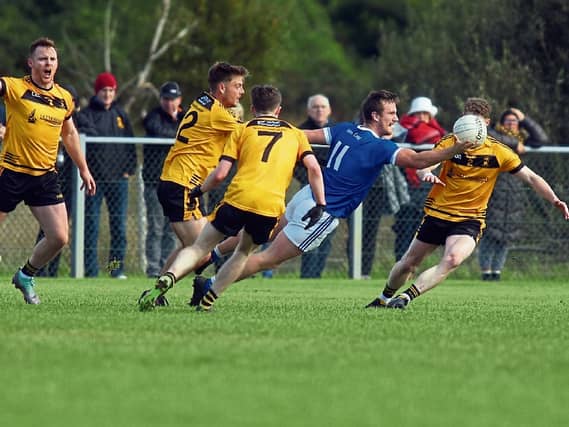

The Donegal Senior Football Championship is now down to the last eight after last Sunday’s series of games. The stand-out tie in the quarter-finals draw is surely Kilcar versus Glenties. Gweedore, who are still the favourites to win the championship outright, will play Bundoran. Glenswilly are matched up with Four Masters while St. Michael’s will take on McCumhaill’s. The Twin Towns team are probably the surprise package in the mix. They have been making steady progress recently having already gained promotion back to Division 1 after many years playing in the lower grades.
While the club championships are taking place all over the country, a very newsworthy item in relation to the inter-county scene emerged just recently. According to The Economic and Social Research Institute (18th September 2018), “GAA players can spend up to 31 hours per week on their senior inter-county commitments and compromise on other aspects of their lives to do so…In spite of the time commitments, very few players cited ‘too demanding’ as their reason for ceasing playing. The research revealed that the vast majority of 2016 players were glad that they made the choice to play senior inter-county.
“The benefits they identified from playing included the opportunities to build leadership skills, self-confidence and professional connections…Players compromised on sleep, with almost half not getting the eight to ten hours recommended for athletes on a pitch-based training day. The injury rate was higher among players getting seven or less hours sleep. Players’ mental wellbeing was poorer than that of the general population, especially when compared to those of a similar age. Suboptimal sleep may be contributing to their poorer mental wellbeing, although players also reported inter-county stresses such as finding the time commitments to be too much, that too much effort was demanded of them and that time away from family and friends was a downside of playing at this level.”
Is this type of lifestyle sustainable going forward? 30 years ago, I ate and slept Gaelic football but it certainly was not as intense or demanding as the modern-day game. As a professional physical therapy clinician, I am now treating much younger athletes than I did 20 years ago. I appreciate that sports people take care of themselves much better nowadays. However, my personal experience relates to the amount of time that adolescents and young adults are putting into sport in general. Many are playing both soccer and Gaelic football for their clubs and schools. Some are drafted into academies and development squads if they are identified as having potential. Parents are constantly on the move transporting their children from one venue to another. It’s exciting and time consuming. The downside is burnout and injury. By the time, the athlete reaches adulthood and settles on one discipline, the potential for damage both physically and mentally is increased.
I believe that our educational system is focused too heavily on academics. Not everyone is going to need a degree to be successful or reach their potential in life. Our young people are being pushed by a subtle system in a robotic manner.
In April 17th, 2017 Carl O’Brien wrote in the Irish Times:“Far from being spaces for free inquiry, the modern classroom, say many critics, resembles a military training ground where students are drilled to produce perfect answers to potential questions based on examiners’ marking schemes.”
Schools kill creativity. Students are not given possibilities to explore their areas of interest deeply, as they are forced to follow an extremely structured course of education. There is pressure on both the students and teachers to attain CAO points. It’s not their fault. There should be less time pushing an EU agenda of control and conformity and more time allotted for activities that are of genuine interest to the students. Of course, the core subjects and the sciences matter but, what about the Arts, Music, Dance and even physical education.
Have you ever wondered why we rarely have world champions in sporting disciplines? I’m a keen fan of athletics. I know who are the brightest and most talented athletes in Ireland. When they go on the European or World stage, they fall embarrassingly short. Again, this blame cannot be apportioned to the athlete or coach. It comes down to funding. Compare us to the UK. Their athletes are constantly and consistently on the podiums in almost every sporting discipline. Funding there starts in the schools and progresses as the athlete does.
When Sonia O’Sullivan and John Treacy were successful for Ireland, we all shared in their glory. Sporting success gives us all a lift. Winning a club championship gives a community a boost. Success come with a price tag though. In Ireland, we want to be successful in sport but, without the proper management in terms of funding from youth right through to adult levels, we will struggle. Our government needs to invest more time, energy and finance into sport and other recreational activities so that our children don’t become robots who aren’t let think for themselves. Let them be creative without the pressure. We live in hope.
Keep the faith!