


Dungloe’s great championship semi-final win over St Michael’s has started a discussion about who was the last team from the club to have reached a senior county final.
The record books show that Dungloe lost out to Sean MacCumhaill’s in 1964 - 60 years ago - and that was recorded in the match reports of their semi-final win.
But since then there has been some debate about whether the team named Rosses Rovers, who were defeated in the final of 1970 by St Joseph’s, should be regarded as the last team from Dungloe to have reached the county final.
Was Rosses Rovers not an amalgamation of players from the Gweebarra Bridge to the Lower Rosses?
Presently there are three clubs covering that area - Na Rossa; Dungloe and Naomh Muire, Lower Rosses. But back in the day, there were numerous club names including Lettermacward, Gweebarra Rovers, St Crone’s, Dungloe, Ranafast, Rosses Rovers and Templecrone. Dungloe was always the focal point and many of the players from that area played for the other clubs - when needed.
This was a team, according to Jimmy ‘Greaves’ O'Donnell, that didn’t actually have a man from Ranafast on it! “The only panel member from Ranafast was Fr Lorcan Sharkey, who is now the parish priest in Glenfin,” says O’Donnell.
Around that time, too, Lettermacaward had a junior team and O’Donnell remembered playing for them as well. It was nearly a first come, first served situation. Indeed, Lettermacaward and Dungloe met in the Junior championship of 1968, and most of the players involved were with Ranafast the following year.
To get a sense of the geography involved there are three parishes - Dungloe (or Templecrone) which includes Lettermaward; Kincasslagh/Burtonport and Annagry/Kincasslagh.
The Ranafast junior championship winners had up to 11 Dungloe players on the team, most notably Sean O’Donnell, who was coming towards the end of his illustrious career, and Enda Bonner, who had just broken into the Donegal senior team.
Their path to the junior final in 1969 saw them come up against a Ballyshannon team that included All-Ireland winner with Galway Sean Meade as well as Pauric McShea, Thomas Quinn and Michael McLoone.
The game was played in Ballybofey but wasn’t finished as a melee broke out near to the end with Ballyshannon leading by a point 3-6 to 0-11.
The teams that day were:
Ranafast: Naul McCole, Jim Boyle, Jim McElwee, Jimmy O'Donnell; Hugh Sweeney, Sean O'Donnell, PJ Sharkey; Packie McHugh, Liam Reilly; Michael Sharkey, Aloysius Bonner, Patrick J McGinley; Ben O'Donnell, Danny Sweeney, Patrick P McGinley. Sub: Denis Ward.
The great Sean O'Donnell - who played for Dungloe, Ranafast and Rosses Rovers
The game was refixed for O’Donnell Park, Letterkenny and Ranafast came out on top by 4-4 to 1-6 with a couple of changes to their line-out:
Ranafast: Dinny Forker, Jim Boyle, Enda Bonner, Jimmy O'Donnell, Hugh Sweeney, Patrick P. McGinley, Ben O'Donnell, Pat Forker and Packie McHugh, Michael Sharkey, Sean O'Donnell, Patrick J. McGinley. Dermot Logue, Daniel Sweeney, Pat Gallagher. Subs.P. J. O'Donnell and Denis Ward for Logue and P. Gallagher.
They went on to defeat St Michael’s, Doe, in the final by 2-9 to 0-10 in Letterkenny and Jimmy O’Donnell says he marked Brian McGinley that day and they became friends for life.
“It was a very tough game but we played very well,” says O’Donnell, whose nickname was earned when he was a goalscoring corner-forward in his youth, after the great Spurs striker Jimmy Greaves. But O’Donnell says he has been a lifetime Manchester United supporter. Ironically when he volunteered for a marking job in Ardara one day early in his career in the junior championship, he became a corner-back for the rest of his career.
The St Michael’s team included Noel Toye (father of Christy) and Mick McColgan, a Donegal senior player. A young Gerald McElwee, who would go on to win an Ulster championship medal with Donegal, appeared for the first time in the winners’ lineout.
The teams in the 1969 Junior final were:
Ranafast: P Boyle; Jim Boyle, Enda Bonner, J O'Donnell; H Sweeney, P McGinley, Liam O'Reilly; P McHugh, P Gillespie; Alo Bonner, Sean O'Donnell, PJ McGinley; Michael Sharkey, D Sweeney, Gerry McElwee.
ROSSES ROVERS
As a result of the win, there was probably a surge of optimism about getting a senior team for the Dungloe area that would be competitive once more. Dungloe had played in the 1969 senior championship in the south-west section without success. The team was probably drawn from the same players that had represented Ranafast in winning the junior championship. This raises the question of whether the Ranafast team was altogether legal.
The Democrat files show that a meeting was called for Kincasslagh Hall in early 1970 and Rosses Rovers was re-formed to include players from all parts of the Rosses.
Fr Seán’s book says: “Dungloe became Rosses Rovers and it was the impressive 100% Rosses men that advanced to the semi-final.”
They defeated another amalgamation, St Bodan’s (northern Inishowen) by 1-17 to 0-5 but were overwhelmed by St Joseph’s (Ballyshannon/Bundoran) by 1-16 to 0-4 in the final.
Jimmy O’Donnell was corner-back, one of 11 Dungloe players on the team.
Could it then really be called a Dungloe team? It wasn’t the same as the amalgamation between Ballyshannon and Bundoran, but in reality it was an amalgamation.
The Rosses Rovers team which played St Joseph’s in the final in 1970 was: Noel McCole; Jim Boyle, Enda Bonner (capt), Jimmy O'Donnell; Jim McElwee, Patrick P McGinley, PJ McGinley; Pat Forker, Pat McHugh; Dermot Logue, Danny Boyle, Aloysius Bonner; Sean O'Donnell; Danny Sweeney, Gerald McElwee. Subs: PJ O'Donnell, M Ward.
The captain of the Rosses Rovers team, Enda Bonner, is adamant that it was a Dungloe team. “The Rosses Rovers name should never have happened. It caused a lot of friction. I always regarded them as Dungloe,” says Bonner, who added that if the likes of the Bonners from Na Rossa had been playing with Dungloe, they would have been in a lot more finals than they have been.
1.
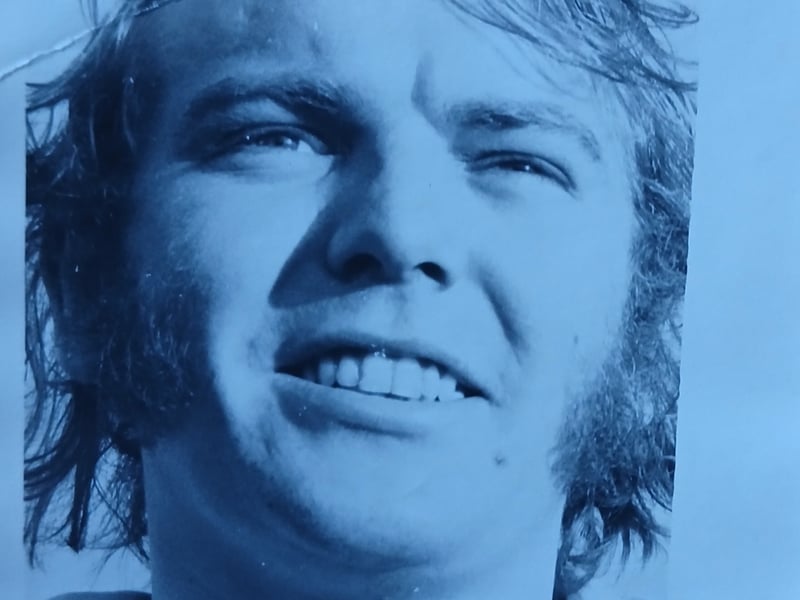
Enda Bonner and Gerald McElwee
2.
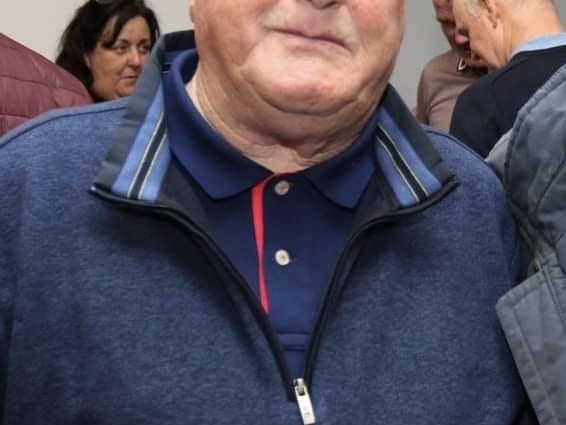
Jimmy 'Greaves' O'Donnell