

'The work being done at the Donegal Academy is second to none'


It's almost two years since Karl Lacey became Donegal’s Head of Academy Development and the diligence of the 2012 Footballer of the Year and a host of volunteers will stand to Donegal football in the long-run
Not long after Karl Lacey hung up his inter-county boots back in 2017 he met the county board official to give his thoughts on where underage development in Donegal was at.
Three years or so later, the conversation was reignited when Lacey, having stepped aside from a coaching role with the senior panel, was asked whether he would be interested in putting some sort of structure on things.
Lacey had been part of Declan Bonner’s backroom for the panel that won Ulster crowns in 2018 and 2019, following a decorated playing career that saw him named as 2012 Footballer of the Year - the same year he won the All-Ireland title - as well as four All-Star awards and three provincial championships.

On the face of it, the project seemed considerable, although Lacey had a rough idea in his head of just how it should be approached. Assurances were required before proceeding and after a couple of presentations to outline his plans, everything was rubber-stamped. By late January 2021 Lacey was appointed as Donegal’s Head of Academy Development and he always felt - whether in terms of players or coaches - the standard in the county was huge.
With the coronavirus pandemic still at an uncertain stage; restrictions were easing and tightening like a belt buckle, Lacey, unable to gather large groups of players in a collective setting, used the time to converse with key stakeholders, coaches, development officers, players past and present.
Donegal, as Lacey says, always had good people and good GAA people; they commonly worked under different umbrellas and, in terms of the county, over a vast geographical area.
At the Academy, the strapline is: “The journey is more important than the destination.” So much has been done already, entering its third year, it's still not far past the baby-steps stage, with the full cycle going to take the full six or seven years after the U-14 first first joined. What is in place now is a framework, reasonably solid in certain ways, yet fluid in others - with everyone learning as they go.
To take a step into the future, Donegal needed to step away from the past where there was a concentration on seeking success in the short-term. To succeed in the medium to long-term, the thought process of those involved would need to consider shared goals, collaboration, pathways. Joined-up thinking was a firm requirement.
The Academy’s prime briefs are to maximise the potential of players, to develop good people, with pride in their identity of being from Donegal, where, as the marketeers put it ‘up here it’s different.’
Talent identification was a concept that brought in aspects like willingness, competitiveness, discipline, focus and attitude. The Donegal Way, or DNA, being worked up in the Academy, contains the facets of commitment to learn, thinking players, adaptability, competitive nature and basic skill under pressure.
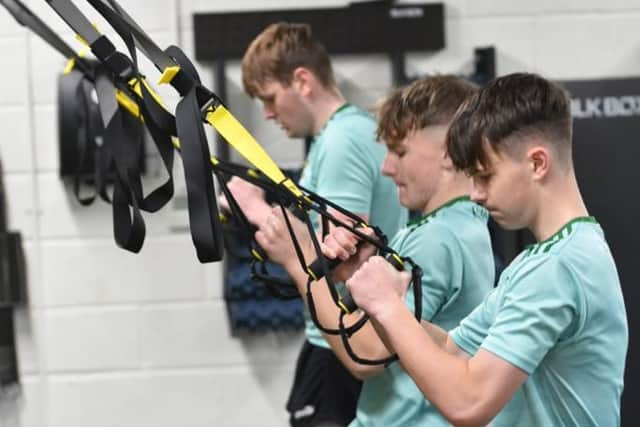
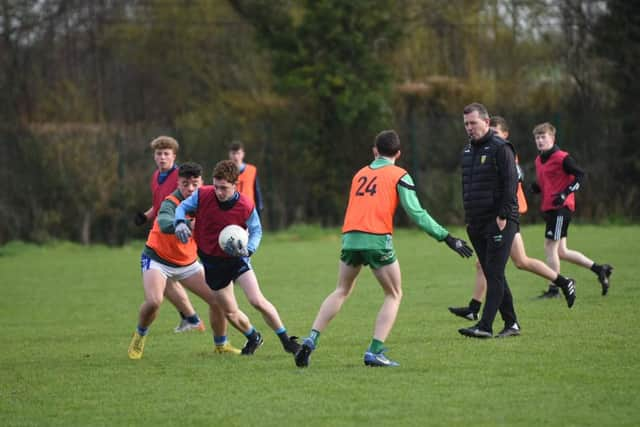
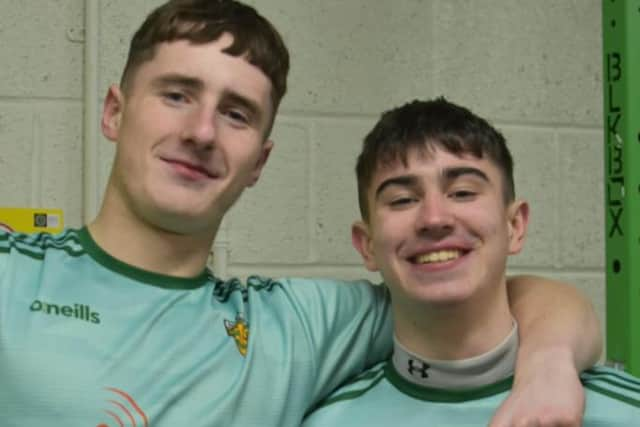
Eighteen months ago, the U-14 and U-15 groups - the youngest of those involved - came together for the first time. The U-14 group were encouraged to wear club gear, with the importance for both players and coaches to pass on the philosophy. The emphasis is that the club is number one and the Academy is to accelerate the development. Children were not discouraged from playing other sports.
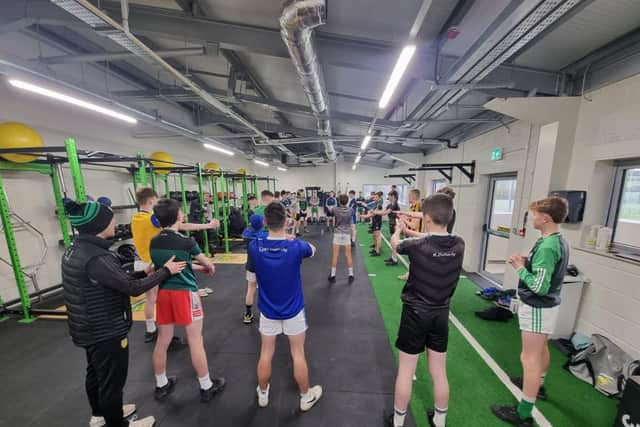
However biologically the range of maturity ranges between -1 year and 2 months to +2 years and five months. This means they possessed individuals who are over a year away from reaching that growth spurt phase and there are other players who are over two years into that development although they are just 14 years of age. So physically those on the plus side will be stronger, faster, more powerful than their peers at the lower end of the scale. With this in mind, empathy is shown to the late developers and they are catered for accordingly.
The invitation and the opportunity was open - sent out to all clubs - with the need at U-14 level to cast the net wide at the talent identification stage. In year one, 2021, the Academy had 201 registered U-14 players and then 252 in 2022.
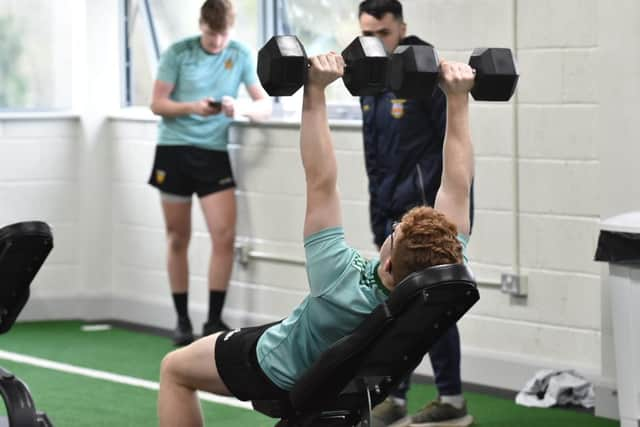
“For us as players, it was a no-brainer to get involved,” says former Donegal captain Michael Murphy, who manages Glenswilly minors. “The work going on at the Academy was fantastic to see. You would always have a fair idea of the younger players in your locality but we could meet with players from all over.
“We got to know these players and the coaches and it was a two-way process with the coach in me learning about technical, tactical and physical aspects. Communication channels are now much clearer between club and county. The Academy has really brought Donegal football to a new level.”
“The senior players are very good with their time and even though some aren’t that much older the academy players, the pathway is there to be seen,” says Noel Scott, vice-principal of Loreto Community School, who have 25 players between the Donegal Academy and the LGFA from eight clubs. “The support systems on offer are excellent, both on and off and pitch and that’s very important.”
There are five sub-academies, which, in terms of numbers for 2023 total 267 at U-14 - Inishowen (63 players), North West (52), East (63), South (43) and South West (46) - which in turn into North (75) and South (50) and then into the centralised all-county group (25). This happens, while the regional bases continued with 30 in each of the North and South sub-academies, meaning there will be 85 players between the three in the U-14 bracket.
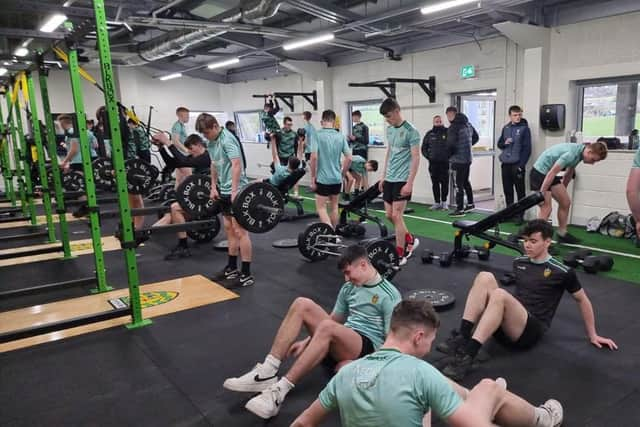
In the years to come these are streamlined into the Talent Development Pathway for U-15, U-16, U-17 and then U-20. Those of the more eagle-eyed might’ve noticed, the plain green U-14 jerseys, which then include one stripe at U-15, two at U-16 and then three by the U-17 age of county minors.
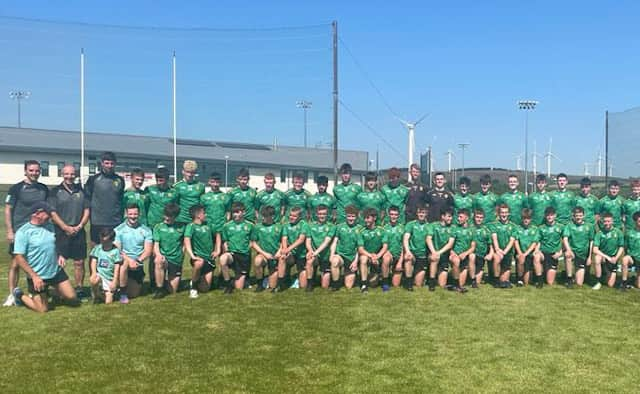
Between August and end of year - or the ‘winter block’ - the transition to U-15 for 2023 has begun. For the 2022 U-15’s, there were 17 talent identification sessions, one internal blitz between the north and south academies, a profiling day, two camp days and six games, five of which were considered competitive.
The group, the door to which remains open, will become more refined and defined in time for U-15, U-17 and U-20, whilst piloting ideas for development to continue at U-18 and U-19.
“The thing about it, the door is never closed,” says Donal Walker, the chairperson of Burt GAA club, who coaches at the Inishowen sub-academy. “We’re constantly on the look-out for talent, whatever age they are.”

If they got picked, they got picked. The selected county panel would give whatever competition they were involved in a serious rattle. No matter what happened, the curtains would be pulled closed for winter and then come the springtime that group - up a year in terms of age groups - might well be working under a different management team with radically different philosophies from their predecessors. They might even start things with another trial match. So on and so forth.

“There is a group of like-minded people, all of whom are open to suggestions,” Donal Walker adds. “Players and coaches are also encouraged to bring back what they learn to their clubs, which is something that has not been forgotten”
Twelve secondary schools serving around the county play host as part of the Schools Programme, where students from nearby schools are welcome for coaches, who attend two days a week for athletic development.
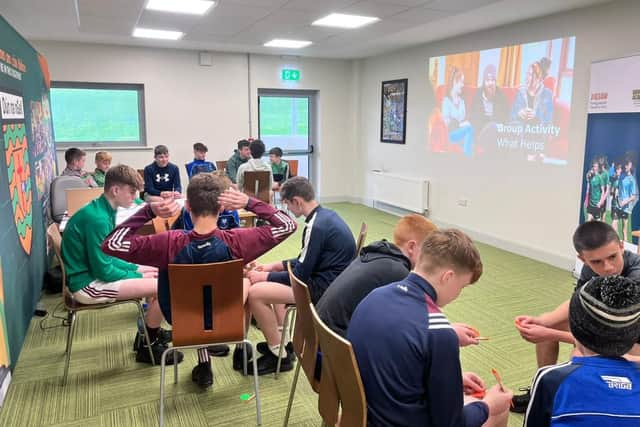
Through an educational partnership with ATU Donegal, the Schools Academy Team is headed by Rosses Community principal John Gorman. Their remit is more than football development, with emphasis on one of the pillars - to develop good people - with assistance provided on subject choices and career choice, with guest speakers and consultation with parents part of the process.

The Academy last month, thanks to Kevin Mills, who heads up health and wellbeing, got into partnership with Jigsaw Donegal, who provide a free and confidential support service for young people. Their aim is to make sure that young people’s voices are heard, and that they get the right support, where and when they need it.
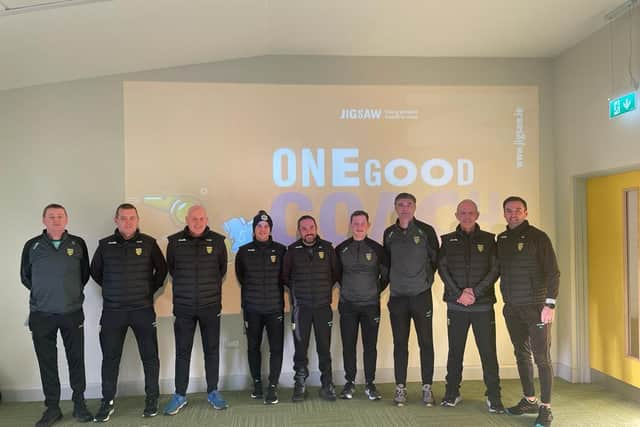
Coach education is the need to coach the coach, with speakers from Southampton FC, Limerick hurlers, Dublin City University, Leinster Rugby and the IRFU having already been brought in for seminars.
“The desire for progress has still allowed for major savings to have been made on the approved costs in the last 12 months. The key has been ensuring that the young players get the best resources but, always with value for money as the guiding principle.
“This has been achieved by the commitment of all involved academy personnel and a drive to do what is best for Donegal GAA and the development of talent. Substantial resources will be needed to continue to achieve the outstanding progress made to date. There is a hope that the new county executive will have the drive and desire to continue the major progress to date.
“The academy would hope that some of the existing roles in the county executive would form closer ties with the academy going forward, particularly the role of County coaching officer, which to date has been quite adrift of the academy and its functions. A clear pathway between both bodies would be healthy and supportive to create a strong link to the senior county set up."
Michael Murphy adds: “Karl is educated in the area and that education is continuing. He is hungry for success for Donegal and for us to continue to try and develop players in the proper manner, for both club and county, with the aspiration of dining at the top table, we need to continue this trajectory. The work being done at the Donegal Academy is second to none.”