

14 new homes approved for Buncrana with key condition protecting future Inner Relief Road
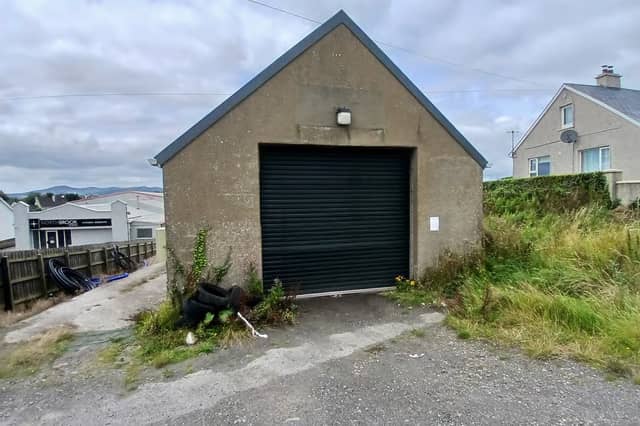

14 new homes approved for Buncrana with land safeguarded for future Inner Relief Road
Planning permission has been granted for the construction of 14 new homes at Looking Glass Brae in Buncrana, with a significant condition attached to safeguard land required for the future delivery of the town’s proposed Inner Relief Road.
Donegal County Council granted permission to Riverbed Lettings Ltd, through applicant Stephen O’Sullivan, for the development on lands adjacent to Northbrook Design in the townland of Ballymacarry Lower.
The proposal involves the demolition of an existing shed and the construction of 14 residential units, comprising six one-bedroom apartments, four two-bedroom townhouses and four three-bedroom townhouses.
Four of the proposed homes will be built to Universal Design standards, which aim to make residential accommodation more accessible and easier to use for people of all ages and abilities.
The development will also include a new site entrance, parking facilities and amenity space.
However, one of the most notable aspects of the planning decision is a condition relating to the future Inner Relief Road, which is intended to provide vital road infrastructure for Buncrana.
Under the condition, the developer must submit proposals to Donegal County Council, before construction begins, for the transfer of lands along the entire frontage of the development site within the existing road corridor.
The lands must be sufficient to facilitate the future construction of the Inner Relief Road, incorporating a road corridor with a cross-sectional width of 17.5 metres.
The council has also stipulated that the lands must remain free from development, structures or other obstructions that could stop the future construction of the road.
The transfer of the lands to Donegal County Council must be completed before the first residential unit is occupied, unless otherwise agreed in writing with the planning authority.
A further condition specifies that the homes must be used as permanent residential accommodation and may not operate as holiday homes or short-term rental properties unless separately authorised by another planning application.
The developer must also submit a Parking Management Plan for the council's written agreement before the development is occupied. This must outline arrangements for resident and visitor parking, measures to prevent unauthorised or overspill parking, and ongoing management responsibilities.
Construction activity will also be subject to a Construction Management Plan, which must be agreed with the council before work begins.
This will cover temporary construction access, the phasing of works, construction traffic routes, waste disposal, wheel-washing facilities, traffic management on public roads and arrangements for construction staff parking and site offices.
The planning permission also includes a requirement for the developer to meet its social and affordable housing obligations under Part V of the Planning and Development Act.
Under the condition, the developer must enter into an agreement with Donegal County Council before a commencement notice is lodged. This could involve transferring 20 per cent of the development land to the council, or providing several completed homes, either on the site or elsewhere within the county.
Other options include providing homes through a leasing arrangement with the council or a combination of these measures.
In addition, another condition is that Stephen O’Sullivan or any person with an interest in the land enters into an agreement with the planning authority that all residential units are to be sold to “individual purchasers” and not to be purchased by vulture funds or corporate entities. If the properties are not sold within two years, however, then the restricted groups may be able to buy them.