

Beach lifeguard, helicopter and ambulance crews involved in Bundoran rescue
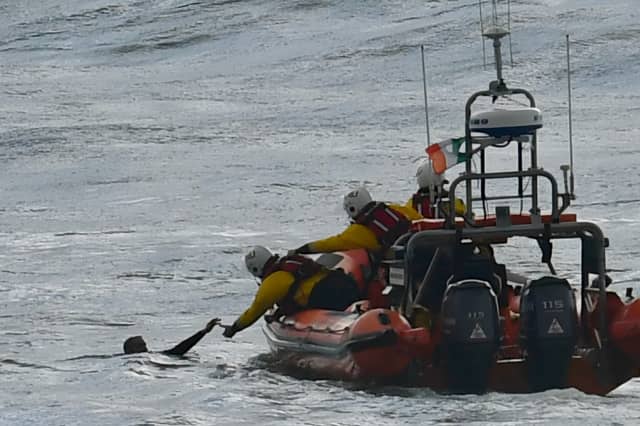

Bundoran RNLI Helm Rory O’Connor has thanked everyone involved and passed on advice to anyone who plans to swim in the area
Bundoran RNLI has urged swimmers getting into difficulty in trying conditions to follow best procedures following the rescue off the Main Beach.
The volunteer crew were requested by the Irish Coast Guard to launch their inshore lifeboat at 4.42pm on Wednesday, August 19, after a member of the public raised the alarm when they heard someone shout and spotted a swimmer having issues.
The lifeboat helmed by Rory O’Connor and with crew members Richard Gillespie and David Clancy onboard, launched immediately and made its way the short distance to the scene. A lifeguard on patrol also responded along with the Irish Coast Guard helicopter, Rescue 118 from Sligo. Weather conditions at the time were good but sea conditions were challenging with a two-metre swell and breaking waves.
On scene, the crew observed the swimmer who was wearing a wetsuit, trying but struggling to swim on their back. The crew managed between the breaking swells to grab the casualty and bring them safely onto the lifeboat and back to the pier.
With a concern that the casualty may have taken in water, an ambulance was requested and the swimmer was transferred to hospital as precautionary measure. Once the casualty was safely ashore, the lifeboat crew returned to the water to bring the lifeguard onboard and back to shore also.
Speaking following the call out, Bundoran RNLI Helm Rory O’Connor said: “We would like to wish the casualty well following their experience yesterday. While prepared by wearing a wetsuit, the conditions off Main Beach caught them out and they got into trouble in the breaking line of the swell.
“We would also like to commend the member of the public who raised the alarm when they spotted the casualty in difficulty and we want to thank the beach lifeguard, helicopter and ambulance crews who also responded.
“We would encourage anyone planning a dip or swim to go prepared by checking conditions in advance and to seek local knowledge on the risks and hazards of the area. Don’t swim alone, always wear a bright coloured cap, use a tow float and carry a fully charged mobile phone in a waterproof pouch.’
The RNLI is also encouraging everyone to remember their Float to Live advice. “Instinctively,” Rory added, “most people who find themselves struggling in the water will begin to panic, swim, or thrash about.
“We’re urging people to ignore this instinct and remember to float: Tilt your head back, with your ears submerged. Relax and try to breathe normally. Move your hands and legs to help you stay afloat if you need to. It’s fine if your legs sink – we all float differently. By doing this, you give yourself the chance to rest and recover your breathing. Once you’ve regained control of your breathing, you can call for help or swim to safety.”