Search


04 Apr 2026
Search
04 Apr 2026

Please allow ads as they help fund our trusted local news content.
Kindly add us to your ad blocker whitelist.
If you want further access to Ireland's best local journalism, consider contributing and/or subscribing to our free daily Newsletter .
Support our mission and join our community now.
To continue reading this article, you can subscribe for as little as €0.50 per week which will also give you access to all of our premium content and archived articles!
Alternatively, you can pay €0.50 per article, capped at €1 per day.
Thank you for supporting Ireland's best local journalism!

The Millennium Forum produced this poster to publicise its staging of The White Handkerchief

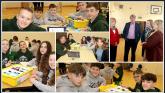
On Thursday 29 January, I joined my fellow Transition Year students from Crana College and students from several other secondary schools from both sides of the border to go and see a drama in the Millennium Forum called The White Handkerchief.
Now, I won’t pretend I had heard of the show before our drama teacher had told us about it, but when she informed us of the name of the show, the first image that came into my mind was of Bishop Daly waving his own white handkerchief in the streets of Derry.
Every child, teenager, adult and pensioner in Ulster knows what happened in Derry on 30 January 1972. It’s a unique historical event in that you don’t need to spend time inside of a history classroom to know about it - most children hear about that fateful day through word of mouth, passed down from their grandparents, to their parents and finally onto them.
So when me and my friends first heard about this planned day out, we were excited to go and watch a professional show for the first time. As time passed, I found myself yearning to go, not for the inevitable craic that my friends and I were sure to have, but because I wanted to see the sacrifices that were made for the simple civil rights that many now take for granted.
Read more: How the Derry Journal reported on Bloody Sunday and its aftermath
The critically-acclaimed and emotional musical drama is set during the historic events of Bloody Sunday, and had a run in the Millennium Forum in the weeks around the anniversary of the atrocity.
The return of the much loved show, which made a huge impression when it was first staged in the Playhouse in 2022, was an in-house production by the Millennium Forum in celebration of the theatre's 25th anniversary. It was directed by Kieran Griffiths, the man who had also sat in the director’s chair four years ago when the show first made its Playhouse debut.
It was clear from the opening scene that Griffiths had an amazing understanding of not only the source material, which was written by the late Liam Campbell, but also the real history and impact of these long remembered and mourned events.
You could tell from the first beam of the spotlight that Griffiths and his cast were aiming to give the audience an emotional connection to the real life characters and victims.
The show itself is told from three different perspectives at three distinct times in the storyline.
We open with a monologue from the late William ‘Willie’ McKinney. McKinney was played by Warren McCook, who also played William in the original Playhouse production.
In his speech McCook starts amongst the audience, instantly showing that William was just like any ordinary person who wanted to stand up for themselves. Following this we see the hours prior to the start of the march and we learn about William’s involvement in previous marches, his dedication to the cause of civil rights and his relationships with the other main characters, especially his fiancee Elizabeth, who was played by Sharon Duffy who did an amazing job capturing the emotion of losing a loved one in such a tragedy.
For the rest of the show, we swap between the perspective of William, Father Edward Daly, played by the experienced Barry Keenan, and Alfie, a young British army soldier who was played by Sascha Kopelsky.
The show’s first act remains a light hearted insight into the lives of the victims but it slowly descends into chaos after the interval where the show, its actors, orchestra and visual effects truly shine.
However, despite the audience being put through the emotional wringer upon seeing the fate of the fallen, the show’s most emotional moment came via the beautiful singing and emotional outburst which came from Limavady actress Orla Mullan, in the role of Peggy Deery, a widowed mother of 14 who was shot on Bloody Sunday.
In this gut wrenching scene Mullan puts on such an emotional performance and truly lives the feeling of pain and worry for the children of Peggy Deery, which was combined with three stellar performances from Barry Keenan’s Fr Daly, Conor O’Kane as Fr Tom O’Gara and Sascha Kopelsky as Alfie, a British army soldier.
Questions and Answers
After the show, the students in the auditorium were lucky enough to have a ‘questions and answers’ session with Kieran Griffiths, Maeve McLaughlin (the director of the Bloody Sunday Trust) and members of the cast.
The question that Crana College students had agreed to ask was about the level of consultation with families of the Bloody Sunday victims prior to the launch of the show. Griffiths answered this question on behalf of the panel and talked about how it didn't matter to him the amount of time, effort and money spent on the show, if the families and friends of the victims weren’t on board the show wouldn’t go ahead.
Kieran Griffiths also stated in this Q and A session with secondary school students, that it was his intent to not let the bodies of the victims fall to the ground.
In the show, when a victim is harmed, another character will walk by and throw a fistful of red petals in the appropriate area and direction of the gunshot in a poignant and remarkable theatrical device which shows the amazing amount of creativity and effort required to bring the show to life.
After the throwing of the petals, the victim is raised into the air by their co-stars in a beautiful show of respect to the fallen.
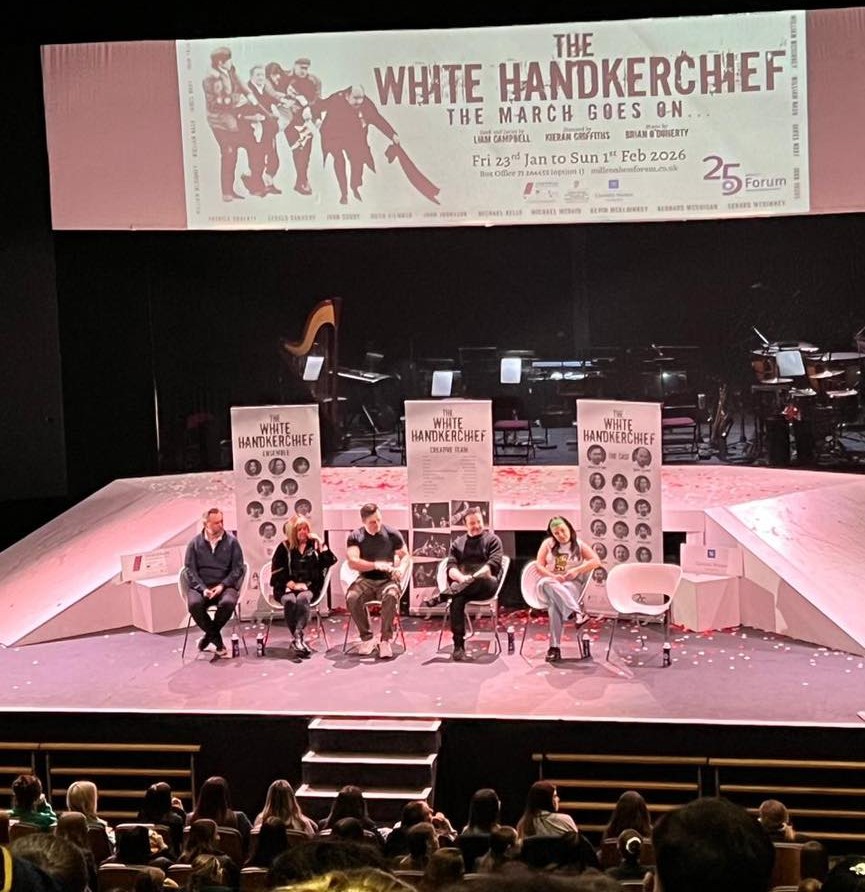
The White Handkerchief, its cast, crew, orchestra and director had achieved what a very small number of people have been able to do - it left me speechless!
During the next several hours, through the Q and A and the bus journey home, I reflected on what I had just seen and it filled me with such a strange emotion. A mix of pride in what the people in the Civil Rights movement had achieved for people in Northern Ireland, despite me never living there and the events depicted coming long before I was even born, but also an element of sadness. Why did it take the deaths of so many to achieve something as simple as equal rights for all? And why was there any need for martyrs and sacrifice and not simple dialogue?
These thoughts and feelings are no doubt similar to not only those who lived it, but those who felt like they had. I have no doubt that these feelings were amplified the next day, Friday, 30 January, the 54th anniversary of Bloody Sunday.

Subscribe or register today to discover more from DonegalLive.ie
Buy the e-paper of the Donegal Democrat, Donegal People's Press, Donegal Post and Inish Times here for instant access to Donegal's premier news titles.
Keep up with the latest news from Donegal with our daily newsletter featuring the most important stories of the day delivered to your inbox every evening at 5pm.

This publication supports the work of the Press Council of Ireland and Office of the Press Ombudsman, and our staff operate within the Code of Practice of the Press Council. You can obtain a copy of the Code, or contact the Council, at www.presscouncil.ie, Lo-call 1800 208 080 or email: info@presscouncil.ie.