

Local Farming: Cattle settling in, but plenty to keep an eye on
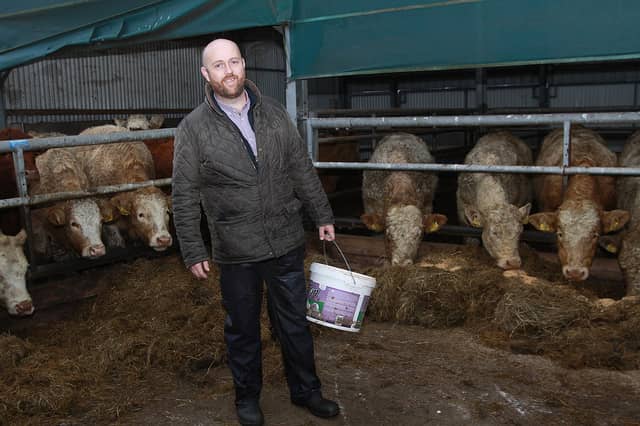

Inishowen Independent columnist James Strain is a beef farmer in Burnfoot. He is a specialist advisor with Inishowen Co-Op where he produces a regular newsletter, and is an occasional contributor to the Farmers' Journal
The last of the beef cattle are housed five weeks at this stage and are settling in nicely.
I'm feeding predominantly heifers this year, with just one pen of bullocks. Unlike other years, I don’t really need to buy any cattle this back end, as I had grazed enough cattle over the summer.
In other years, I might have been feeding a batch of bulls throughout the summer that would have been killed in July or August and then needed to be replaced. This year, so far at least, all the cattle that are in the shed were grazed on the farm all summer.
It makes things a little simpler going into the winter and, with numbers already there, there is no great need to be looking for cattle to fill sheds.
Because of this, and because the cattle are well settled, I was tempted not to give these cattle the IBR (Infectious Bovine Rhinotracheitis) vaccine that I would normally give at housing.
All these cattle were vaccinated for IBR – a kind of cattle flu - when they were purchased in the spring, but the vaccine only lasts for six months. Normally, I would give them a second shot at housing, along with any other cattle that had been purchased.
However, a recent conversation with the local vet has knocked that idea on the head. He thinks I would still be better off giving the vaccine and, I suppose, for the value of it compared with the potential problems that could arise, he is probably right.
It’s one of those jobs that is easy to question when everything is going well, but perhaps not so easy to justify leaving out when you look at the bigger picture.
The cattle were well-dosed for stomach and lung worms at housing, but unfortunately there is a little more coughing in the shed than I would like to hear.
The cattle and dung look good otherwise, but I think, at the very least, I need to take a few dung samples and see if anything shows up. There is little point in guessing when a relatively simple test should give a better indication of what is going on.
Everything also needs to be covered for fluke, which can be tricky enough to get right from a timing perspective. As the cattle have only been housed for five weeks at this point, the only active dose I can use is triclabendazole.
I could wait another couple of weeks and use something else, but with most flukicides having a fairly long withdrawal period, I need to be careful about when the first cattle will be ready for slaughter.
There won’t be many cattle ready before Christmas, but there might be some, so withdrawal periods need to be kept in mind.
There are only a small number of cattle left grazing and, as I haven’t bought any store lambs just yet, there is quite a bit of grass on the farm at present.
Ground conditions are tender, to say the least, and I am not tightening stock up too much as I am trying to avoid doing too much damage.
The downside is that graze-outs can be poor in these conditions. However, lambs will arrive at some point, and I’m sure they will graze whatever grass the cattle leave behind.