

Donegal County Council plans to cut jobs to balance the books
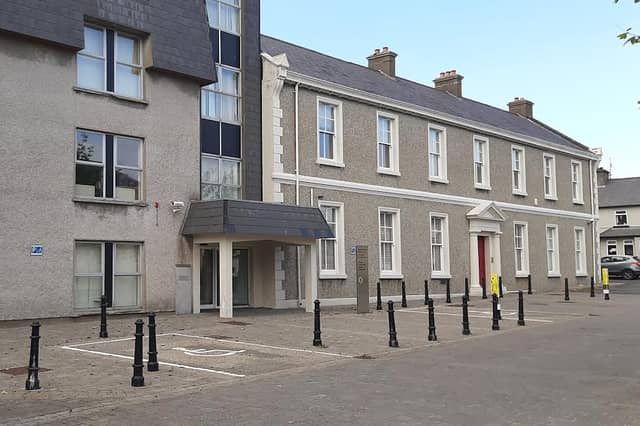

Council targets payroll savings of €2.76 million next year to reduce its reliance on funding salaries from its own cash reserves
Donegal County Council has revealed plans to reduce its workforce by 40 staff next year.
In its Draft Revenue Budget for 2027, which elected councillors will meet next week to debate, director of finance Richard Gibson identified the need to cut the equivalent of 40 jobs, around 3% of the council’s overall workforce of 1,200, to help the local authority balance its books.
Mr Gibson said the council was struggling to balance its books in the face of falling income and rising costs, with reductions in payroll expenditure among the measures needed to make the figures add up.
He revealed that Donegal County Council needed to draw €4.3 million from reserves as an “exceptional measure” in 2026 to balance its budget, and projected that the total value of such measures would rise to €6.8 million in 2027.
“Reducing the Council's reliance on these exceptional measures is now critically important if the Council is to move towards a sustainable budgetary position in the years ahead,” Mr Gibson wrote in his commentary accompanying the detailed budget booklet.
“Based on affordability, it is expected that the Council will need to reduce its budgeted workforce by approximately 40 staff in 2027,” he said, noting that this would reduce payroll costs by €2.76 million next year.
The total payroll and pension cost for Donegal County Council next year is almost €103 million. This comprises €90 million in payroll costs, €10.3 million in pension costs and €2.4 million in lump-sum gratuities, including payments made on retirement.
Mr Gibson noted that the Department of Housing, Local Government and Heritage allocated €17 million to Donegal County Council last year to help fund additional staff payments under the outgoing public service pay agreement, which expired during the summer.
Calculations for next year's payroll costs were carried out before the conclusion of public sector pay discussions between unions and the Government last week. The State has offered a 10.75% pay increase, phased between now and early 2029, with unions currently balloting their members on whether to accept the offer.
Mr Gibson said local authorities expected central Government to cover the additional payroll costs should union members vote to accept the proposals.
However, one area in which central Government did not meet the full cost of improved pay and conditions was the retained fire service, following industrial action taken by retained firefighters before their long-running pay dispute was resolved in April 2025.
The draft budget includes a provision of €3.8 million to offset the increased costs arising from the agreement. Donegal County Council has had to set aside €300,000 from its owns resources to cover the shortfall, although it intends to lobby for this to be addressed by central Government.
“Additional funding will be required in future years to offset the full-year cost of the agreement,” Mr Gibson noted. “The local government sector will continue to liaise with central government in this regard.”
The proposed reduction of 40 jobs does not necessarily mean compulsory redundancies. The target could be achieved through not replacing staff who retire or leave the organisation, recruitment controls or offering part-time working arrangements to employees who are currently full-time.
Read next: Coroner records verdict of death by misadventure at inquest into teen’s fatal road traffic collision
Overall, Donegal County Council projects spending €236.5 million next year, a 6% increase on the €222 million budgeted for this year.
Among the measures it is proposing is a 7% increase in commercial rates, which would bring in an additional €2.3 million compared with the amount collected in 2026.
Despite the considerable amount of time councillors typically devote to debating commercial rates, they account for 18% of the council's annual income.
At just over 20%, income from Local Property Tax and rental payments from social housing tenants combined exceeds the amount collected in commercial rates.
Grants from central Government account for almost half of the council's overall income.