

Mícheál Ó Cléirigh's journey to Bundrowes Friary 400 years on (1626-2026)

The recent rediscovery of historical records proves that The Annals of the Four Masters were compiled and written in Bundoran
The recent rediscovery of the Louvain Papers record of the Franciscan Friary at “Bundrowis” from the 1630s and Mícheál Ó Cléirigh’s notes from 1627-1637 now establishes the historical evidence that Ó Cléirigh compiled and wrote The Annals of the Four Masters in Bundrowes, Magheracar, Bundoran.
Four hundred years ago, Kilbarron-born Mícheál Ó Cléirigh was sent to the Convent of the Friars of Donegal at Bundrowes Friary to collect Irish history by fellow Ballyshannon man, Fr. Hugh Ward, Guardian of the Irish Franciscans in Louvain, Belgium.
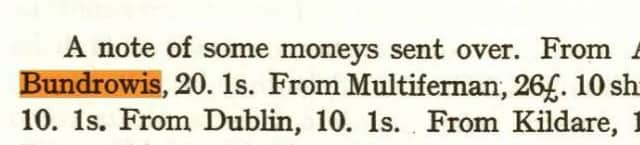
Edited by Fr. Brendan Jennings and Fr. Cathaldus Giblin, the Louvain Papers record is “A note of some moneys sent over to Louvain - From Bundrowis, 20. 1s”. Bundrowis Friary is recorded alongside other Irish friaries of the time such as Armagh, Multyfarnaham, Drogheda, Dublin and Kildare that sent money from their convents to Louvain College.

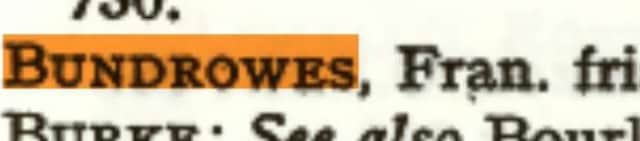
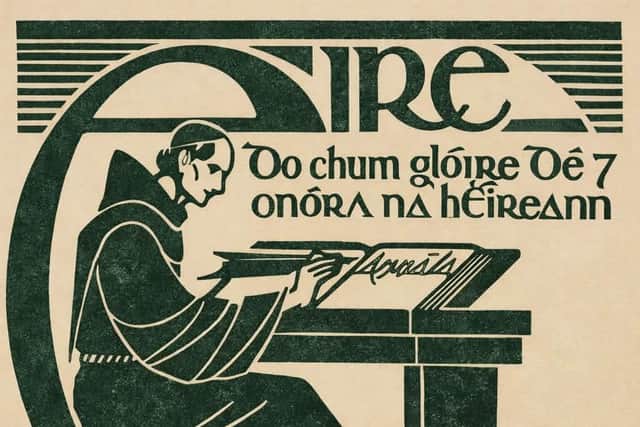
While Donegal Town can lay claim to the older friary, as Dr. Bernadette Cunningham said in her book, The Annals of The Four Masters: “Following the destruction of the original monastery buildings in 1601” in Donegal Town, “the Donegal Franciscan community, based at Bundrowes in the extreme south of the county, provided Ó Cléirigh’s base for most of the eleven years he spent in Ireland as a Franciscan friar between 1626 and 1637.”
Fr. Paddy Gallagher said in his book, Where Erne and Drowes meet the sea (1961): “The House of Bundrowes – This refuge of theirs they called The Convent of (The Friars) of Donegal at Drowes. At least thirty times altogether, Brother Michael used in his writings (from 1627 to 1636) the address “Ag Drobhaois: At Drowes.”
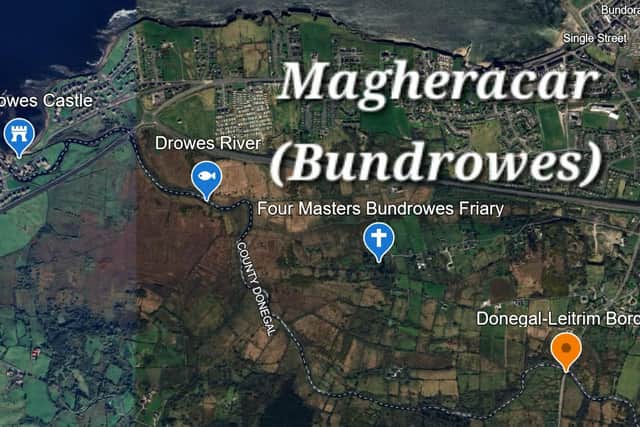
While the Mícheál Ó Cléirigh Summer School considers “Rossfriar” by Lough Melvin in County Leitrim, Trinity College Dublin, the Royal Irish Academy, University College Dublin, the Louvain record of Bundrowes Friary, Fr. John Colgan’s “Annals of Donegal” and Mícheál Ó Cléirigh’s own words in “The Convent of Donegal” make it clear that the Annals were written in Bundrowes, County Donegal.
Bundrowes was home for the proud friar-scribe, Mícheál Ó Cléirigh. Research from Ó Cléirigh’s descendant, Bundoran historian, Madeleine Cleary, proves that Ó Cléirigh’s family held lands in Bundoran by Bundrowes Friary.
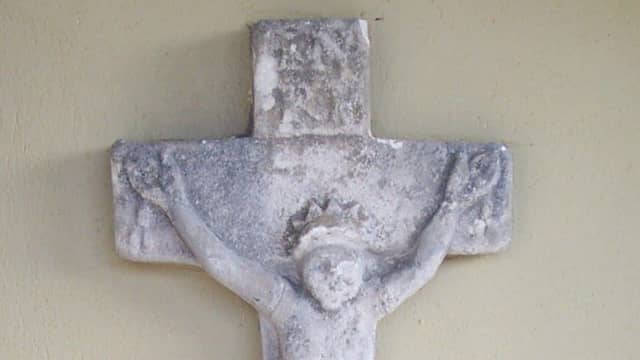
Oral history from the old natives of Bundoran, the old stone cross discovered at the friary site in 1887, and Fr. Paddy’s book has long established the exact location of The Four Masters Bundrowes Friary at the old Gilmartin and Daly homesteads in The Ross, Magheracar, Bundoran. The remains of an old church site are marked on Ordnance Survey maps and archaeological artefacts were observed by archaeologist Christiaan Corlett in 1999.
The rediscovery of the Louvain record of Bundrowes Friary, Ó Cléirigh’s notes and the well-reasoned historical evidence from historians now proves that The Annals of the Four Masters were written and compiled in Bundoran. 400 years on from Ó Cléirigh’s journey to Bundrowes Friary, the Gaelic spirits of The Four Masters now call on the people of Bundoran with Tirhugh heart and humility – to tell one of the greatest true stories of Irish history.