Search


03 Apr 2026
Search
03 Apr 2026

Please allow ads as they help fund our trusted local news content.
Kindly add us to your ad blocker whitelist.
If you want further access to Ireland's best local journalism, consider contributing and/or subscribing to our free daily Newsletter .
Support our mission and join our community now.
To continue reading this article, you can subscribe for as little as €0.50 per week which will also give you access to all of our premium content and archived articles!
Alternatively, you can pay €0.50 per article, capped at €1 per day.
Thank you for supporting Ireland's best local journalism!

Jackie Prendergast

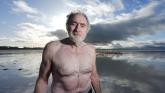
Referring to the brutal Irish Rebellion of 1798, "Too Fierce to Speak of" were the words uttered by the headmaster as he read Jackie Prendergast's roll call, recording just 98 days of school attendance in his 1959 final year at Milford Primary School.
Like other Donegal Tunnel Tigers, Jackie hated school and could not wait to escape what he deemed as an unbearable, torturous environment and move instead into working life.
Jackie, now 80 years old, was born in Carrigart in 1946. He was raised by two caring parents and grew up with two brothers and two sisters.
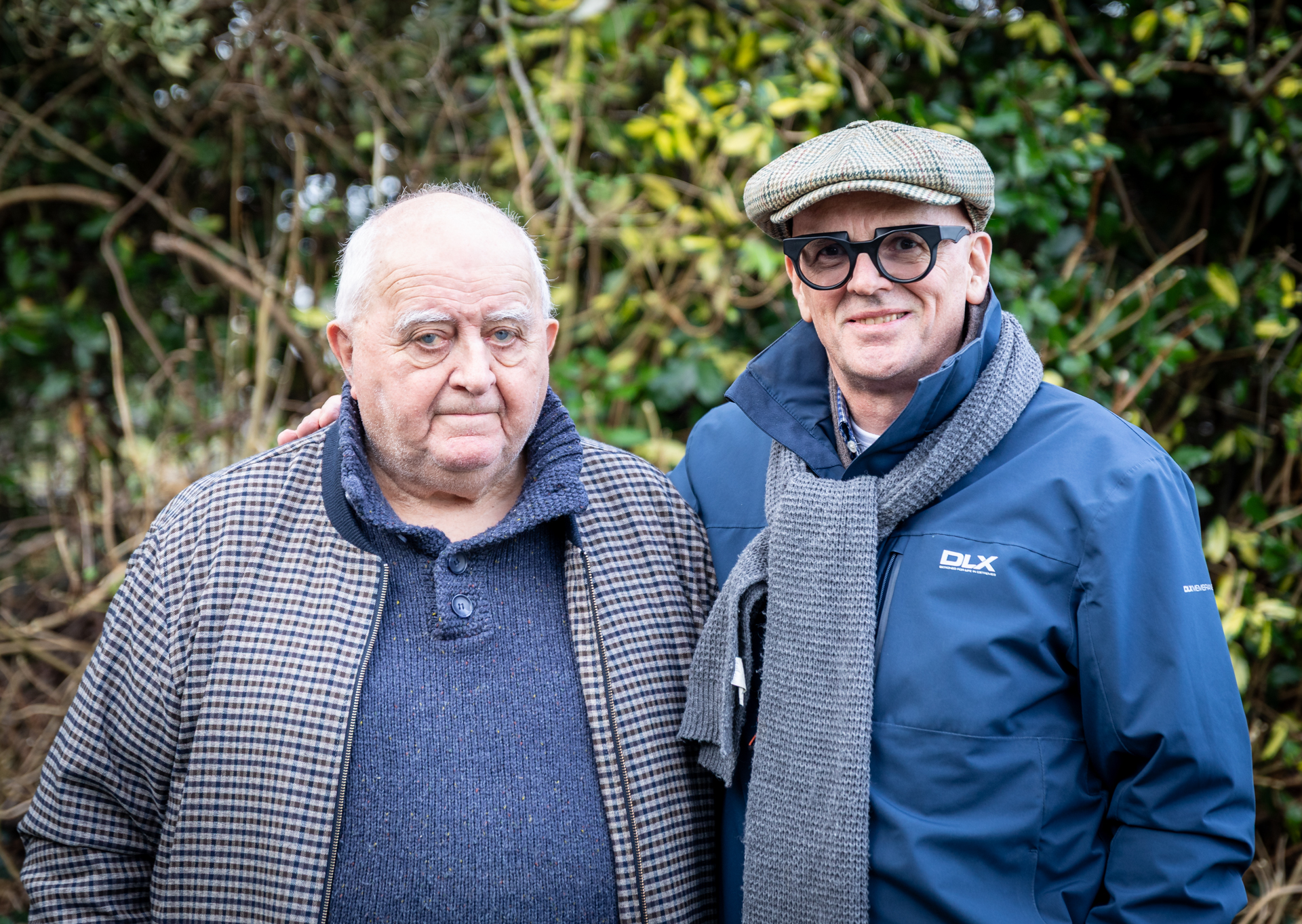
Jackie Prendergast and Eamonn Coyle
Driving the Wheel at Russell Mill, Milford, 1960 to 1961
Aged 14 in 1960, Jackie took up employment as a general operative at Russell Mill in Milford, crushing corn and manufacturing porridge oats. He earned £2 12s 6p per week. After a short time, he secured an apprentice salesman position with Heatons of Athlone, earning £3 10s per week. While the wage was higher, his digs cost two pounds weekly, leaving him worse off overall. Still, he could enjoy a pint of his preferred beer in the local pub for 7p, a sharp contrast to present-day €10 Temple Bar prices.
A Father's Decision to Head for England, 1963
In 1963, aged seventeen, Jackie's father decided to emigrate to London, and Jackie went with him. They rented a shared single room in West Hampstead. Jackie found work as a salesman in a clothes shop earning £7 per week and supplemented this with part-time bar work, earning 17s 6p per night. Both jobs were demanding, and through the bar work he met mainly Irish emigrants.
READ NEXT: How Donegal's Tunnel Tigers helped dig the world's greatest engineering project
It was there that he befriended Paddy Murphy, who was surprised that Jackie needed two jobs to get by. Paddy spoke of the better wages available in construction and suggested that, if he was interested, he should present himself at Queen's Park Tube Station at six o'clock on Monday morning.
Joining Murphy's, Six o'Clock at Queen's Park Tube Station
John Murphy from Cahersiveen Co Kerry, founded Murphy Construction in 1951, laying the foundations for what would become one of the world's largest civil engineering companies. At exactly six o'clock that Monday morning, a green lorry with a canvas canopy pulled in. Jackie climbed into the front seat beside the driver, only to be told to climb into the back. The front passenger seat was reserved for the higher echelons, the site supervisors.
Murphy's early work focused on post-war clean-up operations. Jackie was sent to a site in Hayes, Middlesex, where he operated a concrete batching plant and earned £28 pounds per week. He turned up for work in normal attire and was later told to invest 12p to secure a pair of working boots.
READ NEXT: From Ranafast to the Rock Face: A life carved in darkness, dust and survival
During his time with Murphy's, Jackie often encountered John Murphy himself in the Kentish Town yard. He recalls him as a friendly, affable man, always urging workers to be where they were supposed to be, reciting the phrase “Where are you working now?”
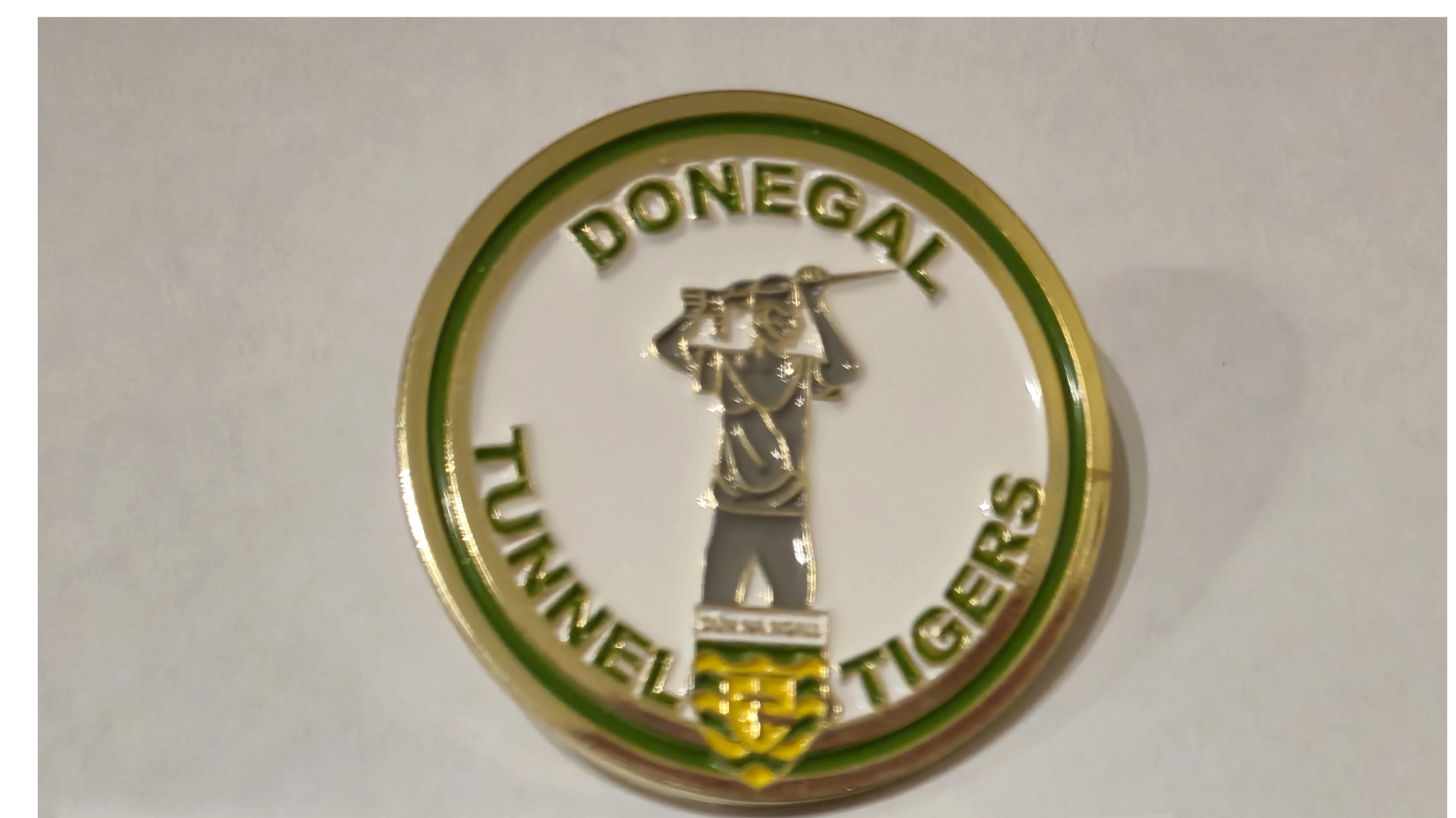
Jackie recalls Murphy himself suggesting, politely but plainly, that Kerrymen did not adapt to tunnelling work as naturally as the Donegal men, a remark that reflected his belief in the Tunnel Tigers' particular aptitude and reliability underground.
Drawn Underground by Better Pay
Through Murphy's and the Irish network, Jackie learned of the higher wages available in tunnelling. He joined Mowlem's and secured a position on the London Underground Victoria Line. The tunnelling fraternity was a close knit and guarded world, and as a newcomer Jackie confidently entered alone. Over time he progressed from general operative to miner, lead miner, and eventually pit boss.
The work was entirely manual, excavating London clay with F22 air spades and erecting steel and cast-iron linings by hand, as was the case for all Donegal Tunnel Tigers of that era.
Under the Thames, Following Brunel's Idea
Early attempts to tunnel beneath the river Thames in London in the nineteenth century had failed repeatedly. Jackie explains that success only came when engineer Brunel discovered the action of a worm boring through wood, consuming material and lining the tunnel behind it while its hard-shell head acted as a shield.
One hundred and fifty years later, in 1965, Jackie worked to that same principle, safely tunnelling beneath the Thames on three separate occasions while working in twelve pounds of compressed air.
Buried Alive, Stanford, 1970
In 1970, aged 24 and working for Nuttall's on a tunnel in Stanford, a two-tonne slab of clay fell from the roof, burying Jackie beneath it. Two close tunnelling friends immediately began breaking the clay away, working so frantically that Jackie feared they would drill into him. Hence, he took the air spade himself and excavated his way free.
Using trouser belts, his Tiger friends secured him to a timber pulley and carried him out of the tunnel. He was transferred to Peterborough Hospital with his right leg broken in two places and also diagnosed with severe internal bruising. The pain from that incident still troubles him today.
Standing Up for the Men, Newcastle Metro, 1973 to 1976
While working on the Newcastle Metro, additional tax cuts were introduced by the contractor under government instruction. Acting as shop steward, Jackie viewed the cuts, imposed without compensation, as unjust. On the same project, and regrettably two of his colleagues were killed and others maimed when a gas cylinder exploded.
As leader of the men, Jackie called a meeting and a strong majority voted in favour of strike action. The decision caused division within the workforce and was viewed harshly by the contractor. False information circulated, tensions rose, and Jackie was branded a blaggard by management, a label that damaged his future tunnelling prospects.
To this day, in 2026, Jackie maintains that workers' rights and safety were his sole motivation. The dispute ended after a one month sit down, and work resumed on more favourable conditions.
Aged 80, and in the Departures Lounge
Now aged eighty, Jackie has attended his doctor on four occasions in the past week alone. He suffers from high blood pressure, respiratory illness, swollen legs, and arthritis, conditions he directly attributes to a lifetime spent tunnelling underground.
Jackie Prendergast's life mirrors that of many Donegal Tunnel Tigers, shaped early by fear and authority, driven abroad by necessity rather than choice, and spent deep underground doing work few saw and fewer understood. From a childhood marked by primary school cruelty to decades of manual tunnelling under cities and rivers, his story is one of endurance, loyalty to fellow workers, and quiet resilience.
The tunnels he helped build remain, unseen but essential. The physical cost is carried in his body to this day. His account stands not as nostalgia, nor complaint, but as a record of a generation who endured in silence, built modern Britain beneath its surface, and returned home carrying scars that history rarely records.
READ NEXT: From the hills of Glenswilly to 40 metres below England’s earth
Today, he remains in close contact with other Donegal Tigers, particularly Glenswilly’s Joe Kelly. He enjoys the company of his partner, three daughters and five sons, and spent the Covid period with his daughter in Australia. Jackie told his story with their benefit and the other Tigers in mind.
This account captures only a fraction of a phenomenal life. A fuller story potentially awaits.
Eamonn Coyle is a Chartered Engineer and Chartered Environmentalist

Subscribe or register today to discover more from DonegalLive.ie
Buy the e-paper of the Donegal Democrat, Donegal People's Press, Donegal Post and Inish Times here for instant access to Donegal's premier news titles.
Keep up with the latest news from Donegal with our daily newsletter featuring the most important stories of the day delivered to your inbox every evening at 5pm.

This publication supports the work of the Press Council of Ireland and Office of the Press Ombudsman, and our staff operate within the Code of Practice of the Press Council. You can obtain a copy of the Code, or contact the Council, at www.presscouncil.ie, Lo-call 1800 208 080 or email: info@presscouncil.ie.