Search


03 Apr 2026
Search
03 Apr 2026

Please allow ads as they help fund our trusted local news content.
Kindly add us to your ad blocker whitelist.
If you want further access to Ireland's best local journalism, consider contributing and/or subscribing to our free daily Newsletter .
Support our mission and join our community now.
To continue reading this article, you can subscribe for as little as €0.50 per week which will also give you access to all of our premium content and archived articles!
Alternatively, you can pay €0.50 per article, capped at €1 per day.
Thank you for supporting Ireland's best local journalism!

Archaeological artefacts discovered at the historic Four Masters site

With the recent rediscovery of Franciscan historical records establishing that The Annals of the Four Masters were created at the Bundrowes friary of refuge in Magheracar, Bundoran, archaeological artefacts have been discovered at the historic Four Masters site.
READ NEXT: In Pictures: Fantastic turnout for fundraising tractor and lorry run in Ballintra
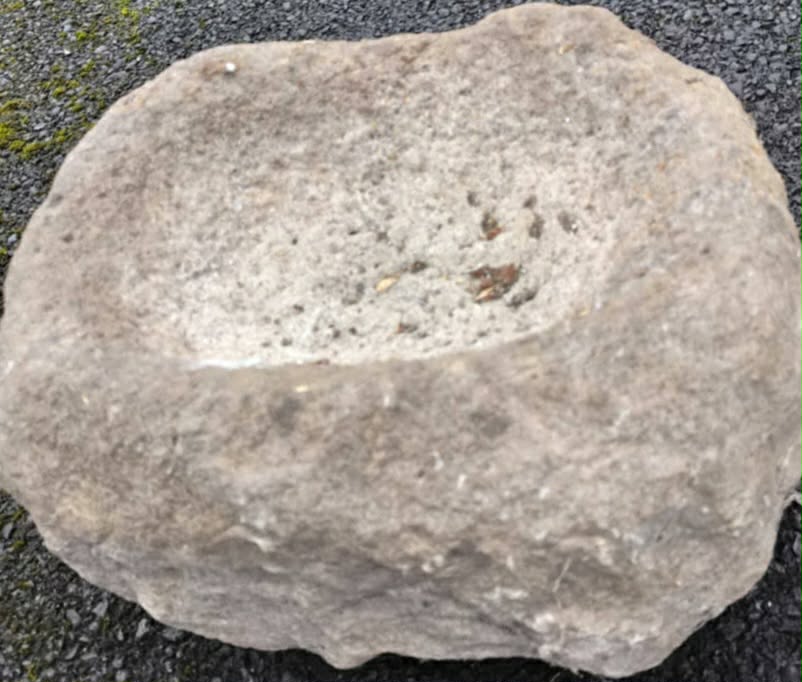
With the kind permission of Mr. Gregory Daly, local Bundoran historian, Seanie Carty recently shared photographs on Where Erne, Drowes and Duff meet the sea of archaeological artefacts discovered at the old church site and burial ground in The Ross, Magheracar. Thanks to Mr. Daly, three of these artefacts were originally examined by one of Ireland’s leading archaeologists, Christiaan Corlett of the National Monuments Service in 1999.
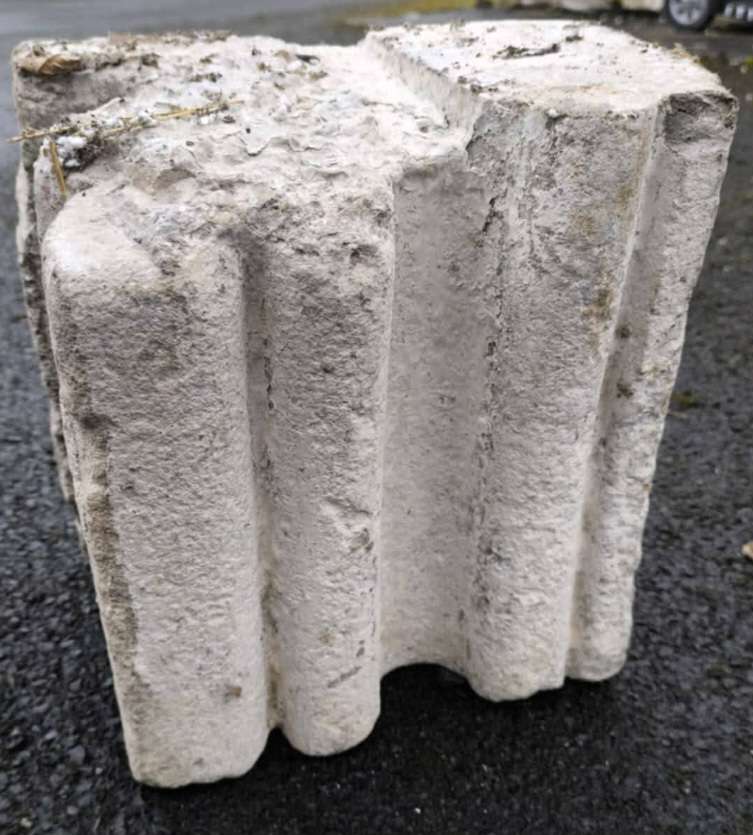
The first artefact is an “architectural fragment (sandstone)” that “features pronounced ribbed moulding which probably formed part of the window or door of a late 12th- / early 13th-century church.” This artefact suggests that the friary of refuge was founded on an earlier church site.
The second artefact is a “fragment of a rotary quern” and the third artefact is a “stone basin” that “consists of an ovoid sandstone block with an elongated, oval basin.” The stone basin “may be a font or stoup associated with a church.”
While “the architectural fragment quite clearly belongs to a late 12th- or early 13th-century church”, the rotary quern and the stone basin “would be perfectly at home within the assemblages from other church sites.”
Within the local vicinity of the church site, Seanie Carty of Donegal Bay Builders discovered well-dressed stone on several old, ruined buildings. In the opinion of Seanie and myself, these stones could be the masonry remains of the Four Masters Bundrowes friary of refuge.
In addition to the artefacts, three first-hand Franciscan accounts describing the Bundrowes friary of refuge appear to align with The Ross site in Magheracar, Bundoran.
The first account is from Fr. Donagh Mooney in 1617. He said that he and the friars fled the friary in Donegal Town by boat in the early 1600s. He described that the friars now live as a refuge community: “in locis magis tutis” (in safer places) and “in locis subobscuris” (in somewhat hidden places). Topographical evidence demonstrates that The Ross site was the safer and somewhat hidden place.
The second account is from Fr. Francis Matthews in 1629. He said that the friars built their own dwelling in Bundrowes: “fratres, erecto sibi in vicinia domicilio.” In the opinion of Seanie and myself, the friars reused stone from the earlier church site in The Ross and also had access to the nearby quarry from The Rock of Bundoran 700 metres away.
The third account is from Mícheál Ó Cléirigh's own brother, Fr. Bernard Ó Cléirigh, The Guardian of the Convent of Donegal at Bundrowes in 1636. In the year that the Annals were completed, Fr. Bernard said that they worked and wrote: “in deserto nostra mansionis” (in the hermitage of our dwelling). The word “deserto” derives from the Latin “desertum”, meaning a place of retreat or a hermitage. In an Irish ecclesiastical context, a desertum indicates a “Dísert”, a monastic or hermitage site.
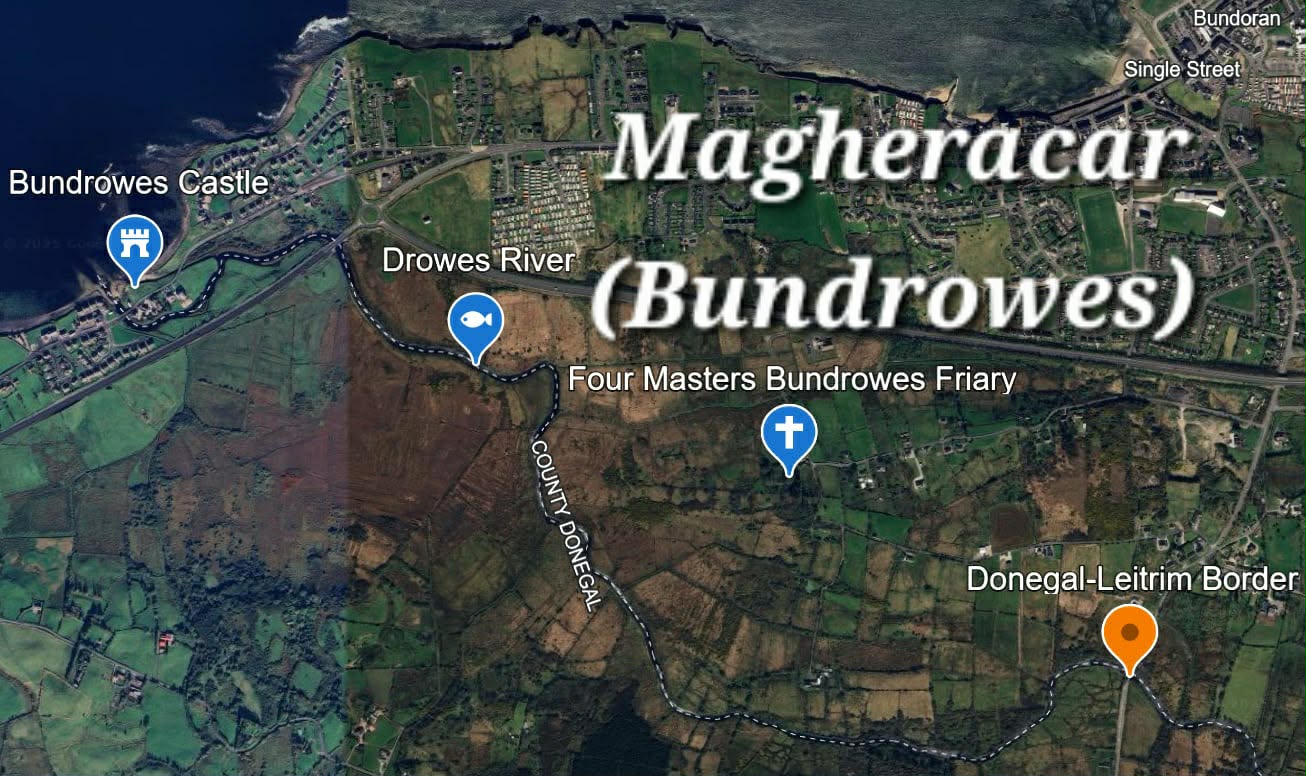
Four-hundred yards above the Drowes River, the raised, wooded Ross church site was also historically known as “Dísert Stealla”, named after the nearby holy well “Tobar na stealla” (The Well of the Stars). Fr. Paddy Gallagher noted in his book, Where Erne and Drowes meet the sea (1961) that Tobar na stealla was known as "The Friars Well."
In the opinion of local Bundoran historians, these three Franciscan descriptions along with the artefacts pinpoint the Four Masters site in The Ross. The Ross was the safe place, it was somewhat hidden, and it was here that the friars of The Convent of Donegal at Bundrowes built their own dwelling in their humble hermitage.
Reflecting on this first look of the archaeological artefacts and the first-hand Franciscan accounts of the refuge site of Bundrowes friary – the Irish historical community can now begin to clearly perceive more Four Masters insight into where Mícheál Ó Cléirigh and his fellow scribes created the greatest book of Irish history.

Subscribe or register today to discover more from DonegalLive.ie
Buy the e-paper of the Donegal Democrat, Donegal People's Press, Donegal Post and Inish Times here for instant access to Donegal's premier news titles.
Keep up with the latest news from Donegal with our daily newsletter featuring the most important stories of the day delivered to your inbox every evening at 5pm.

This publication supports the work of the Press Council of Ireland and Office of the Press Ombudsman, and our staff operate within the Code of Practice of the Press Council. You can obtain a copy of the Code, or contact the Council, at www.presscouncil.ie, Lo-call 1800 208 080 or email: info@presscouncil.ie.