Search


22 Mar 2026
Search
22 Mar 2026

Please allow ads as they help fund our trusted local news content.
Kindly add us to your ad blocker whitelist.
If you want further access to Ireland's best local journalism, consider contributing and/or subscribing to our free daily Newsletter .
Support our mission and join our community now.
To continue reading this article, you can subscribe for as little as €0.50 per week which will also give you access to all of our premium content and archived articles!
Alternatively, you can pay €0.50 per article, capped at €1 per day.
Thank you for supporting Ireland's best local journalism!

Officially, yes, it is true that we can claim St Patrick as the man who brought Christianity to Ireland

Seeing as I’m writing this around about the time of St Patrick’s Day, I thought I might start a wee series explaining some of the history that you may have forgotten from your school days.
This week, we’ll take a look at how Ireland developed as a predominantly Christian country back in ancient times.
Officially, yes, it is true that we can claim St Patrick as the man who brought Christianity to Ireland. That does not mean he was the first ever man of that faith to arrive on these shores, however. Historians tend to agree that a missionary from Rome - sent by the Pope - called Palladius was the first to come here.
READ NEXT: One F in Foley: Travel Memories Part One - A trip to Argentina
It’s understood that he was sent on a sort of scouting mission for the Roman Empire. He reported that this island, at that time, did possess a more pagan and ritualistic form of religion, and because of the constant winter-like weather, this island became known as Hibernia. As in hibernation or ‘land of winter.’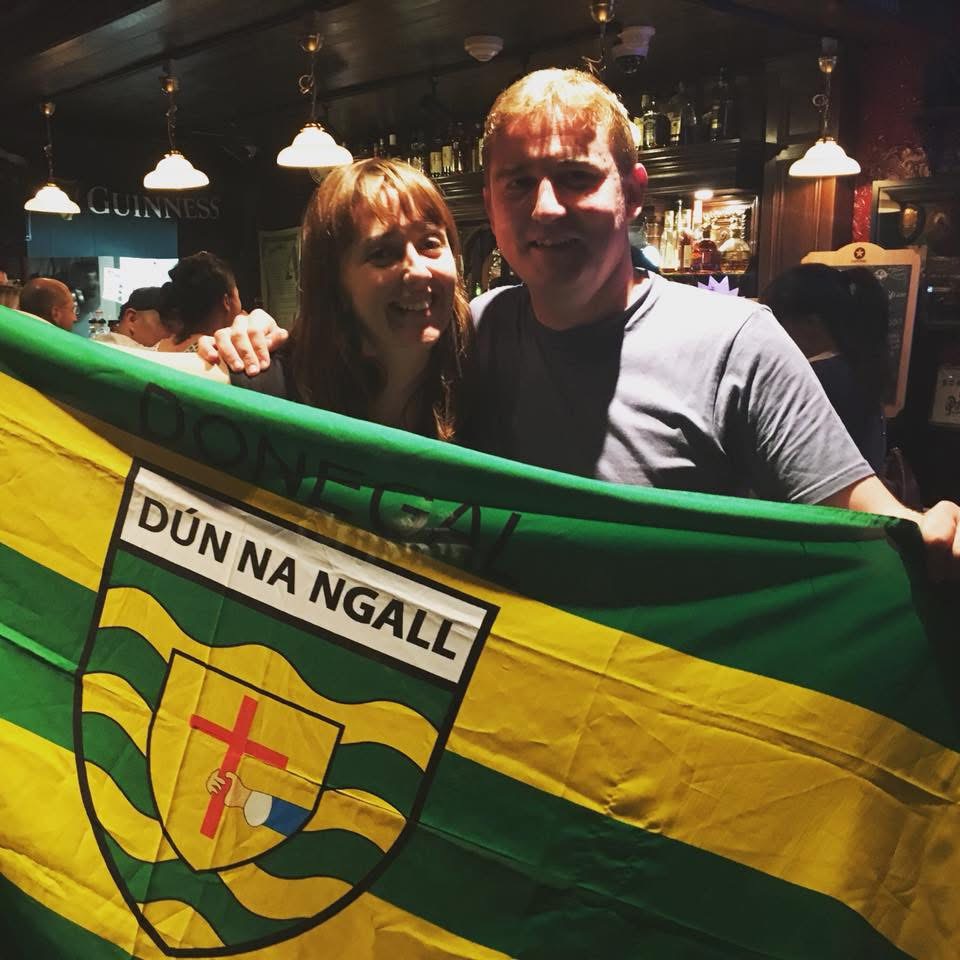
Fall of Rome
When the Roman Empire lost its first hold of the many lands it ruled, including England, the presence of Roman soldiers in these territories fell dramatically. That paved the way for Irish pirates and plunderers to make their way across the channel and abduct people to work as slaves back here.
Patrick, the son af an affluent deacon, was one of those kidnapped. While it’s still unclear what part of Roman Britain he was taken from, there is a general belief that it was from what is now northern England or perhaps Wales. Scotland has also been mentioned, but personally, I don’t think that part is true. Who knows?
At the tender age of 16, he would spend six years here - likely around the west coast Mayo area - where his primary role was to tend to sheep out in the wilderness. It shouldn’t be overlooked at this point that Ireland was a very wooded area at this time, so the threat of exposure and wolves was always there.
With more time to reflect upon his predicament, his faith in God became much stronger; this often caused him to be tagged as a heretic to the more druid-like pagan priests, who dressed in white robes and offered sacrifices when they felt necessary - so the poor lad was very much on his own.
Now at the age of 22, he made his escape on a boat and would spend the next chapter of his life as a monk in both England and France. We all know the next part where a series of restless dreams about the land of his captivity began to call him back, which he duly did.
Now, as an older and wiser figure, Patrick cleverly won over the faith of the main clan leaders and chieftains. That was no easy task. Trying to convince a tribe of hardliners to give up their faith to believe in one God, as opposed to many, would have surely enraged the druid priests; one by the name of Cathkin in particular.
Nevertheless, Patrick’s legend says the picked a three-leaf clover from the ground and used it to symbolize the Holy Trinity of the Father, the Son, and the Holy Spirit to the people. As time went by, his newfound followers carried on his work
By establishing Christian chapels and schools across the country.
Monks and Monasteries
Chances are, you already knew that story from your youth. However, what often gets forgotten is the work of the monks who carried on his teachings long after his death and burial. The creation of monasteries, which were often compared to an early style of a university, began to appear, particularly along the East Coast.
These centres of learning produced so many beautiful works of art, such as manuscripts (‘The Book of Kells’), the Ardagh Chalice (the inspiration for the Sam Maguire’s design) and Celtic Crosses (often seen in graveyards today). It’s also why we have town names such as Abbotstown and Monasterioce today.
While the rest of Europe plummeted into ongoing warfare and plague, Ireland truly was the ‘land of saints and scholars’, but its greatness was to be exploited by the arrival of the Vikings from Scandinavia. They were a much more physical force than the monks and they set their sights on the valuable assets mentioned.
In response, this is why the monks began to build round towers, as they could be used as lookout posts and a place to store and hide away their valuable treasures. It also led to the creation of Skellig Michael off the coast of Kerry. The ‘beehive hut’, which recently made an appearance in a Star Wars movie.
H’up Donegal
Closer to home, Columba - a native of Gartan Lake - was hugely inspired by the teachings of Christianity. He was one of many who felt duly bound to spread the word, and he famously travelled across the Straits of Moyle to Scotland, where he founded the country’s first monastery of Iona.
Another legend of Columba’s was that one of the earliest writings of his time in Scotland in 565 AD claimed that he once noticed a “water beast” in a river that flows from Loch Ness. Make what you will of that, but it’s hard to beat a wee sense of fable and legend when it comes to studying people from this era.
So while we are all very aware of the story of St Patrick and the legacy he left us, it’s never any harm in taking a bit of time, now and again, to look at the history in more depth. It’s why we have so many churches, holidays like St Brigid’s Day, GAA clubs naming their clubs after saints and, of course, the Donegal crest itself.

Subscribe or register today to discover more from DonegalLive.ie
Buy the e-paper of the Donegal Democrat, Donegal People's Press, Donegal Post and Inish Times here for instant access to Donegal's premier news titles.
Keep up with the latest news from Donegal with our daily newsletter featuring the most important stories of the day delivered to your inbox every evening at 5pm.

This publication supports the work of the Press Council of Ireland and Office of the Press Ombudsman, and our staff operate within the Code of Practice of the Press Council. You can obtain a copy of the Code, or contact the Council, at www.presscouncil.ie, Lo-call 1800 208 080 or email: info@presscouncil.ie.