A photo of Scarlett Faulkner surrounded by candles in a church I PICTURE: Facebook
Search


03 Apr 2026

Please allow ads as they help fund our trusted local news content.
Kindly add us to your ad blocker whitelist.
If you want further access to Ireland's best local journalism, consider contributing and/or subscribing to our free daily Newsletter .
Support our mission and join our community now.
To continue reading this article, you can subscribe for as little as €0.50 per week which will also give you access to all of our premium content and archived articles!
Alternatively, you can pay €0.50 per article, capped at €1 per day.
Thank you for supporting Ireland's best local journalism!


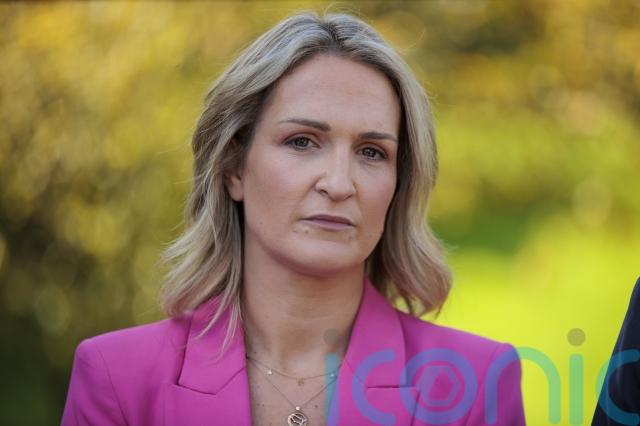
The Minister for Defence had to abandon a trip to Lebanon on security advice from the Defence Forces.
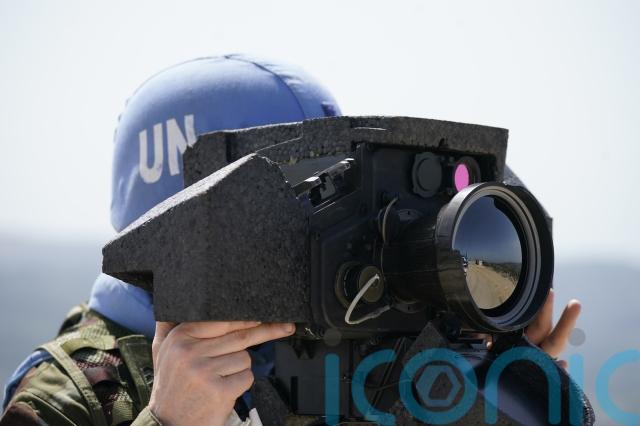
Helen McEntee had been due to meet Irish peacekeepers deployed as part of the United Nations Interim Force in Lebanon (Unifil) but the visit was called off following the military’s operational advice that it was “not tenable”.
In its latest update, the Defence Forces said all personnel in Lebanon are “well and accounted for” amid heightened clashes between the Israeli military and Hezbollah.
It comes after a Polish member of Ireland’s joint battalion with Poland sustained minor injuries from a “roadside device”, while three Indonesian peacekeepers were killed in other blasts.
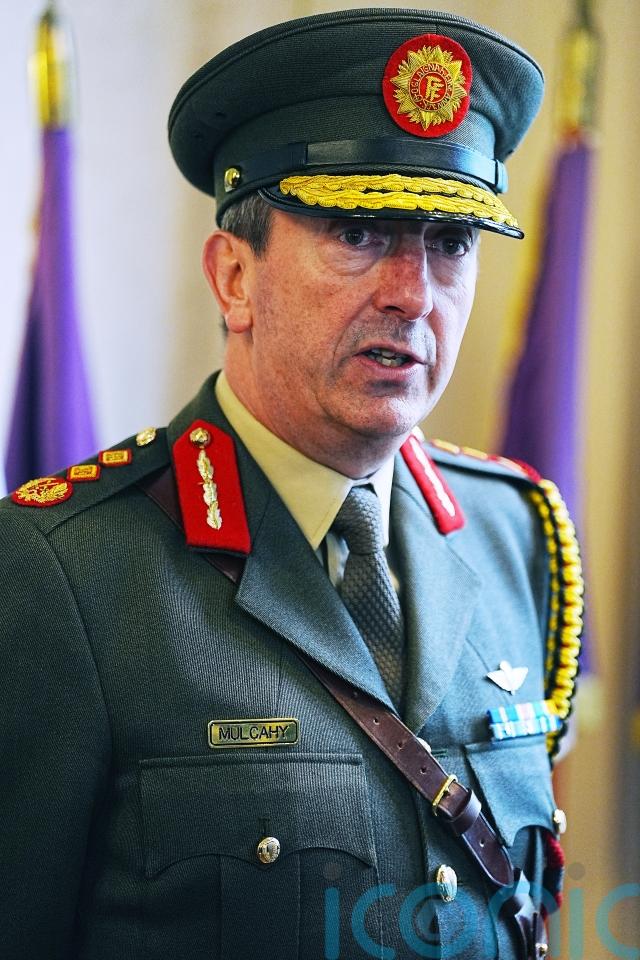
On Thursday, Chief of Staff Lieutenant General Rossa Mulcahy said: “I can confirm that all our personnel across these three UN missions in the Middle East, are well and accounted for; amid ongoing tensions in the region.
“Any developments that may affect their safety are monitored in real time and appropriate actions are taken.”
Ms McEntee said: “I will continue to work closely with partners to enhance force protection, contingency planning and ensure the mission can operate effectively in an increasingly volatile environment.
“Ireland remains steadfast in its commitment to peacekeeping and to supporting stability in Lebanon.”
The cancellation of Ms McEntee’s trip presented an opportunity the Defence Forces was able to exploit to pull off its first personnel rotation in a conflict zone using new “strategic reach” capability.
Last Friday, the Defence Forces confirmed it carried out an operation to transport key battalion personnel to UN Post 2-45 in Lebanon, known as Camp Shamrock, and to return communications specialists who had been performing critical maintenance to communication systems and infrastructure.
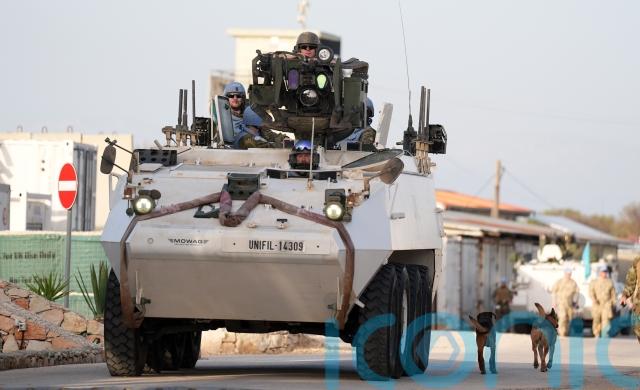
The mission involved a young female Air Corps pilot flying the plane into the “volatile region” to rendezvous with Army personnel who conducted an armoured patrol from UNP 2-45 to Beirut Airport for the personnel and equipment handover.
It was the first such operation using the strategic reach capability of the Air Corps, following the delivery of a C295 transport aircraft last year.
The Defence Forces said it needed to conduct the mission because a civilian air partner had cancelled a planned flight to rotate personnel in and out, over concerns of the increased risk in Beirut’s airspace.
This left key personnel, including medical battalion headquarters staff and medics, unable to return to the battalion.
At the same time, several communication specialists deployed to work on systems across Unifil’s area of operations were also due to leave on a cancelled flight.
Óglaigh na hÉireann can confirm that an operation took place to transport key Battalion personnel to United Nations Post 2-45 and to return Communications Specialists who had been performing critical maintenance to communication systems and infrastructure.
This was a joint… pic.twitter.com/Ize6y02A8N
— Óglaigh na hÉireann (@defenceforces) March 27, 2026
The Defence Forces uses a range of approaches to rotate personnel in and out of overseas bases like Lebanon, including commercial aircraft and chartered flights.
Using its own planes or chartering flights is a complicated process which can take weeks to secure the necessary airport slots and diplomatic clearances in collaboration with the Department of Defence and Department of Foreign Affairs.
As the Minister’s trip got cancelled, the Defence Forces were still able to use slots and clearances it had already obtained to conduct a different flight.
Over the course of five-to-six days, operations personnel analysed the risks, secured departmental sign-off, and conducted the new flight.
The operation was a success thanks to the increased capability provided to the Air Corps by the C295 aircraft, according to the director of operations and plans at Defence Forces headquarters.
Colonel Denis Hanly said it was a “force multiplier”, adding that the mission was proof of increased flexibility for the operations team, with the C295 also due to be used for personnel in Kosovo.
“We proved the concept – and we can do it again,” he said.
The Lebanon mission required ongoing risk analysis and mitigation, technical overwatch from multiple sources, and cooperation between many teams including the Irish Military Intelligence Service.
Col Hanley said securing sign off from Government departments was swift: “The doors we pushed opened very easily.”
Twenty-six personnel flew into the country with around 600kgs of equipment and supplies for deployed troops, while 17 travelled back.
The overall numbers include two pilots and air crew, as well as a medic who travelled on each leg.
They extracted the communications “work party”, swapped chaplains, and carried out a medical repatriation.
A Statement from Defence Forces Chief of Staff Lieutenant General Rossa Mulcahy on the situation in Lebanon. pic.twitter.com/zCsXTtMUuE
— Óglaigh na hÉireann (@defenceforces) April 2, 2026
The rotation was carried out while “ongoing combat operations” were still happening in south Lebanon, with strikes around Beirut visible the night before landing at the airport.
Troops from Camp Shamrock travelled in a heavily armoured convoy of Mowag personnel carriers to Beirut Airport in order to be there before the plane landed.
Col Hanly said: “We wanted a Ryanair turnover – as quickly as possible, no hugs or high fives.”
The handover, which involved unloading the equipment and supplies before taking off again, took 30 minutes – and the operations director said it could be done faster.
The convoy took close to four hours to return to Camp Shamrock, which is almost double what it would normally take because of the increased risk in the region.
Col Hanly, who gained specific experience around force protection of aircraft and airfields in Afghanistan, said there was a “calm confidence” throughout the operation.
He said it has allowed the Defence Forces to refresh leadership and key capability personnel as well as bring vehicles used by Unifil peacekeepers back into service.
Many of the personnel who were brought over were not present for the first weeks of the heightened conflict and are now returning to “austere field conditions”.
Col Hanly paid tribute to the courage and strength of those deployed in Lebanon, adding that he did not currently have concerns for the overall supplies at the camp – but referenced measures like 30-second showers and food preservation as restrictions that can be used in times of shortage.
He said there are “significant clashes across the entire area of operations” for the Irish personnel, with “significant formations” operating in the region.
Of ongoing concern is Israeli strikes on bridges over the Litani River, limiting access to Unifil’s area of operations.
He said there had been no evidence of Unifil being specifically targeted in the Irish area of operations but added that events need to be fully investigated.
Despite last week’s operation, a number of the personnel who had been due to return on leave were unable to do so because of the changing flight plans but remain on stand-by to return.
Col Hanly said the latest figures show there are 1.3 million people displaced in Lebanon, including 300,000 children – with 1,300 fatalities and 4,000 injuries.
With the next rotation due in May, Col Hanly said the Defence Forces is not resting “on its laurels”.
He said he had spoken to the new battalion leader and that planning for the next rotation is “at an advanced stage”.
On a longer term, The Defence Forces is actively planning for the conclusion of the Unifil mission and withdrawal from Lebanon.
The UN Security Council mandate for the mission expires on December 31, followed by a 12-month drawdown and ultimate liquidation.
After May, there will also be a rotation of Irish personnel in November – which is expected to have a larger logistical footprint to deal with the end of the mission.
There will still be a requirement for a “heavy security footprint”, but the personnel will likely be dealing with multiple convoys carrying Irish equipment as well as force protection as the installations are collapsed.
Col Hanly said the Defence Forces is awaiting UN guidance on the logistics of the withdrawal, but there remain concerns over how UN liquidity problems and cuts to manpower may affect it.

Subscribe or register today to discover more from DonegalLive.ie
Buy the e-paper of the Donegal Democrat, Donegal People's Press, Donegal Post and Inish Times here for instant access to Donegal's premier news titles.
Keep up with the latest news from Donegal with our daily newsletter featuring the most important stories of the day delivered to your inbox every evening at 5pm.

This publication supports the work of the Press Council of Ireland and Office of the Press Ombudsman, and our staff operate within the Code of Practice of the Press Council. You can obtain a copy of the Code, or contact the Council, at www.presscouncil.ie, Lo-call 1800 208 080 or email: info@presscouncil.ie.