Search


25 Mar 2026
Search
25 Mar 2026

Please allow ads as they help fund our trusted local news content.
Kindly add us to your ad blocker whitelist.
If you want further access to Ireland's best local journalism, consider contributing and/or subscribing to our free daily Newsletter .
Support our mission and join our community now.
To continue reading this article, you can subscribe for as little as €0.50 per week which will also give you access to all of our premium content and archived articles!
Alternatively, you can pay €0.50 per article, capped at €1 per day.
Thank you for supporting Ireland's best local journalism!

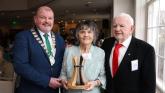
Pat the Cope Gallagher

In a recent meeting with Eamonn Coyle, Pat the Cope Gallagher came across as grounded, experienced, and still deeply connected to local issues in Donegal.
Pat is widely recognised for his straight-talking style, strong constituency focus, and durability in politics over several decades. His career reflects commitment, public service, and an enduring ability to remain relevant in changing political circumstances for many years.
Donegal balances major development needs with high biodiversity value. How do you reconcile the two in policy and planning?
Reconciling the need for increased housing and infrastructure development with our climate and biodiversity obligations is one of the defining challenges of our time. The revised National Planning Framework (NPF), published last April, reflects on the capacity of the environment to accommodate development. It contains several National Planning Objectives (NPOs) that aim to protect and restore biodiversity.
READ NEXT: Planning permission granted for South Donegal community hall extension
There is a commitment under NPO 88 of the NPF to prepare national guidance in relation to Planning and Biodiversity to: Plan and manage for integration of biodiversity protection and restoration in future planning and development; Ensure a consistent and strategic approach to biodiversity protection and restoration across planning authorities and administrative boundaries, and Support the implementation of the National Biodiversity Action Plan (2023-2030) and the forthcoming National Restoration Plan.
There are also specific NPOs (82, 83, and 85) in the NPF to ensure the incorporation of green and blue infrastructure in statutory land use plans, the creation of greenbelts, and measures to provide for connectivity, retention and restoration of habitats in new developments.
Furthermore, the National Parks and Wildlife Service (NPWS) has introduced several strategic measures focused on nature restoration, which are being implemented for many habitats, notably Active Raised Bogs, which have increased by 7% between 2018 and 2024 due to reduced drainage and extraction.
Separately, through the All-Ireland Pollinator Plan, nature-positive management has led to a 14% increase in the area of Hay Meadows, with over 66% now achieving good ecological structure and function.
In addition, the government has funded biodiversity projects in built areas. For example, funding has been made available for Swift projects nationwide in recent years through the Local Biodiversity Action Fund, including local and county Swift Surveys (e.g. Fingal in 2024); funding the deployment of new swift nest boxes, nest cameras, and callers to attract prospecting adults to new nesting locations.
How can Donegal farmers stay economically viable while meeting biodiversity and soil-health obligations?
Ireland’s outdoor, grass-based farming model is already amongst the most environmentally friendly in the world. Even so, Fianna Fáil understands that reconciling food security and action on climate change is a challenge and that we must support farmers in this.
Fianna Fáil believes that farmers should be financially backed for the good work they do.
Our flagship agri-environmental scheme, ACRES, helps address biodiversity decline while delivering an income support for up to 50,000 farm families in Ireland.
In the last Government, Fianna Fáil introduced grant supports for farmers undertaking actions to improve soil health; the Multi-Species Swards and Red Clover Silage Measures. These measures enabled farmers to reduce chemical fertiliser inputs, providing an economic benefit to farmers and an environmental benefit to society while maintaining food production. These schemes ran in 2023, 2024 and 2025. Payments up to €300/ha were available to farmers.
Additionally, the Straw Incorporation Measure encourages tillage farmers to increase Soil Organic Carbon levels by chopping and incorporating straw into the soil. In Donegal, 29 farms received a combined total payment of €94,605.12 for the measure in December 2025.
Global soil degradation is accelerating. Should Irish agricultural policy make soil protection a statutory requirement?
Soil protection measures are compulsory for farmers availing of the nitrates derogation. Under the new derogation, by the end of 2027, all derogation farmers must determine their nutrient balance using AgNav and undertake a grassland management training course.
Derogation farmers in the Slaney, Barrow, Nore and Munster Blackwater river catchments will see a reduction in their chemical fertiliser allowance on grassland from 1 January 2028.
Killybegs is Ireland’s largest fishing port. Taking account of overfishing, what are the most urgent sustainability threats facing the sector?
Ireland faces significantly reduced levels of quota for 2026; a 70% drop in the total allowable catch for mackerel, a 41% reduction in blue whiting and a 22% reduction in boarfish.
Our quota reduction reflects years of overfishing by other countries. We, the EU and specifically Ireland, are suffering the consequences.
Ireland has consistently called for action against those countries that overfish mackerel. Given that Ireland holds the largest share of the EU quota of mackerel in the western waters area, the devastating impact of the decline in the stock will be acutely felt by both our catching and processing sector.
The scientific headline advice for 2026 is a total allowable catch of 174,370 tonnes. This is based on a 50% probability that the stock will recover to biolimit mass, Blim, in 2027. There is a strong scientific basis for that which has been proposed.
Despite this however, in December, Norway, the UK, the Faroe Islands and Iceland agreed that the 2026 total allowable catch should be 299,010 tonnes. This higher catch is associated with a higher risk that the stock will not recover to Blim in 2027. The four-party agreement indicates that their combined share is 79.45%, which is equivalent to 238,000 tonnes and 37% above the headline advice of 174,000 tonnes.
Fianna Fáil wants the EU to send a clear message that actions that threaten the sustainability of our shared stocks are not acceptable. Minister of State for Fisheries and the Marine, Timmy Dooley, has raised our concerns at recent AGRIFISH Council meetings in Brussels, and has consistently called for a concerted EU response.
Donegal’s coastline is highly exposed to climate impacts. What specific coastal protection measures are required immediately?
Fianna Fáil recognises the risks associated with climate change and that increases in sea levels and storm surges will result in more frequent coastal erosion.
Work is underway by an interdepartmental group on the national coastal change management strategy. We need this strategy urgently.
A lot of different Departments are involved; there is an environmental role, a housing role and a role for local authorities. I know that Minister for Housing, Heritage and Local Government, James Browne, has implored those Departments involved to advance the work quickly.
Coastal erosion is now happening at a frightening pace. We have to develop that national strategy.
Ireland repeatedly misses legally binding emissions and biodiversity targets. What practical steps will deliver compliance?
Fianna Fáil is committed to meeting our ambitious climate targets to reduce greenhouse gas emissions by 51% by 2030; achieve net neutrality by 2050 increase.
We have seen three successive years of emissions reductions. Emissions are now at their lowest in 3 decades, despite a larger population and economy, demonstrating that economic growth and emissions reductions can go hand in hand.
However, we understand that we must do more, and we must act faster. That is why the National Development Plan Sectoral Capital Plan (2026-2030) for Climate, Energy and the Environment describes priority investments in the energy, climate and circular economy sectors over the next five years.
The Plan includes Investment of up to €3.7 billion in residential energy efficiency programmes through the Sustainable Energy Authority of Ireland (SEAI) aimed at reducing energy consumption and supporting the transition away from fossil fuels; Delivering the energy infrastructure required to sustain a growing economy; Leading a revolution in renewable electricity with a commitment to achieving 80% of Ireland’s electricity generation from renewable sources by 2030; Promoting a circular economy.
A separate equity investment of €3.5 billion in EirGrid and ESB is provided to ensure the upgrade and reinforcement of our electricity grid.
Ireland ranks poorly on biodiversity protection. What single legislative change would make the biggest practical difference?
The EU’s Nature Restoration Regulation is the first continent-wide, comprehensive law of its kind. It is a key element of the EU Biodiversity Strategy, which sets binding targets to restore degraded ecosystems, in particular those with the most potential to capture and store carbon.
The drafting of Ireland’s Nature Restoration Plan, as required by the EU’s Regulation, is in progress and will be finalised in 2027.
The Plan is being informed by experts in farming, fishing, academia, local, national and EU authorities, as well as extensive stakeholder participation.
Fianna Fáil’s position is that restoration measures should be voluntary for farmers.
All rewetting targets can be met using state lands out to 2040.
Currently, one of the most significant programmes being carried out in the State is the Enhanced Decommissioning, Rehabilitation and Restoration Scheme (EDRRS). This scheme is operated by Bord na Móna. Bord na Móna has rehabilitated approximately 22,500 hectares of peatlands under EDRRS to date, with work continuing to reach the scheme's target of 32,779 hectares. This rehabilitation work is already delivering significant benefits for the environment, particularly carbon storage and reducing carbon emissions. It is also enhancing ecosystem biodiversity by restoring natural peatland habitats.
Significant progress has also been made by the National Parks and Wildlife Service and others towards the target to rehabilitate an additional 30,000 hectares of degraded peatland by 2030, with work continuing in this area.
Donegal has strong wind and marine energy potential. What is the main barrier to faster rollout?
Fianna Fáil is committed to meeting our ambitious goal that 80% of Ireland’s electricity be generated by renewables by 2030. We believe that Ireland can be a leader in offshore wind and even a net exporter of renewable energy.
It is true that offshore wind development has faced barriers in Ireland, mostly in relation to the planning system.
That is why we have established the accelerating renewable energy task force, alongside the Taoiseach's clearing house. That will provide inter-agency oversight to remove any barriers to grid planning or ports. We need private investment, and significant amounts of it, to support connections on both the onshore and offshore sides. We are making progress in regard to previous and future auctions.
We are starting to see investment along the Donegal coast, such as the Malin Head Offshore Wind Farm project. This offers an opportunity to create employment and economic opportunities in the county, as well as delivering on our environmental ambitions.
Current forestry policy is widely regarded as failing. What alternative model would you propose?
The current Forestry Programme runs from 2023-2027 and is funded with €1.3 billion.
We have undertaken a thorough review of the Programme and listened carefully to feedback from those who have direct experience of implementing it on the ground.
We are now bringing in improved financial incentives, increased scheme flexibilities, and proactive training and engagement initiatives to better support farmers, landowners and foresters.
Key highlights include Increases to existing fencing grant rates and allowances, and agroforestry premium rates for the Afforestation Scheme; Increases to existing fencing rates for the Native Tree Area Scheme; Increases to existing fencing rates and allowances and expansion of the Deer Tree Shelter, Hare and Deer Fencing Scheme; Increases to existing grant rates for the Climate Resilient Reforestation Pilot and Forest Road Schemes;
Additionally, the farmer definition within the Afforestation Scheme 2023-2027 has been reviewed with a view to reducing administrative burden on farm families. An applicant will now just have to pass the Department’s “Active Farmer check” and have received a valid payment under the Basic Income Support for Sustainability (BISS) scheme prior to the completion of planting. This will make it easier for farmers to take part in forestry, whilst keeping a protective mechanism in place.
What concrete commitment can you give younger Donegal people on environmental action?
Fianna Fáil is committed to driving down our transport emissions. That is why we have been increasing investment in the public transport network since 2020. This investment allows us to expand bus and rail services, while reducing fees for customers.
The expansion of services continues at a pace. For example, in October 2025, Route 983 from Manorhamilton to Ballyshannon was enhanced to operate ten daily return services Monday to Thursday, 14 daily return services on Friday and Saturday and eight daily return services on Sunday. The route serves Bundoran East and Finner.
Over the coming years, we want to make significant progress in delivering the big, strategically important rail projects to support future growth, and to facilitate a reduction in our transport emissions.
The Department of Transport, together with the Department for Infrastructure in Northern Ireland, published the Rail Project Prioritisation Strategy in December 2025. This Strategy outlines how to best optimise the recommendations of the All-Island Strategic Rail Review, published in July 2024. The Rail Strategy identifies major projects to be progressed, such as the reinstatement of the Western Rail Corridor, including a Derry to Letterkenny line.
What is the single biggest long-term environmental threat facing rural Ireland?
We are already seeing the devastating impact of increased extreme weather events on rural Ireland.
Across the last three years, storms have caused unprecedented damage to our homes, our farms, the forestry sector, businesses, and roads.
Our telecommunications network was hit badly by Storm Éowyn in January 2025. This had significant effects on citizens in rural areas of the North and West.
Since January 2025, operators have focused on improving power resilience at key sites. This has involved putting in larger batteries and making more sites ready for mobile power generators in the event of longer power outages. One of first key outputs has been the identification of a list of key mobile sites which are being prioritised for resilience and restoration measures. In the event of a future storm, once these sites are restored or kept on air, a basic level of connectivity is maintained across the country.
I am glad to see that this work in the telecommunications sector is progressing. However, we must continue to build storm resilience across the whole of society so that we are prepared in the years to come.
Donegal has one of Ireland’s highest rates of one-off rural housing, which fragments habitats and increases car dependency. Is this pattern environmentally sustainable?
Fianna Fáil has always supported people to live in rural Ireland, whether this is part of a village, town or in a stand-alone home.
Our increased investment in the grid and our ambitious goal to have 5GW of offshore wind by 2030 will enable us to meet our target of 80% of our electricity to be generated by renewable sources by 2030. A reinforced grid will deliver clean energy across the country, including to one-off homes.
Furthermore, our domestic Solar PV scheme and retrofitting grants are particularly suitable for one-off rural housing. Earlier this year, Minister Darragh O’Brien announced a package of new and enhanced grants for homeowners who are looking to benefit from home energy upgrades. Since February 3, for a detached house, grants are increased to €1,800 for cavity wall insulation and €2,000 for attic insulation.
A fixed-amount grant for installing a heat pump system will be introduced, with €6,500 for the heat pump, €2,000 for upgrading radiators and pipework and a new renewable heating bonus of €4,000.
In regard to transport, Ireland has already met its Climate Action Plan target of 195,000 EVs on the road by the end of 2025 - a key milestone in the transition to cleaner transport.
In October, Minister O’Brien announced that almost €10 million will be allocated to support grants to deliver 192 new fast recharging points at 90 locations along the national primary and secondary road network. This part of a wider plan to build a reliable recharging network across the country, with the distance between recharging hubs envisaged as 30km or less.
Finally, the rollout of new and improved bus links continues at pace across rural Ireland.

Subscribe or register today to discover more from DonegalLive.ie
Buy the e-paper of the Donegal Democrat, Donegal People's Press, Donegal Post and Inish Times here for instant access to Donegal's premier news titles.
Keep up with the latest news from Donegal with our daily newsletter featuring the most important stories of the day delivered to your inbox every evening at 5pm.

This publication supports the work of the Press Council of Ireland and Office of the Press Ombudsman, and our staff operate within the Code of Practice of the Press Council. You can obtain a copy of the Code, or contact the Council, at www.presscouncil.ie, Lo-call 1800 208 080 or email: info@presscouncil.ie.