

Calls to introduce Sociology and Politics as a subject in Donegal schools
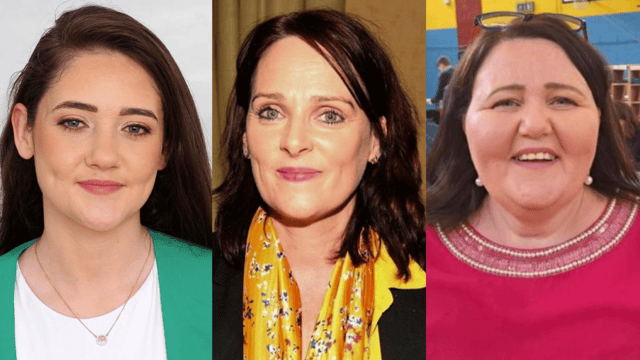

Councillor Niamh Kennedy highlighted the importance of the subject in order to encourage more gender balance and diversity in democracy
A call has been made to introduce Sociology and Politics as a Leaving Certificate Subject in Donegal schools.
Councillor Niamh Kennedy highlighted the importance of the subject in order to encourage more gender balance and diversity in democracy. The motion was brought at the recent Plenary Meeting of Donegal County Council.
“Many schools don't teach sociology and politics, leaving students at a disadvantage,” Cllr Kennedy said. “We need to ensure young people have a good understanding and knowledge to stand for elections.”
There have been suggestions to take it on as an additional subject, but it would prove more expensive and time-consuming for students involved.
“Sociology and politics are one of the most important subjects,” Cllr Joy Beard said, seconding the motion. “It explores how decisions are made and how politics works. Access to this subject is essential to improve female representation in politics. Women bring different perspectives and a different approach to politics.”
Currently, only three of the 37 county councillors in Donegal are women: Cllr Niamh Kennedy (Independent), Cllr Joy Beard (100% Redress), and Cllr Dakota Nic Mheanman (Sinn Féin) – that’s the lowest female representation of any Council in Ireland.
A sharp comparison between Donegal County Council and the South Dublin County Council, which comes the closest to gender parity at a local government level, with 19 of the 40 female councillors elected, 47.5%. However, in Donegal, just 8.1% of the elected officials are female.
‘Students Shaping the Future of Democracy in Donegal’ was held earlier this month, which featured one hundred students from Loreto Convent, Letterkenny, Scoil Mhuire Buncrana and St Columba's College, Stranorlar, considering the problem that sees Donegal in last place in the country when it comes to the percentage of its female public representatives.
The students recommended making politics an official subject in all Donegal schools for the Leaving Certificate, the creation of a county-wide public speaking competition, a mentorship programme involving retired/former councillors, and bursaries for women to help them cover the cost of running for election, aiming to increase female representation going forward.
At the Leaving Certificate level, the study of social and political science encompasses power and decision-making, active citizenship, human rights and responsibilities, and globalisation and localisation.
Donegal County Council will arrange to write to the Minister for Education, Hilldegarde Naughton TD, to implement the subject.
Funded by the Local Democracy Reporting Scheme