

McShea's Say: The GAA and its challenges with its amateur ethos

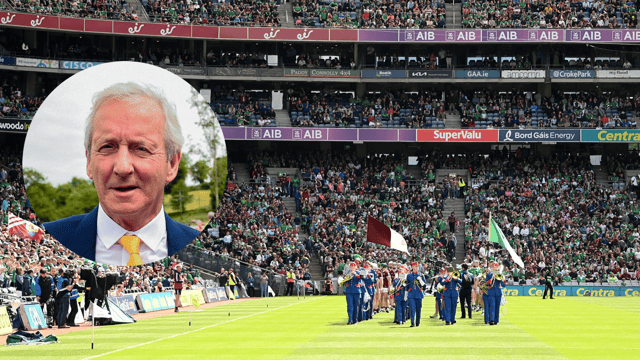

In his weekly Donegal Post column, Pauric McShea, the Donegal captain, delves into the amateur status of the GAA
As we reach the business end of the season, with the All-Ireland Football semi-finals upon us and the Hurling finalists now known to be Limerick and Kilkenny, this is the time of year when managers and coaches move on.
Some go to pastures new, and the ongoing question of remuneration, or “under-the-counter payment” again is a topic of conversation across most counties. The GAA has plenty of challenges when it comes to amateurism of course.
Close observers of the GAA can point to contradictions and hypocrisies everywhere in hurling and Gaelic football when it comes to money. Going back some years when the inter-county grant scheme was introduced for players, there was a little-noticed item in the fine print about recipients tax compliance being their own affair - and not the GAA inviting the term independent contractor to be applied to individual players when it came to the hurling and football championships.
Looking to the sidelines, there is the vexed question of paid managers and coaches, a long running issue which the GAA has wrestled with openly but never fully addressed. Everyone agrees that the manager/coach is entitled to legitimate expenses, but the grapevine within the GAA fairly crackles with tales of vast sums finding their way into the bank accounts of various coaches.
The GAA is entitled to be proud that the 30 men on the field at any given point, who draw 82,000 spectators into Croke Park on All-Ireland final day, are all amateurs who don’t get a euro for their efforts - a statement which I believe is usually made as an endorsement of their amateur ethos rather than a criticism.
The culture of the GAA is all about voluntary effort at club level, where the man on the gate at the smallest club in the country shares in the county’s biggest day in Croke Park, if his county gets there of course.
A lot of hot air is exhaled about the volunteer ethos within the GAA but it exists and is the biggest asset the Association or any other sporting body relies upon. Then there is the question of referees and how they are “looked after”.
Referees do not make a killing on the biggest day of the GAA calendar. An All-Ireland final may draw a few million television viewers, as well as a packed Croke Park but I believe that the standard remuneration applies for the man who throws in the ball.
Of course, it is a great honour to referee a final, and something any referee worth his salt would want to do. A referee wants to be part of an All-Ireland final, just as a player wants to play in one.
A few years ago, referees’ income was also the subject of some official focus, when the Revenue Commissioners served notice that they were going to look into referees expenses. That’s something that was petty in the extreme as no referee in club or county football or hurling will ever make money from what is simply a labour of love.
It is suggested that in modern Gaelic games that there are some coaches not earning, yet in others being paid €100,000 a year.
I find that very difficult to reconcile when one looks at the club officials all over the country, who are standing in supermarkets on a Saturday for hours on end selling the lotto or spending every Friday night running bingo to get the few euros to keep their club afloat. There must be a better way.
In an extraordinary manager, like Brian Cody, Kilkenny has got a man who has led his county to their 19th All-Ireland Hurling final after they hammered Clare on Saturday. His coaching has produced players of extraordinary calibre, of discipline, mentality, toughness, and calmness within themselves.
With Cody’s players there is no loud-mouthiness, no boasting, no trouble. There is no foolishness or arrogance of any form. There will never be a better manager in the history of Gaelic games, and he is a volunteer.
There is a great weekend of football in store in Croke Park with Derry playing Galway on Saturday evening, while Dublin and Kerry meet in the second semi-final on Sunday. Cavan and Westmeath complete the programme in what should be a very good Tailteann Cup final.
All three matches are difficult to call, but if Con O Callaghan is fit, he may just swing things Dublin’s way against Kerry. Derry are slight favourites to overcome Galway, but they were fortunate to prevail in Ulster against an off-colour Donegal side. And having watched Galway against Armagh I still believe Donegal could well have been playing in this Sunday’s semi-final.