Under
ATU’s technical leadership, cutting-edge smart water technology has advanced from research labs in Donegal to real-world deployment in Uganda, where it is already improving water security for rural communities.
The Smart Water: Internet of Things (IoT) for Uganda project has reached a significant milestone as these systems transition from advanced academic research to operational use. As part of the collaboration, ATU’s WiSAR Lab provided the technical leadership, working alongside global consultancy Arup, international development organisation Fields of Life, and the Kumi District Water Office to support the rollout of smart water systems now benefiting rural communities.
Launched in 2019 as a joint research initiative, the project has progressed from early concept development and laboratory testing to full-scale deployment on the ground.
Funded under the Enterprise Ireland Innovation Partnership Programme, the project demonstrates how ATU’s applied research in electronics, wireless communications, and embedded systems can address global sustainability challenges. The ATU team designed and manufactured low-cost, solar-powered IoT systems to continuously monitor community hand pumps, the main water source for many people in rural East Africa.
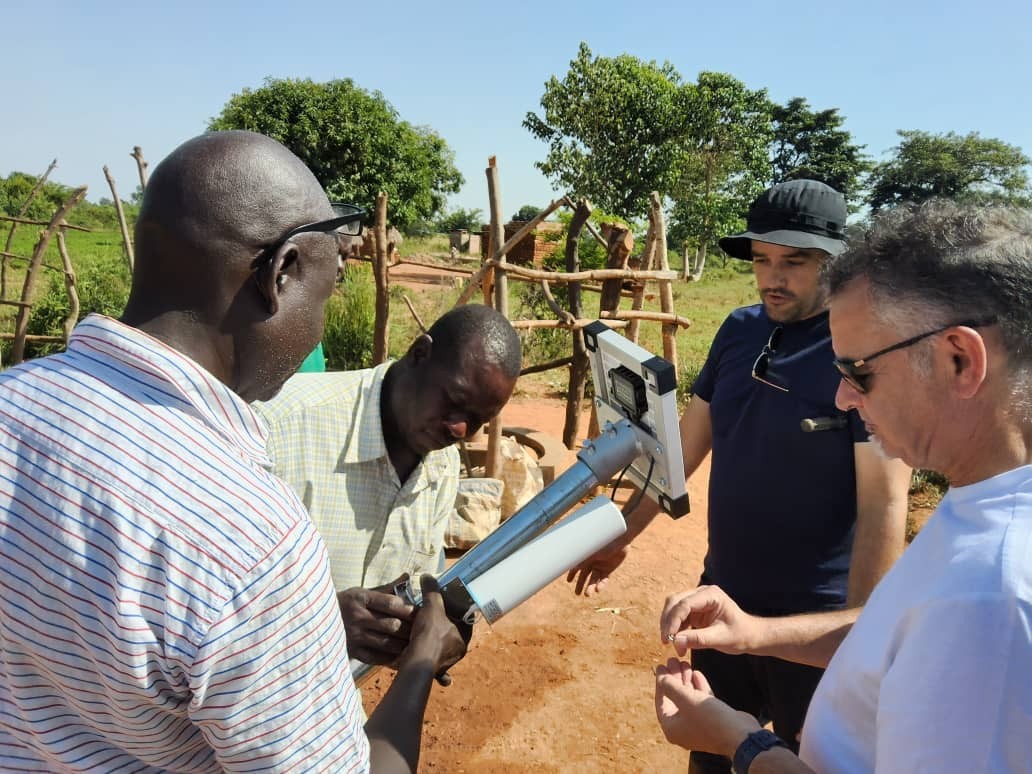
Last month, WiSAR research engineer Senan Morris travelled from Donegal to Uganda to oversee the installation of the new smart monitoring systems and train local engineers alongside the Kumi District Water Office. He also supported commissioning at several community water points to confirm their performance under real-world conditions.
“It was humbling to see the technology making a real difference on the ground,” said Senan Morris. “Working side by side with local teams showed how innovation and collaboration can create lasting impact.”
These smart systems transmit real-time data on water usage and pump performance, enabling local authorities and NGOs to detect faults early, plan maintenance efficiently, and prevent water loss. Conceived and engineered by ATU researchers, the technology reduces downtime and ensures reliable access to clean, safe water, improving health and resilience in rural communities.
Data from the pumps is already supporting local government planning. By providing reliable insights into water usage and performance, the platform enables smarter decision-making and early contingency measures. The system is scalable, with potential for further ATU-led development to include water-quality and environmental monitoring.
Dr Stephen Seawright, WiSAR Technology Gateway Manager at ATU, said: “Through the use of research and technology, we were able to help improve the lives of people in rural communities where access to clean water has long been a daily challenge. This project shows how Irish research, and ATU research in particular, can make a difference globally by turning ideas from the lab into solutions that change lives.”
Dr Orla Flynn, President of Atlantic Technological University, added: “This project epitomises the mission of ATU to conduct high-quality, impactful research that tackles real-world problems and delivers tangible benefits to society. The success of Smart Water reflects the strength of our research teams and the power of collaboration between academia, industry, and community partners.”
Ales Gason, Director of Programmes at Fields of Life, said: “Access to safe and reliable water is fundamental to life and community development. Working with partners such as ATU, Arup, and the Kumi District Water Office allows us to combine engineering innovation with community experience to ensure these solutions meet real local needs.”
Alison Orr, Senior Hydrogeologist with Arup, said: “The Smart Water project shows how digital innovation and research collaboration can transform essential infrastructure in rural Africa. The expertise from ATU’s WiSAR Lab was central to the system’s development, helping local communities move from reactive to predictive maintenance.”
Peter Mawanga, District Local Government, Uganda, said: “This system is already making a real difference for our communities. Seeing pump data in real time helps us plan maintenance, allocate resources, and respond quickly to faults before they become major issues.”
The Smart Water: IoT for Uganda project supports UN Sustainable Development Goal 6: Clean Water and Sanitation, strengthening local water security, improving public health, and showing how ATU’s applied research can deliver global impact.
Supported by Enterprise Ireland under the Innovation Partnership Programme and co-funded by the European Regional Development Fund (ERDF), this partnership between ATU, Arup, Fields of Life, and the Kumi District Water Office highlights how research-driven innovation can deliver lasting, measurable benefits for communities who need it most.