

Appeal against Council’s refusal for new Narin Campervan Park denied
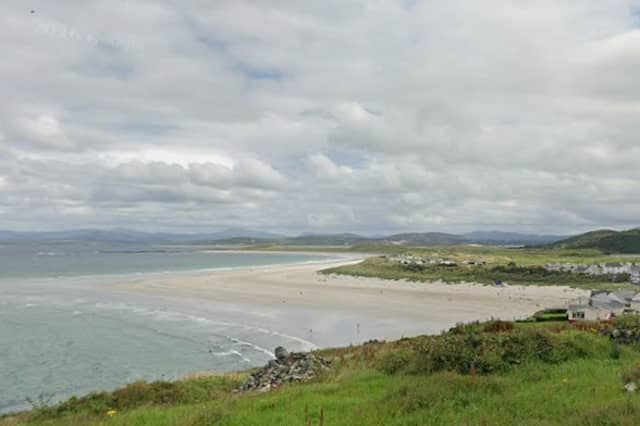

An Coimisiún Pleanála denied appeal that had been submitted by listed applicant, Patrick Boyle
A Donegal County Council decision to refuse planning permission for a proposed campervan park in Narin, Portnoo, has been upheld by An Coimisiún Pleanála.
An Coimisiún Pleanála denied the appeal by the listed applicant, Patrick Boyle, who had submitted application for the construction of the campervan park, to be situated at a site 800 metres from the Narin-Portnoo Strand, consisting of 10 campervan parking bays with associated services, internal pathways, laneways and additional parking areas, a play area and picnic benches within green areas, a service building containing showers, toilets, and a reception area.
The appeal to An Coimisiún Pleanála was submitted in March 2026.
Reasons and considerations for why An Coimisiún Pleanála was recommended to reject the appeal included the argument that the proposed development, “by virtue of its haphazard, transient nature, detachment from the coastal tourism setting and general failure to integrate with, and reflect the character and amenity of this landscape, would adversely impact on the scenic quality, visual amenity and rural character of the area, and materially detract from the visual and scenic amenities of this important approach to Naran-Portnoo Strand, a significant tourism attraction and national Discovery Point along the route of the Wild Atlantic Way.”
A second reason was that the “proposed development would significantly impact existing residential amenities of the same by virtue of its haphazard, transient nature, and particularly in terms of noise, lighting and general nuisance, and the overall disconnect from the coastal tourism setting.”
It was further considered that the “proposed wastewater treatment system would be prejudicial to public health.”
Finally, An Coimisiún Pleanála could not be “satisfied that the proposed development, individually, or in combination with other plans and projects would not be likely to have an adverse effect,” on sites in view of conservation objectives.
The 32-page appeal documents, which were lodged on March 16, had provided arguments against reasons why the proposals had been refused by Donegal County Council, namely the “alleged visual prominence, alleged conflict with High Scenic Amenity, alleged residential amenity impact,” and “alleged undesirable precedent.”
It had been argued that the Planning Authority were “clearly premature in its refusal decisions” and that the proposal was “low-impact, mostly seasonal, and reversible.
“The council decision does not reflect this or acknowledge substantial landscape mitigation.”
It had been concluded in the appeal that “the refusal by Donegal County Council is not supported by the Development Plan, lacks evidential basis, and is inconsistent with national policy and An Coimisiún Pleanála precedent cases.”
Initially, the Planning Authority had considered that the proposals would fail “to assimilate successfully into the landscape,” and cause a “detrimental change.”
Within the Planner’s Report, the location of the proposed campervan park on a visually prominent and exposed site had been considered, as was its location within an area of High Scenic Amenity and the impact on the scenic quality, visual amenity and rural character of the area, and the significant impacts on existing residential amenities of neighbouring dwellings.