Search


17 Apr 2026
Search
17 Apr 2026

Please allow ads as they help fund our trusted local news content.
Kindly add us to your ad blocker whitelist.
If you want further access to Ireland's best local journalism, consider contributing and/or subscribing to our free daily Newsletter .
Support our mission and join our community now.
To continue reading this article, you can subscribe for as little as €0.50 per week which will also give you access to all of our premium content and archived articles!
Alternatively, you can pay €0.50 per article, capped at €1 per day.
Thank you for supporting Ireland's best local journalism!

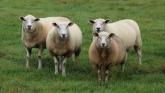
140 of the sheep had no tags and could not be traced for food purposes,

A former Garda has been fined after transporting sheep without the required tags or documentation - resulting in 140 animals being destroyed and a €50,000 cost to the State.
Patrick Kilcoyne appeared before Judge Gráinne Malone at Letterkenny District Court, where he was convicted after being caught transporting 177 sheep from Mayo to Donegal in November 2022.
Some 140 of the sheep had no tags and could not be traced for food purposes, meaning they had to be destroyed, while none of the animals on the lorry had the required documentation.
Patrick Kilcoyne, 64, of Rosemount Villas, Letterkenny, who was charged under section 4 and section 7 of the European Communities (Sheep Identification) Regulations 2011, was fined €1,000.
His brother, Owen Kilcoyne, with an address at Creggnabaun, Louisburgh, Westport, Co Mayo, was also charged with a similar offence relating to the same incident.
The case was outlined by Detective Garda Enda Jennings at Letterkenny District Court.
Detective Garda Jennings told the court that he was made aware of a lorry travelling from Westport in the direction of Donegal on November 27, 2022.
He said the vehicle was of interest in a sheep-movement investigation.
The lorry was observed going through Ballyshannon and was stopped at 1.55pm at Railway Road, Stranorlar.
Detective Garda Jennings spoke to the driver, who informed him that he was transporting 180 sheep. The driver of the lorry told the detective that he had no documentation and “didn’t know what was tagged and what wasn’t”.
Gardai learned that the lorry was loaded by Patrick Kilcoyne in Louisburgh, Westport earlier in the day.
Detective Garda Jennings informed the court that he observed sheep which had coloured markings on their backs, but with no tags.
The sheep were seized for the purpose of the investigation and Gardai escorted the lorry to a nearby mart.
The animals were subsequently handed into the care of the Department of Agriculture and taken to a secure location outside of County Donegal.
On December 5, 2022, investigators, including Gardai and an official from the Department, examined all of the sheep and found that 37 were tagged with 140 untagged. On the day in question, no documentation for any of the 177 sheep had been provided.
The 37 tagged sheep bore tags relating to the flocks of seven other individuals, who were neighbours in the Mayo area. In the case of three people, they related to 10 sheep.
Detective Garda Jennings spoke to the owners of all of the sheep. Two people had no record of selling the sheep to Patrick Kilcoyne and made statements to that effect.
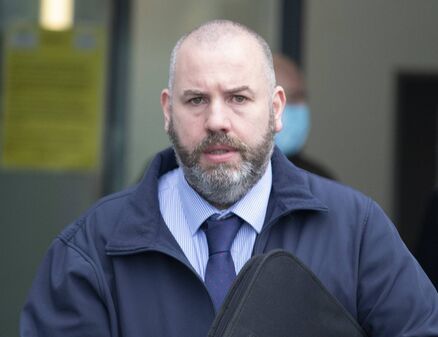
Detective Garda Enda Jennings. (North West Newspix)
A third Kilcoyne brother, Peter, confirmed that four of the sheep were from his flock, but told Gardai that Pat and Owen operated the flock and he had “no hands-on” dealing.
Mr Danny Gavaghan, a District Superintendent from the Department of Agriculture, Food and the Marine, told the court that sheep have to be tagged to ensure traceability.
Mr Gavaghan told Judge Malone that the Department incurred costs of around €50,000 as a result of this investigation.
Detective Garda Jennings said that neither of the accused men was cooperative.
“One initially did, but he refused to engage after that,” he said.
Solicitor Mr Kieran O’Gorman disclosed to the court that Patrick Kilcoyne is a retired member of An Garda Siochana. He said he has been farming the family farm in Mayo in conjunction with a small farm in Donegal.
Mr O’Gorman said the majority of the sheep in question were to be sold the next day.
“It was his intention to have them tagged,” Mr O’Gorman said. “He has an otherwise impeccable record and he has never come to the attention of the Department. He has a very good relationship with the Department.”
Mr O’Gorman said his client, a married father-of-three, “accepts that they should have been tagged”.
“The sheep were being brought for sale rather than going from farm-to-farm,” he said.
Judge Malone said that the Department ultimately “had to fork out money” due to the actions of Mr O’Gorman’s clients and asked if he had any proposals. The judge noted that the matter had cost “tens of thousands of euro”.
Mr O’Gorman said his clients were “small farmers” and added that “nothing could be done once the situation arose”.
Garda Inspector Johnny Sweeney told the court that a plea was indicated on the day before the case was due before the court.
Mr O’Gorman outlined to the court that Owen Kilcoyne is undergoing cancer treatment and is unwell at present.
Judge Malone said that in the case of Owen Kilcoyne she would, given the plea and what was said on his behalf, apply section 1 (1) of the Probation of Offenders Act, 1907, leaving him without a conviction.
Patrick Kilcoyne was, said Judge Malone, “the main person involved in this”.
Judge Malone said the accused man would get “significant credit” for his guilty plea, which saved the State and the Department “considerable time”, and noted that he has no previous convictions.
“I am concerned that his behaviour cost the Department a considerable sum,” Judge Malone said. “While he has pleaded guilty, nothing has been suggested as to how that can be addressed.”
Judge Malone added that as a former member of An Garda Siochana, Kilcoyne “should have known the importance” of traceability and tagging.
Patrick Kilcoyne was fined €1,000 and given six months to pay.

Subscribe or register today to discover more from DonegalLive.ie
Buy the e-paper of the Donegal Democrat, Donegal People's Press, Donegal Post and Inish Times here for instant access to Donegal's premier news titles.
Keep up with the latest news from Donegal with our daily newsletter featuring the most important stories of the day delivered to your inbox every evening at 5pm.

This publication supports the work of the Press Council of Ireland and Office of the Press Ombudsman, and our staff operate within the Code of Practice of the Press Council. You can obtain a copy of the Code, or contact the Council, at www.presscouncil.ie, Lo-call 1800 208 080 or email: info@presscouncil.ie.