

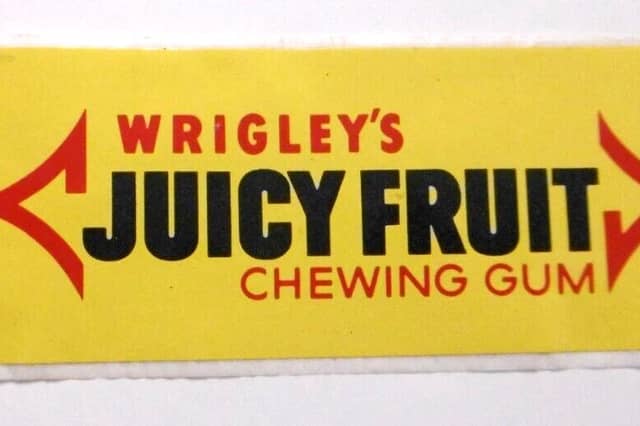
Barrtalk vs Barrcode: And a vintage packet of Juicy Fruit chewing gum


Moville journalist Caoimhinn Barr writes a weekly column which has been running in the Inishowen Independent newspaper since 2010
Her Indoors came up with the name for this column in early 2010, and I immediately adopted it.
Ever since then, I’ve always assumed that ‘Barrtalk’ was the perfect moniker for the jumble of words and views on this weekly page.
That was until I happened to listen to the radio the other day, when they were doing an unusual feature to mark the anniversary of the first ever barcode being scanned.
Eureka! ‘Barrcode’ [I would’ve added the second ‘r’ obviously] would have been an even more perfect name to sum up the contents published here.
Anyway, after more than sixteen years, I guess that ship has very much ‘sailed’, as they say.
And whilst this writer has managed to survive without a barcode at the top, there is one on the back page of this Inishowen Independent newspaper – and everything else we have bought for the past fifty-plus years.
When a humble pack of Wrigley’s Juicy Fruit gum passed over a scanner at exactly 8.01am on June 26, 1974, few could have guessed it was the beginning of one of the biggest revolutions in everyday life.
That first-ever grocery barcode scan took place at a Marsh supermarket in Troy, Ohio, and while it barely caused a ripple at the time, it quietly changed shopping forever.
Like many breakthroughs, the barcode had been decades in the making. Back in 1949, inventor Joe Woodland drew the first concept in the sand on Miami Beach, inspired by Morse code. Instead of dots and dashes, he imagined information stored in thick and thin lines.
His original circular ‘bull's-eye’ barcode was clever, but the technology simply wasn't ready. It took the arrival of lasers and affordable computers before the idea finally caught up with reality.
When the grocery industry sought a universal system to speed up checkouts and reduce errors, IBM engineer George Laurer produced the now-familiar rectangular Universal Product Code, complete with its black-and-white stripes and 12-digit number.
It proved easier to print and scan than Woodland's original design, and the rest, as they say, is retail history.
But of course, people hated it. Or at least they were deeply suspicious of it.
Some feared barcodes would let supermarkets secretly overcharge shoppers. Others distrusted the strange-looking stripes altogether. Consumer groups objected, protests were held, and adoption was painfully slow, with only a small percentage of US grocery stores installing scanners by the end of the 1970s.
If social media had existed back then, you can almost guarantee someone would have insisted the barcode knew which way you voted, how much tax you owed, and was probably communicating with satellites while it was at it.
Half a century later, those fears seem almost quaint. Barcodes have made checkouts dramatically faster, reduced pricing mistakes, improved stock management, and helped businesses keep shelves filled with the products people actually want.
More importantly, imagine supermarket queues over the past 50 years without them. Every single tin, loaf, and carton would still have to be keyed in manually, one item at a time, while the queue behind you stretched halfway to the frozen food aisle.
Today, barcodes appear on everything from shipping labels and airline luggage tags to hospital records and library books. What began with one packet of chewing gum in an Ohio supermarket has become one of the world's most successful pieces of invisible technology – proof that yesterday's ‘dangerous new invention’ often becomes tomorrow's indispensable convenience.
Incidentally, for those who prefer life before the advent of the barcode, I found a vintage unopened pack of Wrigley’s Juicy Fruit from the 1950s currently selling on etsy.com for €90. I kid you not. That’s €90 for one packet of mouldy chewing gum.
And if you think that’s not crazy enough [which it is], postage to Moville from the US is an extra €43 on top!
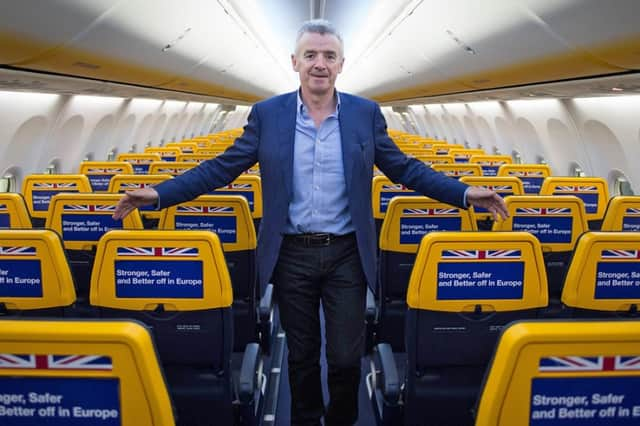
Ryanair goes a bit more family-friendly
The news last week that Ryanair was forced to abandon charging parents fees to be seated next to their young kids came as a surprise to me.
I've always defended Michael O'Leary, and I even called my youngest son Ryan, partly in homage to the airline but more so to Giggs and Adams.
I always assumed that the basic Ryanair approach to customer service was worth the trade-off for cheap flights to almost anywhere in Europe.
That said, the concept of the budget flight has all but disappeared in recent years in the face of soaring fuel costs.
In this new expensive air travel era, it seemed baffling that Ryanair was, until recently, heaping an additional charge on parents for the privilege of sitting beside their kids on flights.
For years, Ryanair defended its policy of requiring at least one parent to pay for a reserved seat to guarantee sitting beside their young child. The airline argued that the system was transparent and even generous, as one paid adult seat allowed up to four children's seats to be allocated free of charge.
However, following pressure from the UK’s Competition and Markets Authority (CMA), Ryanair has now reversed course, allowing parents and children to sit together free of charge after check-in.
The change is welcome, but it raises an obvious question: why did it take regulatory intervention to achieve what most passengers would consider common sense?
Sitting beside a young child is not a luxury or a premium extra. It's a basic expectation that supports children's wellbeing, and makes life easier for cabin crew, not to mention other passengers.
Families should never have been charged to meet what many see as a fundamental safety and welfare obligation on the part of the airline.
In typical O'Leary style, he and his company haven't exactly welcomed the move.
Ryanair has adapted its policy, but insists the move is "reluctant" and maintains the previous system was fair. The reality is that businesses that genuinely put passengers first should not need regulators to prompt changes that improve the travel experience.
Low fares and customer care should not be mutually exclusive, especially in 2026 when truly low fares are a thing of the past.
Airlines have every right to charge for optional extras, but keeping parents and young children together should not be treated as one of them. This policy change is a victory for families.
Everything about the flying experience has been fleecing families for years. From €15 sandwiches, €5 for a €1 bag of sweets, and soft drinks costing the same amount as a pint.
Parents are paying through the teeth for everything about the average family holiday these days, so it's nice to know we'll not have to pay to sit beside each other on the plane. I'm sure Michael O'Leary can afford to take the hit.
On a side note: We’re flying Easyjet to London from Belfast later this month on a family holiday – and you’ll never guess the highlight for us Barrtalks??
Being able to take as many liquids as we like in our luggage and not having to put them in separate ‘sealed’ plastic bags and painstakingly bring them all out for inspection at airport security!
Glorious 250ml shower gel and 125ml moisturiser. It’s the little luxuries in life.