

Buncrana beach water quality is back to ‘excellent’
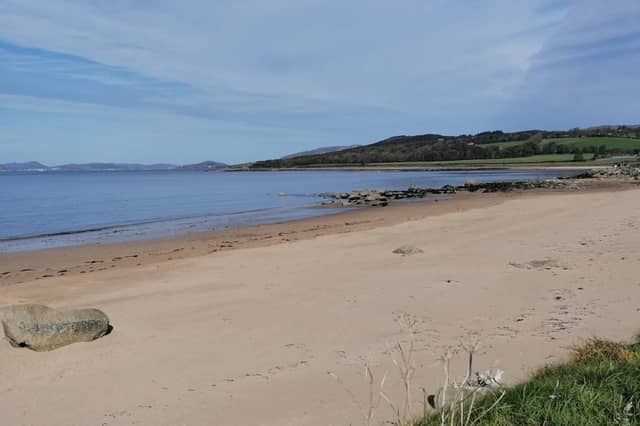

Lady’s Bay recovers after severe contamination, but questions remain over pollution from rivers and streams as well as sewerage network
The latest pollution incident at Lady’s Bay, Buncrana’s shorefront beach, has ended with water quality at the popular bathing spot now deemed to be excellent.
Water quality testing carried out there on Wednesday 25 August returned an excellent result, with levels of e.coli and intestinal enterococci well below the thresholds for safe swimming.
Heavy rain in the locality the previous week overwhelmed the sewerage system and primary wastewater treatment plant in Buncrana, leading to the worst pollution incident at the beach in five years, with extremely high levels of e.coli and intestinal enterococci detected in tests carried out on Tuesday, 18 August, and Wednesday, 19 August.
Lady’s Bay lies between the mouths of the Crana and Mill rivers and is also sensitive to pollution emanating from their upstream catchments.
The August 18 reading at the shorefront beach was almost 14 times the Environmental Protection Agency's (EPA) minimum safe bathing-water threshold for e.coli, while the following day's result was more than five times the limit.
Donegal County Council had issued prior warnings of possible bacterial pollution in the days beforehand, based on forecasts of heavy rainfall.
As is usually the case following a pollution incident, the local authority increased the frequency of testing at the beach to determine its extent and duration. Tests carried out on August 20 and 21 showed that the worst had passed, with water quality returning to a ‘good’ result - point two on the EPA’s four-point bathing-water quality scale.
The result on Wednesday, August 25, was back at ‘excellent’, the top of the scale.
Nevertheless, this pollution incident was the worst recorded at Lady's Bay since August 2021 and could have ramifications for bathing at the beach in the future.
The EPA’s designation of a bathing water as excellent, good, sufficient or poor is based on water-quality testing results over the previous four years.
Lady’s Bay was designated as having ‘poor’ water quality for four consecutive summers from 2021 to 2024, with the EPA imposing a ‘no swimming’ advisory warning the public against entering the water.
Significant upgrades to Buncrana's sewerage network and wastewater treatment plant, carried out by Uisce Éireann, did lead to an improvement in water quality with the EPA awarding the beach a ‘sufficient’ quality rating for 2025.
However, this month’s serious pollution, along with the failure to acknowledge much less address pollution discharges from urban and agricultural sources through local streams and rivers, leaves Lady’s Bay at risk of having swimming restrictions imposed again in 2027 and beyond.
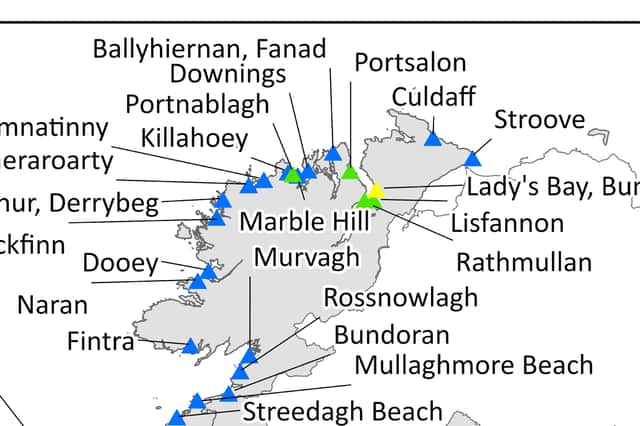
The EPA assesses 153 designated bathing waters around the 26 counties, with 150 of those meeting or exceeding the minimum ‘sufficient’ standard last year.
In Donegal, 21 designated bathing waters are subject to regular water-quality testing each summer. However, many other popular swimming spots around the county are not monitored under the EPA’s bathing-water programme and the public must take their chance - whether after periods of heavy rainfall or not - that taking a dip doesn't result in a tummy bug or a more serious illness.
Pregnant women, young children, older people and those with weakened immune systems can be more susceptible to infection from contaminated bathing water, while people with open cuts or wounds should not enter the water.
Regardless of age, anyone who swallows significant amounts of contaminated seawater can be affected by nausea, diarrhoea or, in more serious cases, skin, ear, eye or respiratory infections.