

Health & Happiness: Samhain and the Ancient Irish Origins of Halloween

Columnist Aileen Casey is a Buncrana-based writer, parent and healthy-living enthusiast with a background in early childhood care and elderly support
As October draws towards its close, shop windows fill with pumpkins, children make plans for fancy dress and households prepare for an evening of callers at the door.
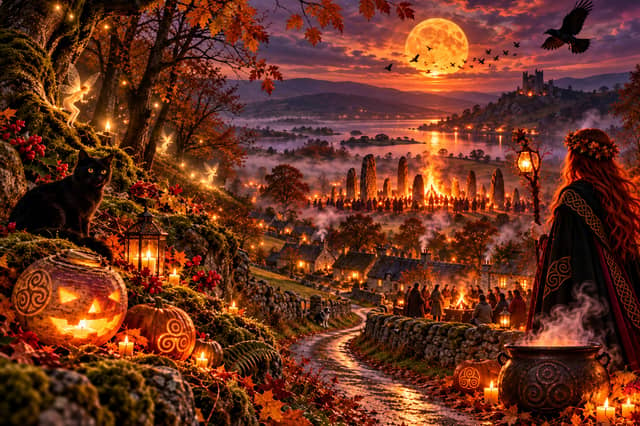
Yet behind the costumes and confectionery lies a story that began much closer to home. Long before anyone had heard of trick or treating, communities across Ireland observed Samhain a festival marking the end of the harvest and the beginning of winter.
Celebrations traditionally began on the evening of October 31st, known in Irish as Oíche Shamhna, and continued into November 1st. Samhain was one of four important turning points in the old Irish year, alongside Imbolc, Bealtaine and Lughnasa.
Its origins reach back to pre-Christian Ireland. Crops were gathered, livestock brought in from summer grazing and provisions stored before winter. Samhain marked one season’s end and another’s beginning, bringing families and neighbours together.
Alongside these practical preparations grew a rich collection of stories and beliefs, passed through generations of Irish storytelling.
According to tradition, Samhain was a time when the veil separating our world from the ‘Otherworld’ grew particularly thin. The Aos Sí, the mysterious fairy folk, could move more freely through the countryside, while spirits might return to places they had once known.
The mischievous púca, a shape shifting creature of Irish folklore, was another presence associated with the season. Said to appear in different forms, it might wander country lanes and play tricks on unsuspecting travellers.
Tales of fairy forts, enchanted places and unexplained encounters were shared around the fireside on dark autumn evenings.
Even today, there are corners of the Irish countryside where these ancient stories seem remarkably close, particularly when October mist settles over the fields and the last light disappears beyond the hills. Fire, food, games and storytelling provided companionship as winter approached.
With the spread of Christianity, the calendar acquired another important dimension. All Saints’ Day, celebrated on November 1st , honours the saints and their lives of faith, while All Souls’ Day on November 2nd offers an occasion for prayerful remembrance of those who have died.
The evening preceding All Saints’ Day became known as All Hallows’ Eve, from which the word Halloween developed. Over the centuries, Christian observances and seasonal customs became familiar parts of this time of year.
One familiar Halloween decoration shows how Irish customs travelled the world. Long before pumpkins became synonymous with Halloween, people carved frightening faces into turnips, hollowed them out and placed candles inside.
There is a fascinating Donegal connection preserved by the National Museum of Ireland. In 1943, schoolteacher Rois Ní Braonáin, working near Fintown, provided the museum with a traditional turnip lantern.
She explained that similar lanterns had been made locally around 1900. A painted plaster cast model survives in the museum’s collection, a reminder of the county’s Halloween heritage.
The name Jack O’Lantern is associated with an Irish folktale about a wandering character called Jack, said to have been turned away from both Heaven and Hell and left to travel with only a lantern to guide him.
When Irish emigrants carried Halloween customs to America, pumpkins proved easier to carve than turnips, and the familiar glowing pumpkin took hold.
Fancy dress has a history older than shop bought costumes. Irish guisers visited houses wearing masks and improvised outfits, sometimes singing or performing in return for a treat. Mischief and practical jokes added to the excitement, helping shape customs that eventually became modern trick or treating.
In the kitchen, Halloween offered seasonal food and a little fortune telling. Barmbrack might contain a ring supposedly promising marriage or a coin suggesting wealth.
Colcannon was another favourite, while apples and nuts featured in games. Many will remember trying to bite an apple suspended from a string or bobbing for one in a basin of water, with laughter usually more certain than any prediction.
Today, Ireland’s Halloween heritage is celebrated on a remarkable scale, including here in Inishowen.
On Sunday, 25 October, Buncrana’s Samhain by the Swilly – Parade of the Púca, delivered by Inishowen Carnival Group and MRK Live, will bring illuminated floats, colourful costumes and performances to Main Street from 7pm. Families can then enjoy music and children’s activities in St Mary’s Hall.
Meanwhile, Redcastle’s annual Scarecrow Drive-Thru is well worth a visit, with displays from 19th October and a €100 prize for the most humorous, scariest or most topical scarecrow. A pumpkin and turnip carving competition and Fright Night walk on October 30th will add to the festivities.
Those drawn to the peninsula’s mysterious past can also join North West Scenic Tours’ Haunted Inishowen Tours, exploring ghost stories, an ancient fort and historic sites.
Just across the border, Derry Halloween, recognised as Europe’s largest Halloween festival, celebrates its 40th anniversary in 2026.
From October 28th to November 1st, the Walled City will be transformed by illuminated trails, performances, the famous carnival parade and fireworks. Belfast joins in with its Halloween Takeover, as giant inflatable creatures appear across the city centre.
Further afield, County Meath’s Púca Festival brings folklore, music and entertainment to Trim and Athboy. Across Ireland, celebrations flourish, from Dublin’s Bram Stoker Festival and Galway’s Gaillimh Ah-Boo!, featuring the spectacular Macnas parade, to Cork’s Dragon of Shandon.
Kerry’s Samhain Chiarraí, including events in Dingle, and traditional Halloween activities in Sligo further reflect the enduring appeal of Ireland’s seasonal heritage.
Yet beyond the larger festivals, Halloween remains an occasion shared in homes and neighbourhoods. Across Inishowen, children will compare costumes, families will decorate their doorsteps and neighbours will welcome miniature witches, ghosts and superheroes. Older generations may remember homemade disguises, apple games and slices of brack.
Perhaps that is what makes Halloween’s story so enduring: its ability to change without losing its familiar character.
The turnip became a pumpkin, homemade outfits became elaborate costumes and local festivities grew into international celebrations. Yet family, community, storytelling and remembrance remain woven through its history.
This Halloween, amid the costumes and sweet treats, Samhain remains part of Ireland’s extraordinary cultural inheritance, carried forward in customs we continue to share.