Search


04 Apr 2026
Search
04 Apr 2026

Please allow ads as they help fund our trusted local news content.
Kindly add us to your ad blocker whitelist.
If you want further access to Ireland's best local journalism, consider contributing and/or subscribing to our free daily Newsletter .
Support our mission and join our community now.
To continue reading this article, you can subscribe for as little as €0.50 per week which will also give you access to all of our premium content and archived articles!
Alternatively, you can pay €0.50 per article, capped at €1 per day.
Thank you for supporting Ireland's best local journalism!

Joe’s attachment to Glenties stemmed from his interest in Patrick MacGill which was sparked by his father who brought back books by McGill from his seasonal work in Scotland

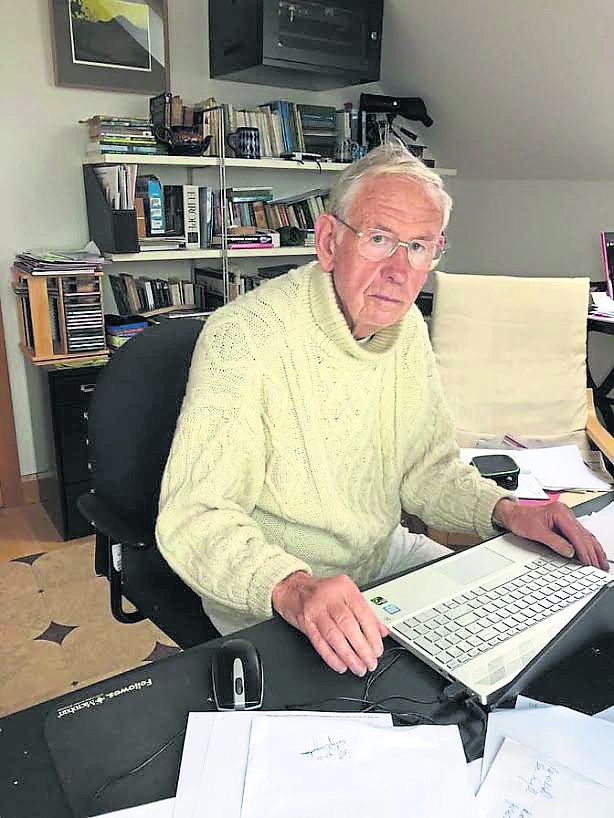
Joe Mulholland, a towering figure in so many aspects of his life, was never more at home than when he was in Donegal.
At his summer home in St John's Point, in the towns of his youth, Ballybofey/Stranorlar and especially in Glenties.
Joe’s attachment to Glenties stemmed from his interest in Patrick MacGill which was sparked by his father who brought back books by McGill from his seasonal work in Scotland. In reading MacGill’s books and researching his life, Joe discovered a fascinating story.
The schoolboy who challenged the headmaster and left school never to return, the young boy who was sent to the hiring fair in Strabane, the young man who went to Scotland and became a Navvy, wrote poems about his life experience and became known as the Navvy Poet. The man who, after the publication of his early books The Rat Pit and Children Of The Dead End, rose to fame and fortune.
However, after MacGill moved to the US in 1928, he seemed to vanish off the face of the earth. Now Joe asked the important question: What had happened to MacGill? Joe, ever the pragmatist, took action! He put an advertisement in an American literary magazine enquiring about MacGill.
As good fortune would have it, one of MacGill’s daughters became aware of this and contacted Joe. Joe visited the MacGill family in the United States, where he heard the full story of MacGill’s life, how his health had deteriorated, leading to his death some years earlier. While Joe had been researching MacGill, moves were afoot in Glenties to establish a festival to celebrate MacGill. Joe and the festival group joined forces. In the early 1980’s, Joe brought MacGill’s daughters to Glenties for what became known locally as The MacGill Festival.
‘MacGill Festival’ was probably the right title for these events. There were bands in the streets, there were welcoming speeches, plaques were unveiled, and MacGill’s daughters spoke in their elegant American accents to excited audiences. It was a joyous homecoming. The centrepiece of these first years was Joe telling the story of MacGill, his early life, his rise to fame and fortune and the missing story of his life in America.
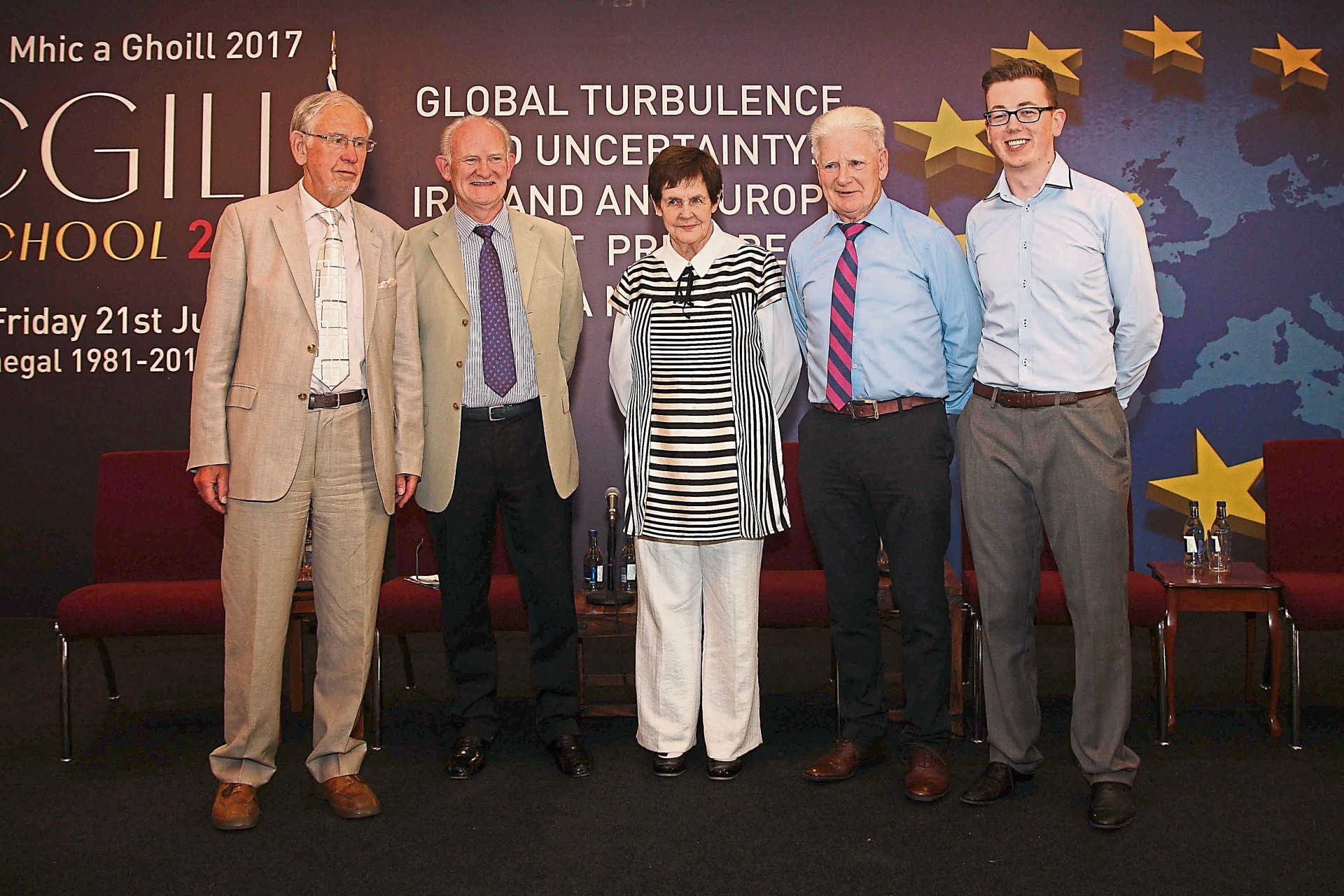
Joe, however, had a vision beyond festival. Aware of the Merriman Summer School, founded in 1968, a discussion event in Co Clare promoting the work of Brian Merriman, the 18th century poet, Joe renamed the festival the MacGill Summer School. The Summer School started investigating issues raised in MacGill’s works: emigration, education, the power of the church, the power of landlords, and the power of local businessmen known as Gombeen Men.
Michael D Higgins, speaking in those early years, said of the Gombeen Men, they were people for whom “a yard of counter was worth an acre of land”. Speakers in those early years included John Cooney, who went on to found the Humbert Summer School, Co Mayo, and later Noel Whelan, who founded the Kennedy Summer School, Co Wexford.
Joe’s work at the MacGill Summer School was based on a very strong belief in the role and value of Public Broadcasting. It was the duty of media to investigate, to inform and to educate. His work at the MacGill Summer School reflected that of his professional life at RTE.
The early years of the Summer School were very relaxed. A grand opening on Sunday was followed by Art and Writing workshops in the morning with the main lecture in the evening over the following five days. Joe always had an eye for improving things, and he introduced a new format at the Summer School.
There were morning sessions, midday sessions, and evening sessions. This led to more in-depth discussions, broader contributions and richer interactions between speakers and the audience.
Joe maintained: “We have to keep growing, keep evolving, otherwise we fossilise”. By the end of the 1980’s MacGill was on the way to becoming one of the most important fora in Ireland, analysing topics of national and international interest.
The subject matter of the Summer School is quite often of a serious nature, but Joe, because of his interest in art, drama, poetry, and music, interspersed these serious discussions with art exhibitions, music recitals, poetry readings, and tours of MacGill country. Introducing people like Derek Hill, John O’Connor, Paul Durkan, among many others.
Drama played a significant role in Joe’s own educational journey, presenting his ‘plays’ with his good friend Eilish Carroll at Finn College, promoting his ‘shows’ at De La Salle teacher training college in Manchester, and in his Doctoral Thesis at Nancy University on medieval plays.
It is not surprising then that Joe developed a long-standing friendship with Brian Friel, regarding him as one of the greatest dramatists of the 20th century. They both shared an intense regard, indeed love, for Glenties. Glenties is the Ballybeg of so many of Friel’s plays, and it is the homeplace of Joe Mulholand’s Patrick MacGill. On two separate occasions over ten years, Joe devoted the entire Summer School to the works of Brian Friel. When Dancing at Lughnasa appeared in 1990, Joe could not wait to bring it to Glenties.
Unable to get the complete cast of either the London or the New York production, the ever-pragmatic Joe brought together a combined cast of London and New York thespians. Brian Friel sat at the performance in the Comprehensive School in Glenties, within a stone’s throw from The Laurels, the actual house his aunts, the characters in the play, had lived in. A special moment for all in attendance.
I extend my deepest sympathies to Fiona, Julian and Sylvian on the loss of their Father so soon after the loss of their Mother Annie. As we reflect on Joe’s life and their life together, we remember a life well lived, a life of vision, integrity, commitment and love.
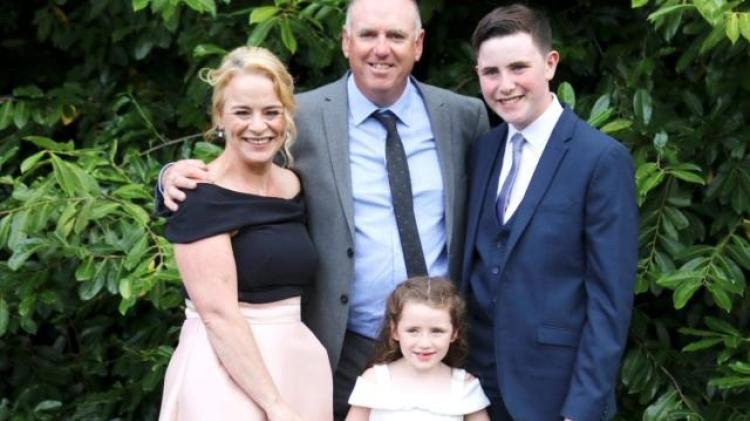
Geraldine Mullan with her family - husband John, son Tomás and daughter Amelia. Photo Geraldine Mullan
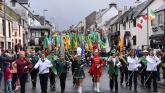
The Easter Sunday parade featuring Rosses Fifers Unite which was held in 2016. Photo: Mary Rodgers
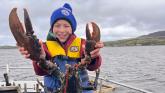
Darragh Wilson shows off his catch from Mulroy Bay
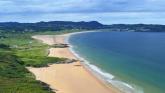
Volunteers are asked to meet at the Warden car park at 4pm, to come prepared, as work will get underway on a new pathway

Subscribe or register today to discover more from DonegalLive.ie
Buy the e-paper of the Donegal Democrat, Donegal People's Press, Donegal Post and Inish Times here for instant access to Donegal's premier news titles.
Keep up with the latest news from Donegal with our daily newsletter featuring the most important stories of the day delivered to your inbox every evening at 5pm.

This publication supports the work of the Press Council of Ireland and Office of the Press Ombudsman, and our staff operate within the Code of Practice of the Press Council. You can obtain a copy of the Code, or contact the Council, at www.presscouncil.ie, Lo-call 1800 208 080 or email: info@presscouncil.ie.