

One F on Foley: How Street Fighter inspires the travel world

Jonathan Foley is a regular columnist in the LetterkennyLive newspaper and teacher at Moville Community College
On a recent trip to Century Cinemas in Letterkenny, I couldn’t help but notice that on the ‘Coming Soon’ posters inside the main door was one for a new Street Fighter movie. Not only did it give an instant flood of nostalgia to a 1990s kid who grew up playing that Nintendo game, but I also realised how thankful I am for it.
It might sound bizarre, but I do think that, on a subconscious level at least, this old-fashioned beat-em-up style computer game had a silent but profound effect on my later travels around the world. Over much of the last decade - Covid restrictions notwithstanding - I was blessed to visit almost 30 countries in that time.
Round One
Even as I write this, memories of traipsing through rainforests in Brazil, barging through the crowded streets of India, or being utterly mesmerised by the bright city neon lights of Japan have come flooding back. And maybe - just maybe - what gave me the original urge to go and see this world of ours was an old fighting game from my much younger days.
The premise of the game was simple. Select a character, let’s say Ryu, a Shotokan Karate master from Japan, to go and compete against a Sumo Wrestler, a Soviet Wrestler, a female Chinese martial artist from China, or an overtly zealous boxer from Las Vegas. Beat them all your character becomes world champion. Simple.
For a generation of gamers in the nineties, the game became something more than something to pass the time. It introduced millions of youngsters like me - at the time - to a colorful world of international characters, exotic locations, and a variety of different cultures and global music. Of course, the creators played on stereotypes a fair bit, but Street Fighter still ignited a sense of curiosity in me.
Back in those days, many happy hours were spent on these consoles doing battle on screen with your siblings and neighbourhood friends. The declaration of ‘winner stays on’ was common and, in a more communal sense, arcade venues like Funland became popular hangout spots to test yourself against the wider community.
Deep down, though, the game did more than that. Every character in the game had a unique personality and fighting style, and their stage levels provided a glimpse into environments and traditions from all around the world. The stages themselves, be it for their scenery or cultural background music, became as iconic and as memorable as the characters themselves.
As a kid, I began associating characters with their countries, and it sparked an early interest in places that I otherwise may have grown to know very little about. A game that was built entirely for entertainment did more for a lot of people than any geography lesson could even attempt. It encouraged me to ask questions about the world.
Curiosity
Where exactly is Thailand, and why do they love statues so much? Does Japan really have houses with triangular roofs? What does it mean to be a yoga spiritualist in a country like India? Does the Amazonian Outback of Brazil really look like that? Are they all as colourful and vibrant as they seem? The list goes on.
Looking back, these questions grew into a lifelong interest in travel and other cultures. As time moved on and I grew up a bit more, the era of cheaper flights to Europe or backpacking trips to South America, Africa, and Asia became more accessible, and maybe it's no wonder why I saved up and booked adventures to the places that I did.
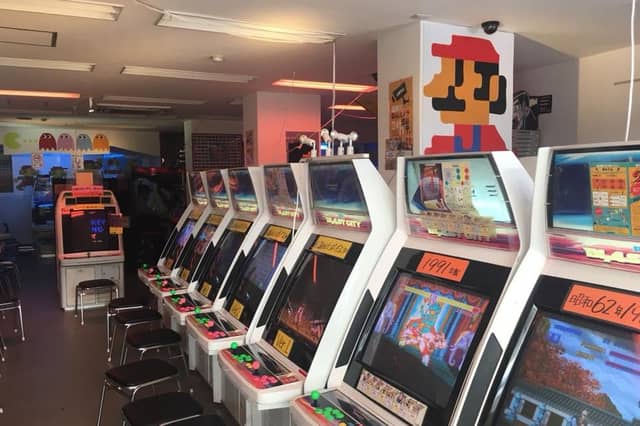
One of my fondest memories of a trip to Osaka, Japan, was the day I wandered into an old-style arcade room. There were only a handful of people in there and, even without being able to communicate in the same language, a local lad and I nodded at the Street Fighter machine; we played a few rounds of battle with one another and shared a few laughs and then high-fived and bowed at the end.
Similarly, during a trip to India the same year, I found myself walking around a hillside of many Hindu shrines and temples. Many of them were lit by candlelight and had long-bearded people with beads and flowers around their necks, crouched over in deep, silent prayer. A reminder of the character of Dhalsim.
Legacy
In today’s terms, the game of Street Fighter II would be branded as a product of its time. It did lean heavily into cultural stereotypes with regard to how the characters and their stage locations were portrayed. To be honest, it probably wouldn’t even get the go-ahead to be made as a new game in the mid-2020s.
Still though, in a time when kids like me have grown into their forties, and the arcade rooms are now a thing of the past, the memories the game of Street Fighter helped shape for me are something I won’t ever forget. My trips around this world of ours didn’t begin with an online booking.
They began with a joystick.