

How to support neurodivergent and anxious children returning to school


Supporting neurodivergent children on the journey back into school every September can be difficult. Aoife NicSheáin - a neurodivergent mum and special education teacher based in Donegal - suggests some things you can do that might help support your child’s mental health as they return to school.
When you’re parenting neurodivergent or anxious children, the journey back into school every September can be a difficult one.
Supporting our children as they work through their fears and worries is challenging, and it can often make the last two weeks of August tense at home. As the new school year approaches and school things start reappearing across the landscape - a uniform here, a pencil case there, friends and family constantly asking about the new teacher, the class - children’s anxieties can grow and grow.For neurodivergent children, especially those of us who are autistic, ADHD and have a PDA profile, this can have huge, albeit unintended, consequences.
Transition
Capacity can max out very quickly for these little people, and suddenly home life is thrown into chaos; the peace, calm and gentle routine of summer is gone. During these periods of transition, we typically see things like sleep regression, toileting regression, accidents at night, refusal to shower or wash teeth, notable changes in appetite or food restrictions, intense meltdowns and lashing out.
Capacity can max out very quickly for these little people, and suddenly home life is thrown into chaos; the peace, calm and gentle routine of summer is gone
This is all common when there is a perceived loss of autonomy coupled with unpredictability on the horizon and nervous systems feeling under attack.
Frustration
None of this is easy to navigate and it can be extremely hard, if not impossible, for some children to explain what’s going on, or advocate for their own needs. Frustration levels get high. An atmosphere like this in a family home before school even starts is obviously not conducive to setting a child up for the best possible first day back. There is no fault or blame here. The little people who are struggling have no control over how their nervous systems are reacting.
Supporting our children as they work through their fears and worries is challenging, and it can often make the last two weeks of August tense at home.
Parents are all trying their best and often don’t know where to turn for advice.
Good and positive
School is full of good and positive things, as well as things that can be upsetting for some of us. Sensory sensitivities will always make school environments extremely challenging for some, complex social groupings and changing relationships as children grow and learn at different rates will cause difficulties for others. Everyone has reasons to both like and dislike parts of the school experience.
Having said that, school is set up as an environment that best suits some of us - not all of us.There are significantly more hurdles to jump for those of us who are neurodivergent and anxious. This means that as parents, there is a lot more support that we need to give.
Things to do to support your child
Here are some things you can do that might help support your child’s nervous system and mental health as they return to school.
1. If your child has a diagnosis or identification, re-read their reports. There may be some good information in them that will remind you of the best approaches you can take.
2. If your child is old enough for a conversation, wait until a quiet time before asking if there is anything worrying them about school. Don’t minimise or trivialise their worries. Recognising how big their feelings are is so important. Everyone needs to feel heard.
3. Gently explain that you will help them to try and solve whatever the problem is, with their permission. Autonomy is crucial for nervous system regulation. There are always some steps that can be taken. Focus on those, together.
4. Lower as many demands as you can for your child at home - let them eat on the sofa, watch TV, play on their devices.
If you need to pick up after them more than usual, do that for these few weeks.
5. Try using declarative language - instead of saying “put your shoes on” say “I think your shoes are by the stairs.”
This simple change can make a huge difference over time.
6. Drive the route to school a couple of times.
Point out some things along the way that you can always look out for. This gives predictability.
7. Reach out to your child’s school this week and ask if you can bring them in for a short visit before the first day.
If their teacher, principal or SNA is there, a quick, friendly hello can alleviate a lot of fear.
8. Fill out a quick profile for your child’s teacher. There is a lovely one included in the NCSE Relate Framework called Getting to Know Me.
This framework is used by teachers across Ireland to promote regulation and connection. It is free to download online.
9. Remember, if you have a complex case, there are lots of options out there that you may not have explored yet.
There is always a way forward.
10. Most importantly, go easy on yourself. Just like on a plane, put your own oxygen mask on first. Speak kindly on the inside.
Try not to forget, your child just wants to be loved and none of us are doing any of this perfectly! Your best is always good enough.
For more information, further tips or a one-to-one, tailored pathway-building consultation for your child, please see @neurovoice_coaching online.
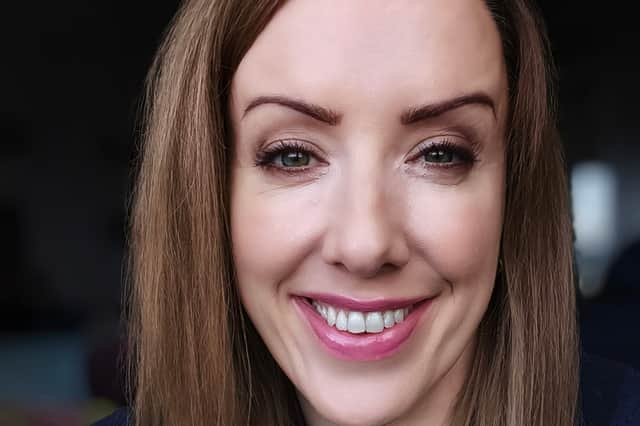
Aoife NicSheáin is a neurodivergent mum, special education teacher, parent coach and disability rights advocate. She is committed to empowering parents/caregivers and education staff with the knowledge they need to support children at home and at school, and to advocate confidently for their children’s needs in schools and in services.Aoife facilitates the creation of spaces and the development of practices that are built on connection- and regulation-first approaches, unconditional positive regard, felt safety, consent, autonomy and the fostering of joy.
@neurovoice_coaching
0834527982
www.neurovoicecoaching.ie