

‘Immediately, I felt a real sharp pain in both big toes. I wondered what had stung me’

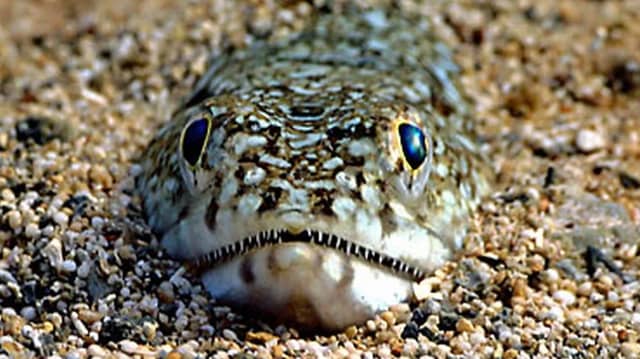

Dangerous weeverfish warning: Local woman – and her dog – badly stung while paddling in the water at beach near Buncrana
Donegal beachgoers are being warned to take extra care after a local woman was badly stung by a venomous and dangerous weeverfish.
Mary Harrigan was paddling at Linsfort Beach, near Buncrana, when the painful incident occurred towards the end of August.
Her foot immediately began to swell up after she unknowingly came into contact with the reptilian-looking fish. Mary’s dog, a West Highland Terrier, was also injured, with its paw becoming badly inflamed.
The Linsfort woman says the beach used to always be “my happy place” but now she’s “scared” of it. She explained what happened.
“I was paddling in the shallow water. The tide wasn’t fully in and I decided to take a wee dander from Linsfort over to Stragill.”
“Immediately, I got a real sharp pain in both big toes. I wondered what had stung me. I had been watching out for jellyfish, because we had an awful lot of jellyfish all summer, but I couldn’t see any.”
“I continued walking along the saltwater and I got home. I assumed then that maybe I had stepped on a thorn or something.”
“I later phoned the podiatrist and told them I was in trouble, that I had taken a bad reaction. We thought it was a sting, but we didn’t know from what.”
The toxic level of the venom was such that Mary’s hands were affected when later removing it from her feet.
She further explained: “The advice was to immerse your foot in boiling hot water for up to 90 minutes – as hot as you can stand it – and then squeeze to get the poison out.”
“My husband had the tweezers and he was then able to remove the tentacles. But unfortunately I didn’t wear rubber gloves, and I got the poison onto my thumbs, which then swole up as well.”
Mary then realised that she had been stung by a weeverfish – and she’s speaking out publicly in a bid to alert others.
“I’d never heard of weeverfish, but a friend had mentioned that the north coast is infested with them. The more I started to look into it, the more I realised that’s what happened.”
“They’re lying under the sand in shallow water and you don’t see them. I just want people to be aware and to take precautions. They will be in-season until the end of September. If we do get a couple of good days in September; just be very careful.”
“This is not something for the faint-hearted. A young child could take anaphylactic shock, or anyone whose immune system might be weakened – they say these can be fatal.”
She says footwear is the best defence.
“If I had continued to wear my Crocs, instead of taking them off, I wouldn’t have been harmed. That’s the only thing that will save you against weeverfish. Enjoy the beach but please wear footwear.”
Meanwhile, the National Poisons Information Centre of Ireland recently issued a warning for weeverfish in Donegal – and the vast majority of injuries occur when people unwittingly step on them. It typically takes up to three weeks to fully recover from a sting.
Buncrana Councillor Jack Murray is also urging people to be aware of the potential dangers.
“Many people wouldn’t be aware of weeverfish or the dangers they pose, but I would ask people to heed the advice and exercise caution.”
“Weeverfish are normally buried in the sand with just their venomous black dorsal fin showing above the surface.”
“People should continue to enjoy our beautiful beaches, but the advice is to wear rubber-soled shoes or flip-flops while walking on the sand.”
“Vulnerable people, and those with weakened immune systems, should be particularly careful,” Cllr Murray warned.